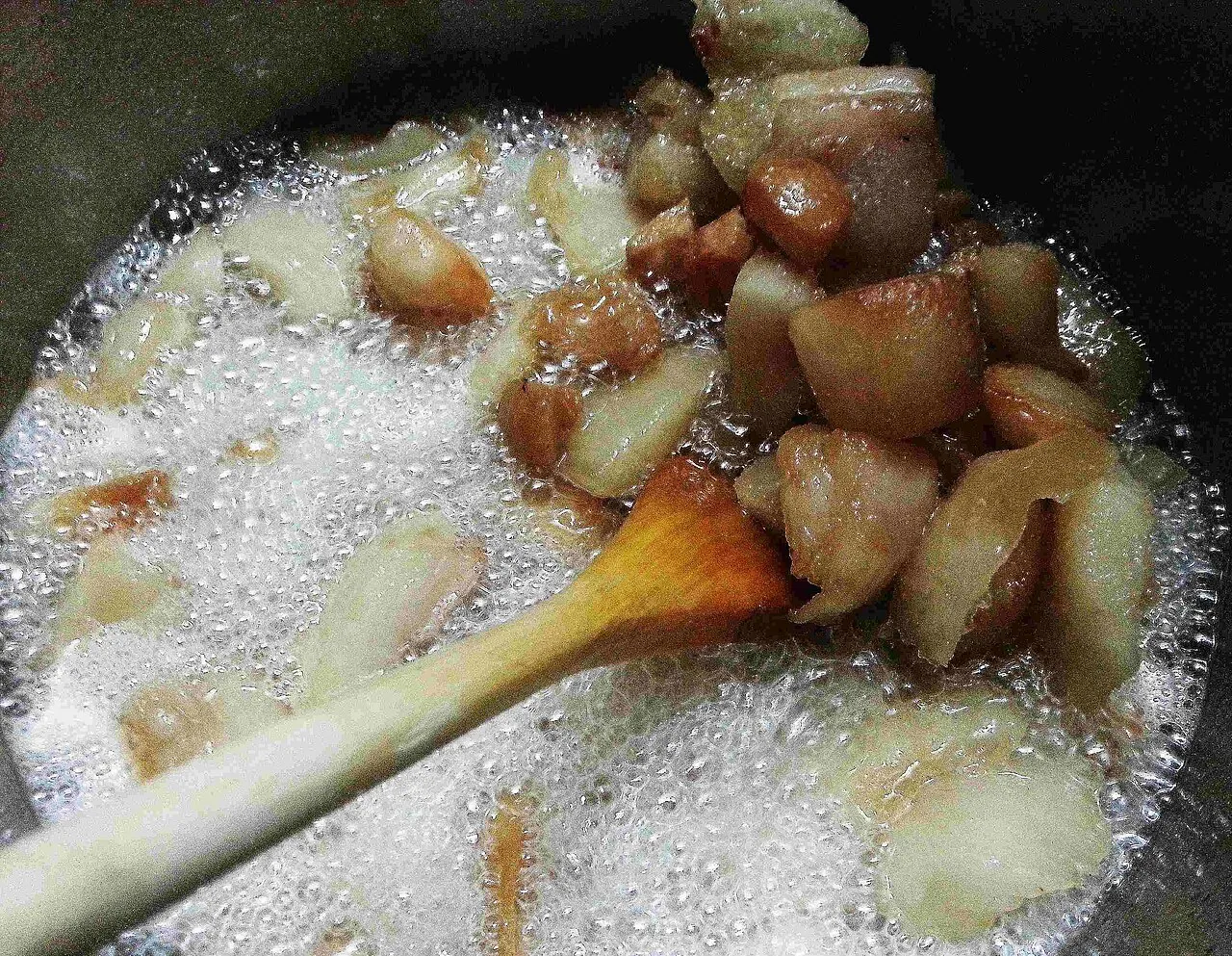
Rendering Lard
Turning pork fat into lard: leaf fat versus back fat versus organ fat, trimming and cutting small, keeping the fat near 212°F and never above 255°F, knowing when it's done, straining and cooling to a creamy set, cracklings, and storing lard so it doesn't go rancid.
- 4 min
- 6 steps
- 3 questions
- Lesson 49 of 55
In this lesson
- Which fat
- Low and slow
- Done, strain, cool
- Storing lard
- Try it
- What to take from this
Picking up where you left off.
Which fat
Lard is rendered pork fat. Not all pork fat is equal 1:
- Leaf fat, the soft sheet of fat around the kidneys and inside the loin, makes the whitest, mildest lard, the one for pie crust.
- Back fat and fat trimmings make good all-purpose lard.
- Fat from around the internal organs makes a darker lard and should be rendered separately 1.
Trim off all skin and lean first; lean left on the fat browns and darkens the lard 1. Cut the fat into small pieces of similar size so it renders quickly and evenly 1. Running chilled fat through a coarse grinder plate does the same job faster.
Quick check
Fat from around internal organs makes darker lard and should be rendered separately.
Low and slow
Steam rendering is best because nothing can scorch; on a farm, an open kettle works if it’s stirred often over a low fire 1. In a kitchen, a heavy pot on low heat, a slow cooker, or a roasting pan in a low oven all do the job.

Don’t use copper or brass: those metals make lard go rancid fast 1.
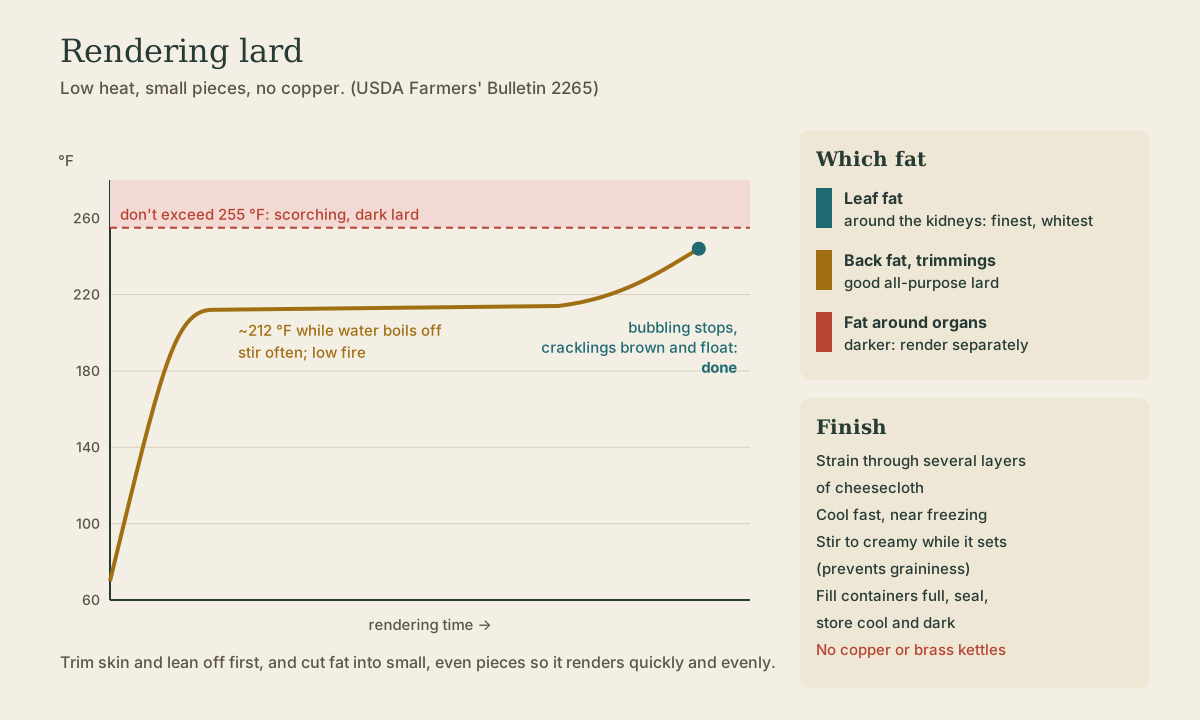
The fat’s temperature tells you where you are 1:
- While water is boiling out of the fat, it holds near 212°F.
- As the water runs out, the temperature climbs.
- Never let it go above 255°F. Dark lard means it scorched or too much lean was left on 1.
A clip-on candy thermometer makes this easy.
Quick check
The fat sits near 212°F while water boils off; scorching above that darkens the lard.
Done, strain, cool
Rendering is finished when the bubbling stops and the cracklings, the bits of tissue left behind, float to the surface and turn brown 1. Then:
- Strain through several thicknesses of cheesecloth into pails, crocks, or jars 1.
- Cool quickly, near freezing if you can 1.
- Stir while it sets until it’s creamy; that keeps it from turning grainy 1.
The cracklings still hold fat. Pressing them hot in a lard press gives more lard 1; salted, they’re a snack, or they go into cornbread.
Playback is optional. If the player is unavailable, open the video at its source.
Quick check
Bubbling is water boiling off; once it’s gone, there’s nothing left to render.
Storing lard
Air and light make lard rancid. Fill containers to the top, seal them tightly, and store them somewhere cool and dark 1. A root cellar, refrigerator, or freezer all work; freeze what you won’t use in a few months.
Tallow is the same process with beef or mutton fat. It sets harder and has a stronger flavor, and traditionally went into candles and soap as well as cooking.
Try it
Ask a local butcher or a farmer you buy pork from for 5 pounds of leaf fat. Trim off any lean, freeze it for an hour, and cut it into 1/2-inch cubes (or grind it). Render in a heavy pot on low with a splash of water to keep it from sticking at the start, with a thermometer clipped on. When the bubbling stops, strain it through cheesecloth into pint jars, set them in a cold place, stir as they cloud, and use the first jar for a pie crust.
What to take from this
Lard is rendered pork fat. Leaf fat makes the finest lard; render organ fat separately. Trim off skin and lean, cut the fat small, and render it low: it holds near 212°F while water boils off and must never exceed 255°F. No copper or brass. It’s done when bubbling stops and the cracklings brown and float. Strain, cool fast, stir to a creamy set, and store full, sealed, cool, and dark.
Lesson complete
Nice work.
Sources for this lesson
- 1H. Russell Cross. Pork Slaughtering, Cutting, Preserving, and Cooking on the Farm (Farmers' Bulletin 2265). U.S. Department of Agriculture (Project Gutenberg edition). 1978. verifiedIssued June 1978, revised 1981. Sausage from trimmings, more than 50 percent lean, 20-30 percent fat, ground through 1/2-in. then 1/8-in. plates, 2 lb salt, 6 oz pepper, 1-2 oz sage per 100 lb, seasoned sausage frozen no more than 2-3 months; dry cure 8-2-2 in three rubs, 36-42 F, bellies about 7 days per inch; sweet pickle cure 3-1/2 to 4 days per pound, ropy brine; soak 2 minutes per day in cure; smokehouse from a barrel and buried stovepipe; hardwoods only; ham and bacon smoking schedules; trichinae destroyed at 137 F or by specified freezing; lard rendering near 212 F and never above 255 F, leaf fat best, organ fat separately, no copper or brass, cool fast and stir to creamy.