Apple Trees
A home apple orchard by UW-Madison Extension's rules: pick the rootstock for the size you want (dwarf M.9 or M.26 at 8–10 ft, fruiting in year 3), plant with the graft union 2–3 inches above the soil, put two varieties that bloom together within bee range, choose varieties that are hardy and ripe by mid-October (Zestar!, McIntosh, Honeycrisp, Haralson, scab-resistant Liberty), train a central leader, prune in March and April, trap apple maggots from July, and pick from August into October.
- 6 min
- 9 steps
- 4 questions
- Lesson 6 of 55
In this lesson
- Rootstock sets the size
- Site
- Planting
- Two varieties
- Picking varieties
- Pruning
- Pests
- Try it
Picking up where you left off.
Apples are the most widely planted tree fruit in Wisconsin 1. A couple of well-chosen dwarf trees will feed a family fresh fruit from August into winter. The decisions that matter most are made before the tree goes in the ground: which rootstock, which varieties, and where.
Rootstock sets the size
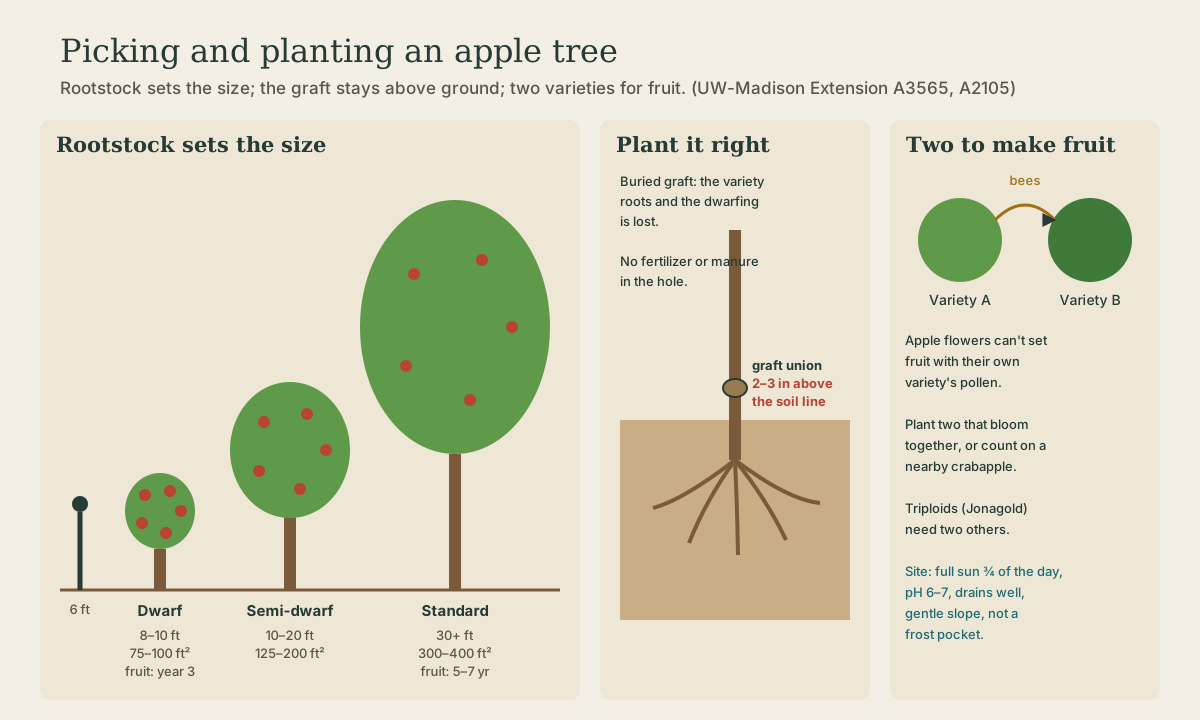
A nursery apple tree is two plants joined together. The rootstock below ground decides how big the tree gets; the scion above it is the variety that makes the fruit 1.
- Dwarf (M.9, M.26): 8–10 ft tall, about 75–100 ft² each. A few fruit in the third year. Nearly all the work can be done from the ground, without a ladder.
- Semi-dwarf: 10–20 ft, 125–200 ft² each.
- Standard: 300–400 ft² or more and possibly over 30 ft tall. Fruit in 5–7 years.
Extension recommends dwarfs for home gardens: several small trees give more fruit over a longer season than one big one, and they’re easier to prune, spray, and pick 1. Buy from a nursery that tells you the rootstock 1. One caution: M.9 and M.26 are very susceptible to fire blight, so variety choice and not overfeeding nitrogen matter more on them 1. Dwarfs also root shallowly, so they’re usually staked or trellised.
Quick check
Dwarfs take 75–100 ft², stay 8–10 ft tall, and bear a few fruit in year three; standards take 5–7 years.
Site
From A3565 1:
- A gentle slope, so cold air drains away on frosty spring nights. Valley bottoms are frost pockets, several degrees colder than nearby slopes, and they kill blossoms. Hilltops are too windy.
- Drainage. Apples won’t tolerate wet feet.
- pH 6–7. Soil test the season before you plant and lime or sulfur as the test says.
- Full sun at least three-quarters of the day.
- No grass within 18 inches of the trunk, and a 2–3 ft clear circle is better. Grass competes hard for water and nitrogen.
Planting
Dig a hole wide enough to spread the roots without bending them. Set the tree so the graft union, the knob where scion meets rootstock, is 2–3 inches above the final soil level 1. If it ends up buried, the scion grows its own roots and the tree loses its dwarfing. Backfill with the soil you dug out, firm it with your foot, and water. Don’t put fertilizer or manure in the hole 1.
If you planted an unbranched whip, cut the top off at 30–45 inches. New branches sprout just below the cut, so the height of the cut sets the height of the first limbs 1.
Playback is optional. If the player is unavailable, open the video at its source.
Quick check
Bury it and the fruiting variety grows its own roots, and the dwarfing is lost.
Two varieties
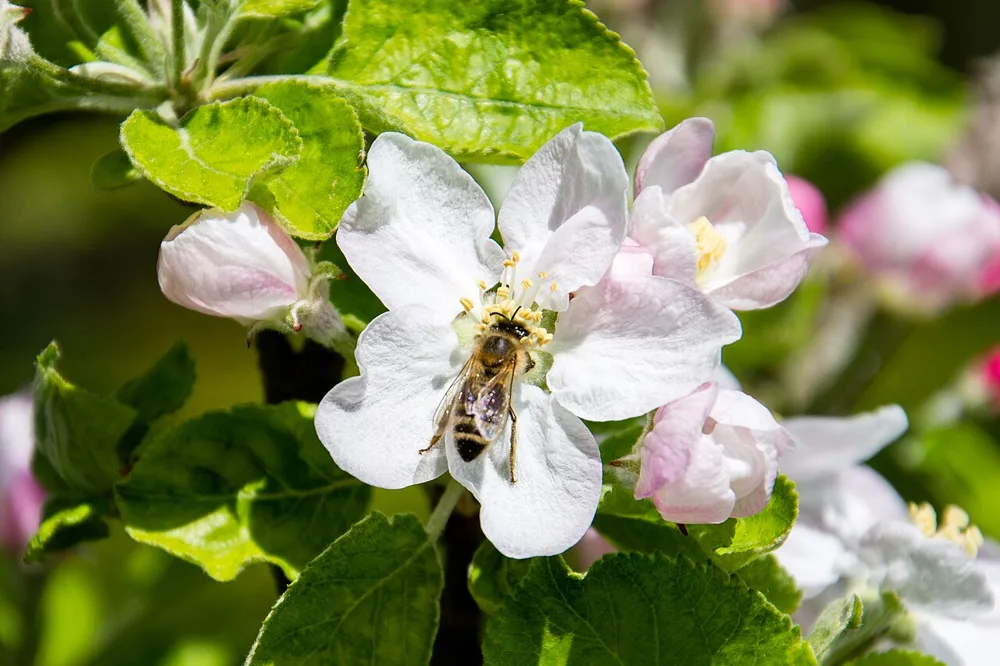
Apple blossoms are self-unfruitful: pollen from the same variety won’t set fruit. Bees have to bring pollen from a different variety that blooms at the same time 1. A crabapple in bloom nearby works for any apple 2. A few varieties, such as Jonagold, are triploid and make poor pollen, so they need two other varieties around them 2.
.jpg)
Quick check
Plant a second variety that blooms at the same time, or count on a nearby crabapple.
Picking varieties
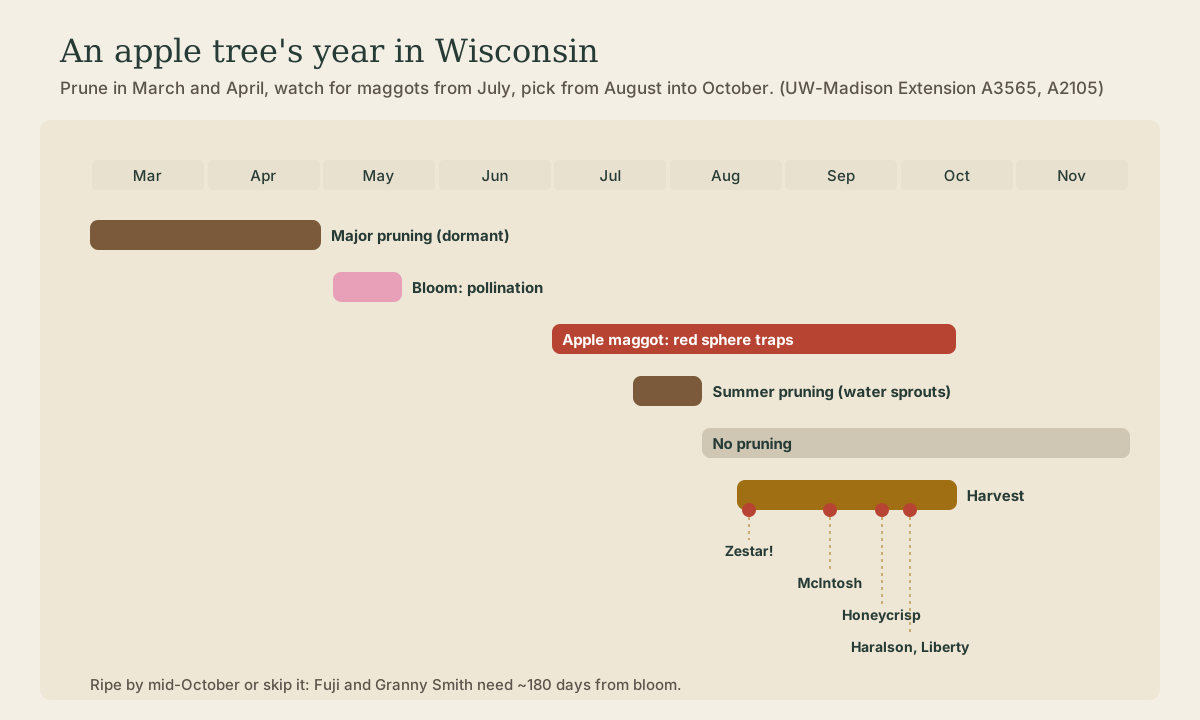
Two rules come first: the variety has to be hardy where you live, and it has to ripen by mid-October 1. Most of Wisconsin is zones 4 and 5; much of the north is zone 3, where only the hardiest apples survive 2. Fuji and Granny Smith need about 180 days from bloom and won’t mature here 1.
The third rule is scab resistance. Apple scab is the most serious apple disease in Wisconsin, and resistant varieties skip most of the fungicide sprays 1. From A2105’s table 2:
| Variety | Ripens | Notes |
|---|---|---|
| Zestar! | 3rd week Aug | Minnesota; crisp, keeps a month |
| McIntosh | 2nd week Sept | Wisconsin’s most popular apple; zones 3–5 |
| Honeycrisp | 4th week Sept | very crisp; stores 4 months |
| Haralson | 1st week Oct | tart, hardy; popular in the northwest |
| Liberty | 1st week Oct | very scab resistant; “one of the best disease-resistant apples” |
Choosing one early, one mid, and one late variety spreads the harvest from late August into October; check with the nursery that their bloom times overlap so they can pollinate each other.
Pruning
Train a young tree to a central leader, one main trunk with tiers of side branches (scaffolds) growing out at wide angles, which are the strongest 1. Keep the lowest scaffold at least 24 inches up and the top of the tree narrower than the bottom, so every leaf gets sun. Leaves in shade can’t make the sugar that good fruit needs 1.
Each year 1:
- March and April, while dormant, is the time for major pruning.
- Remove dead, broken, and crossing branches, downward-growing limbs, and straight-up water sprouts. Upright shoots make leaves, not fruit; flatter branches fruit.
- Prefer thinning cuts (removing a whole branch at its origin) to heading cuts.
- A light pruning in late July to early August can remove water sprouts and open a dense canopy. Nothing after early August: it delays dormancy and invites winter injury.
Quick check
Pruning after early August delays dormancy and invites winter injury.
Pests
Even scab-resistant trees still need insect control 2. The big one is the apple maggot (“railroad worm”), a fly that lays eggs in fruit from early July until harvest; its larvae tunnel through the apple. Uncontrolled, it’s the worst apple insect in Wisconsin 1. Hang red sticky spheres (with an apple-scent lure) in the trees to see when the flies are active and, on a few trees, to catch many of them. Codling moth, plum curculio, and leafrollers are the others to learn 1.
Try it
Before ordering trees, walk your land on a still, frosty morning and note where frost lies longest. Pick a sunny, gently sloping spot above it, soil test it this fall, and order two or three scab-resistant dwarfs that bloom together and ripen by early October.
Lesson complete
Nice work.
Sources for this lesson
- 1Growing Apples in Wisconsin (A3565). University of Wisconsin-Madison Extension (Roper, Mahr, McManus). verifiedRootstock controls size: M.9 and M.26 dwarfs best for home gardens, 75-100 sq ft and 8-10 ft tall, a few fruit in year 3; semi-dwarf 125-200 sq ft, 10-20 ft; standard 300-400+ sq ft, may top 30 ft, fruit in 5-7 years. Site: gentle slope (valley bottoms are frost pockets), good drainage, pH 6-7, full sun at least three-quarters of the day. Plant with the graft union 2-3 in above final soil level or the scion roots and dwarfing is lost; no fertilizer or manure in the hole. Apple flowers are self-unfruitful. Train to a central leader with wide-angled scaffolds; lowest scaffold at least 24 in up; cut an unbranched whip to 30-45 in. Major pruning March-April while dormant; summer pruning of water sprouts late July-early August; no pruning after early August. Cultivars must be hardy and ripen by mid-October; Fuji and Granny Smith need about 180 days from bloom. Apple scab is the most serious disease; apple maggot (railroad worm), early July to harvest, the most serious insect if uncontrolled, monitored with red sticky spheres. M.9 and M.26 are very susceptible to fire blight.
- 2Apple Cultivars for Wisconsin (A2105). University of Wisconsin-Madison Extension (T.R. Roper). verifiedMost cultivars are self-unfruitful and need a second cultivar; triploids such as Jonagold need two other pollinizers; crabapples pollinate all apples if bloom overlaps. Most of Wisconsin is zones 4-5, much of the north zone 3. Granny Smith, Rome Beauty, Braeburn, and Fuji ripen too late. Ripening: Zestar! 3rd week Aug; McIntosh 2nd week Sept (Wisconsin's most popular apple); Honeycrisp 4th week Sept, stores 4 months; Haralson 1st week Oct, popular in northwest Wisconsin; scab-resistant Liberty 1st week Oct ('one of the best disease-resistant apples'), also Redfree, Prima, Priscilla, Jonafree, Nova Easygro. Disease-resistant cultivars still need insect control.