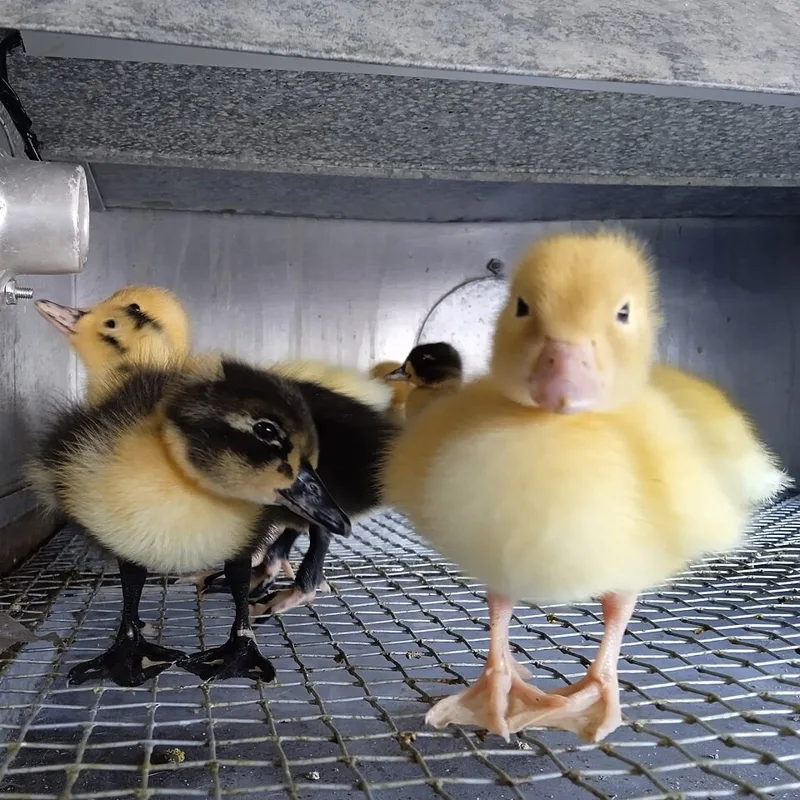
Ducks and Geese
Waterfowl on a Wisconsin homestead: why ducks need grain and predator protection while geese mostly graze, brooding ducklings at 85–90 °F and dropping 5–10 degrees a week, keeping them dry for the first four weeks, space from half a square foot to two, starter crumbles to grower pellets at two weeks, an 8-pound Pekin in about seven weeks on 20 pounds of feed, water deep enough to dunk the head, and Wisconsin's rules for home-dressed poultry.
- 5 min
- 7 steps
- 3 questions
- Lesson 11 of 55
In this lesson
- Ducks or geese
- Brooding ducklings
- Feed
- Water
- Processing
- Try it
Picking up where you left off.
Ducks are the easiest meat bird a homestead can raise: hardy, fast-growing, resistant to most chicken diseases, and ready for the freezer in about seven weeks. Geese are the grazers of the poultry world. Both bring one complication that chickens don’t: water, and lots of mess with it.
Ducks or geese
- Ducks are smaller and need less space, but they need grain year-round and are more vulnerable to predators 1.
- Geese need about twice the space, but they do well on limited grain with plenty of grazing and are seldom bothered by predators 1. Chinese geese are loud and alert enough to be used as “watch geese,” and they’re also used as weeders 1.
For meat, hybrid Pekin ducks grow fastest and convert feed best; Rouen and Mallard-colored ducks look nice but grow slower and dress out with dark pinfeathers 2. Muscovies have excellent dark meat but grow slower than Pekins 2. Goose meat breeds include Emden, African, and Pilgrim 1. Ducklings and goslings are usually sold April through July 1.
Quick check
Ducks need grain year-round and more protection.
Brooding ducklings
A broody hen will adopt ducklings if you slip them under her at night 2. Otherwise, brood them like chicks 2:
- A dry, draft-free spot with 4 inches of absorbent litter (shavings or chopped straw). Ducks soak their litter far more than chicks, so pull wet spots daily.
- Two 125-watt heat lamps hung close together about 18 inches up, so one failing overnight isn’t a disaster.
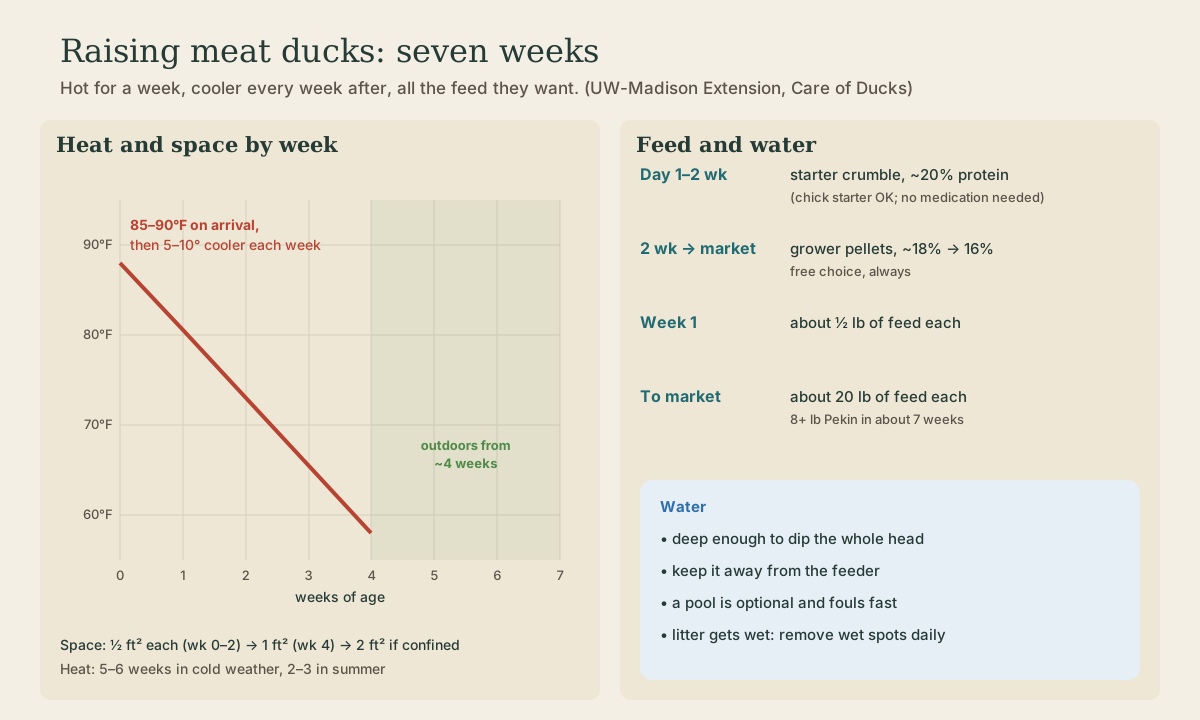
- 85–90 °F at the edge of the light when they arrive, then 5–10 degrees cooler each week. Watch the birds: huddled and noisy means too cold; spread far from the light means too hot.
- Heat for 5–6 weeks in cold weather, 2–3 in summer. By about 4 weeks they’re feathered enough to go outside except in cold, wet weather.
- Space: ½ square foot each for the first two weeks, 1 square foot by four weeks, and at least 2 square feet if they stay confined after a month.
Never brood on newspaper or another slippery floor, which causes splayed legs 1.
Quick check
Watch the birds: piling up and peeping means cold; moving away from the heat means too hot.
Feed
Start ducklings on starter crumbles. Chick starter works if duck starter isn’t available, and medicated starter isn’t needed, since ducks resist the diseases it targets 2. Some sources warn against medicated chick feed for waterfowl altogether, so unmedicated is the safe choice 1. Switch to grower pellets at two weeks: ducks waste powdery mash and can choke on it. Keep feed in front of them at all times, and put the feeder away from the waterer 2.
Protein steps down as they grow, about 20% for the first two weeks, 18% to six weeks, 16% to eight 2. A commercial Pekin eats about half a pound of feed in its first week and about 20 pounds by market, and reaches 8+ pounds in about seven weeks 2.
Geese and ducks raised past 8–12 weeks need very little grain if they have good grazing. Give them grit before they go onto green, fibrous plants 1.

Water
Ducks need water deep enough to dunk their whole head, which keeps their eyes and nostrils clean 1. Swimming is fun but not necessary for growing ducks, and a pool or small pond fouls quickly unless it’s flushed often 2. Keep young birds from swimming or getting soaked for about the first four weeks; wet ducklings chill, pile up, and can die 1. A waterer with its lip at back height, set on a wire-covered platform, keeps the pen far drier 2.
Quick check
Give drinking water deep enough to dunk their heads, but keep them dry for about the first four weeks.
Try it
Count back seven weeks from the date you want ducks in the freezer and order Pekin ducklings for that hatch date. Set up the brooder a day early with the lamps running, check the temperature at the edge of the light, and build a drip or no-swim waterer before they arrive.
Lesson complete
Nice work.
Sources for this lesson
- 1Management Requirements for Waterfowl. The Poultry Site. verifiedDucks need less space but grain year round and are more prone to predators; geese need twice the space but do well on limited grain with plenty of grazing and are seldom bothered by predators. Meat ducks: Pekin, Muscovy, Rouen; meat geese: Emden, African, Pilgrim; Chinese geese used as weeder and watch geese. Young waterfowl usually available April-July. Avoid slippery brooder floors (spraddle legs); keep young birds from swimming or getting soaked for the first four weeks; no medicated chick feed; 20-22% protein starter for three weeks then 16% grower; grit before greens; after 8-12 weeks very limited grain. Waterer lip at back height; adults should be able to submerge the head past the eyes.
- 2Care of Ducks. University of Wisconsin-Madison Extension, Livestock Program. verifiedDucklings can be brooded by a broody hen or like chicks; 4 in of absorbent litter, remove wet spots; two 125-watt heat lamps 18 in up; 85-90 F at the edge of the light on arrival, reduce 5-10 degrees a week; heat 5-6 weeks in cold weather, 2-3 in summer; feathered enough for outdoors by 4 weeks. Floor space 1/2 sq ft for two weeks, 1 sq ft by four weeks, 2 sq ft if confined after a month. Starter crumble (chick starter OK; medication unnecessary since ducks resist chick diseases), grower pellet at two weeks, free-choice feed; about 0.5 lb feed in week one and about 20 lb to market; 8+ lb market duck in about seven weeks; NCSU nutrient table: protein 20% (0-2 wk), 18% (2-6), 16% (6-8). Swimming water is not essential and fouls quickly; drip or no-swim waterers keep birds clean. Hybrid Pekins grow faster and more efficiently than Rouen or Mallard colors; Muscovies excellent meat but slower. Wisconsin allows personal use and small sales of home-dressed poultry; larger sales need inspected processing.