Preparing and Killing Chickens
The first half hour of processing day: withholding feed, checking birds for health, laying out a clean-to-dirty line, killing in a cone by cutting both jugular veins, bleeding out, and what Wisconsin allows for selling birds you raise.
- 5 min
- 6 steps
- 3 questions
- Lesson 36 of 55
In this lesson
- Before the day
- Health checks
- The kill
- Wisconsin rules for selling birds
- Try it
- What to take from this
Picking up where you left off.
Before the day
Processing goes well when the setup is done before the first bird is caught.
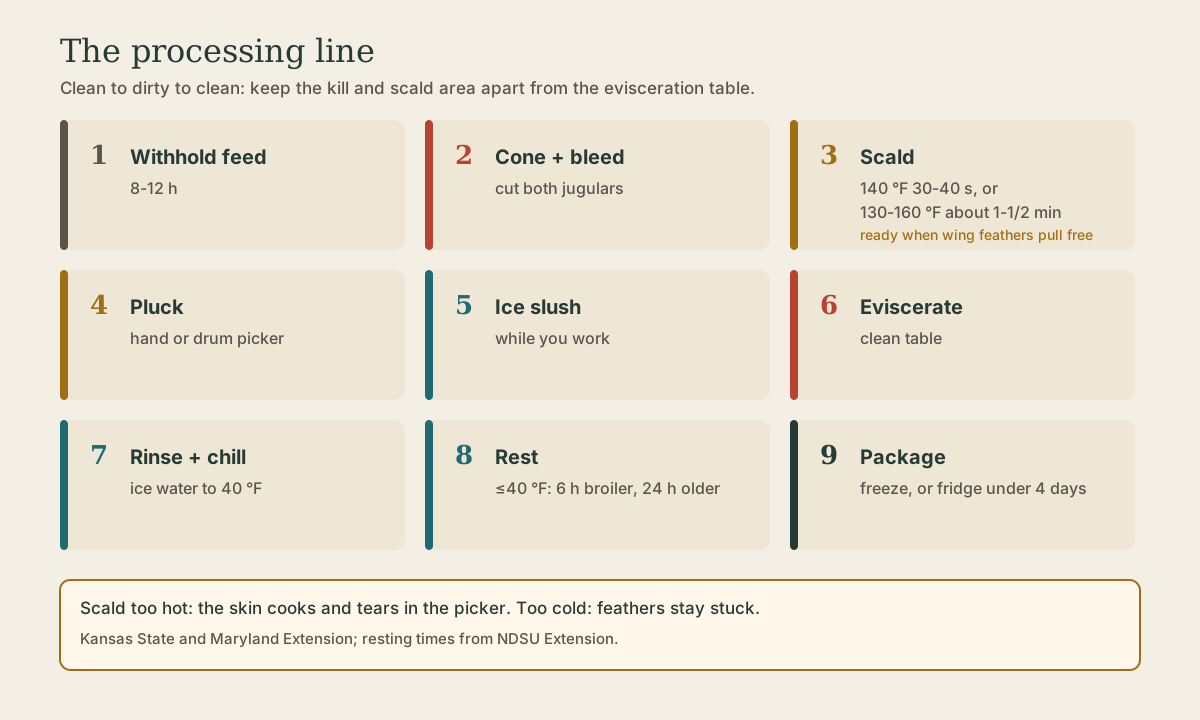
- Withhold feed 8 to 10 hours (Kansas State) or 9 to 12 hours (Maryland) before slaughter, so the gut is emptier and less likely to contaminate the carcass 1 2. Leave water available.
- Choose the birds: Cornish Cross broilers are ready at 6 to 8 weeks 1; older laying hens and roosters are tougher and suit stewing.
- Lay out the line from dirty to clean: kill cones and a bleed bucket, the scalder, the plucker, an ice-slush tub, then a separate clean evisceration table, then ice water for chilling.
- Equipment: killing cones (or a rope and block), a very sharp knife, a thermometer for the scald water, a large pot and propane burner for scalding 2, plenty of ice, clean water, and freezer bags.
Quick check
Kansas State says 8-10 hours, Maryland 9-12. Leave water available.
Health checks
Process only healthy birds. Kansas State’s list of signs that a bird should not be used, mostly seen once it’s opened 1:
- lumps or spots of any size on the liver;
- any fluid in the body cavity;
- orange rather than yellow or white fat in a poorly fleshed bird;
- abnormally large internal organs;
- breast meat the same color as the thigh meat;
- meat with white streaks or abnormal swelling.
Bruises, blisters, and skin tears are different: trim off the damaged tissue and the rest is wholesome 1.
Quick check
Liver spots, cavity fluid, enlarged organs, and abnormal meat color mean the bird isn’t used. Bruises and skin tears can simply be trimmed.
The kill
The standard home method is a killing cone: a metal funnel that holds the bird head-down and keeps it from flapping and bruising 1.
- Place the bird head-first into the cone so its head comes out the bottom.
- Hold the head firmly, comb in your palm, and with a very sharp knife cut the jugular veins on both sides of the neck, just behind the jaw 1 2. A deep, decisive cut on both sides gives a fast bleed-out; the bird loses consciousness as blood pressure drops.
- Keep holding the head and let it bleed into the bucket. The body will flap for a while after it’s insensible; the cone holds it.
- When all movement stops, it’s ready to scald 1.
Without a cone, hang the bird by the feet so it doesn’t bump anything and bruise 2. Stunning before the cut is an option with the right equipment; follow its instructions 1.
Playback is optional. If the player is unavailable, open the video at its source.
Wisconsin rules for selling birds
Processing your own birds for your household needs no license. Selling them is regulated. Wisconsin DATCP’s rules for poultry 3:
- Under 1,000 birds a year, sold from your premises: you may slaughter healthy birds you raised and sell them without inspection or a license, but only directly to consumers within Wisconsin (in person, by phone, or online), and each bird must be labeled “NOT INSPECTED” with your name and address.
- Farmers markets, special events, door-to-door, or wholesale: each bird must be inspected at a state or USDA-inspected establishment and fully labeled, plus a mobile or transient retail license for markets.
- Over 1,000 birds a year: inspection is required for every sale.
Livestock (hogs, cattle, sheep, goats) are different: meat sold to consumers must always come from an inspected establishment 3.
Quick check
Farmers market and wholesale sales need bird-by-bird inspection; over 1,000 birds a year, every sale does.
Try it
Before your first processing day, set up the whole line with no birds: cones mounted, scald pot filled and heated to temperature with a thermometer, plucker or a clean table for hand plucking, ice tubs, a separate clean table. Walk through it and time how long the water takes to heat.
What to take from this
Withhold feed 8-12 hours, process only healthy birds, and lay out the line from dirty (kill, scald, pluck) to clean (evisceration, chilling). Kill in a cone by cutting both jugular veins with a sharp knife and let the bird bleed out completely. Discard birds with liver spots, cavity fluid, enlarged organs, or abnormal meat; trim bruises. In Wisconsin, under 1,000 birds a year may be sold uninspected only from your premises, directly to Wisconsin consumers, labeled NOT INSPECTED.
Lesson complete
Nice work.
Sources for this lesson
- 1R. Scott Beyer, Eric W. Johnson. Processing Farm-Raised Poultry (EP-71). Kansas State University Research and Extension. 2000. verifiedOff feed 8-10 hours before slaughter; reject birds with liver spots or lumps, fluid in the body cavity, orange fat in a thin bird, enlarged organs, breast meat colored like thigh meat, or white streaks; hang in a cone and cut the jugular veins on both sides; scald at 140 °F for 30-40 seconds with an up-and-down motion; skin tears if water is too hot; icy slush while processing; remove neck skin, windpipe, crop, feet at the hocks, oil gland, viscera, and lungs; chill to 40 °F; refrigerate under 4 days or freeze.
- 2Jonathan Moyle. Home Processing and Egg Laying/Handling. University of Maryland Extension. 2022. verifiedWithhold feed 9-12 hours; hang by the feet to avoid bruising; cut the jugular vein on each side of the neck; scald at 130-160 °F for about 1-1/2 minutes, a large pot and propane burner works; remove head, feet, and viscera; wash and chill promptly below 40 °F.
- 3Direct Marketing Meat and Poultry (P-DFRS0238). Wisconsin Department of Agriculture, Trade and Consumer Protection. 2026. verifiedUnder 1,000 birds a year, a producer may slaughter healthy birds raised on their premises and sell them from the premises without inspection or license, only directly to consumers within Wisconsin, labeled NOT INSPECTED with name and address; farmers market and wholesale sales need bird-by-bird inspection at a state or USDA establishment; over 1,000 birds all sales need inspection; livestock meat sold to consumers must be inspected; custom-exempt meat cannot be sold.