Skinning and Aging
From hanging deer to clean carcass: hanging by the hind legs, skinning without getting hair on the meat, trimming bloodshot meat, the 40 °F rule, when aging helps and when it doesn't, the 32-36 °F aging range, and what to do in a warm November.
- 4 min
- 6 steps
- 3 questions
- Lesson 41 of 55
In this lesson
- Hanging and skinning
- The 40 °F rule
- Aging
- When it’s warm
- Try it
- What to take from this
Picking up where you left off.
Hanging and skinning
Hang the deer by the hind legs from a gambrel, head down, so blood drains away from the hindquarters and the hide peels down over the shoulders. Skin it as soon as you can after you get home or to camp, and refrigerate the carcass below 40 °F 1; skin it before it goes to a processor 1. The hide holds heat in.
- Ring the legs just above the hocks and slit the hide down the inside of each hind leg to the opening of the belly.
- Peel the hide down, using your fist and the knife’s edge turned toward the hide, never the meat, to separate it. Around the tail, cut through the tailbone.
- Work down the back and sides; the hide pulls more easily while the carcass is still warm.
- Front legs: slit up the inside of each and ring them at the knee, then peel the hide to the neck and cut it off with the head (keep the head for CWD testing; see Chronic Wasting Disease and Testing).
- Keep hair off the meat: cut from the inside out so the knife doesn’t drag hair across the carcass, and pick off stray hairs as you go.
Trim: cut away bloodshot meat around the wound channel, any dirt, and hair 2. Wipe the carcass with clean, damp paper towels rather than hosing it down.
Playback is optional. If the player is unavailable, open the video at its source.
The 40 °F rule
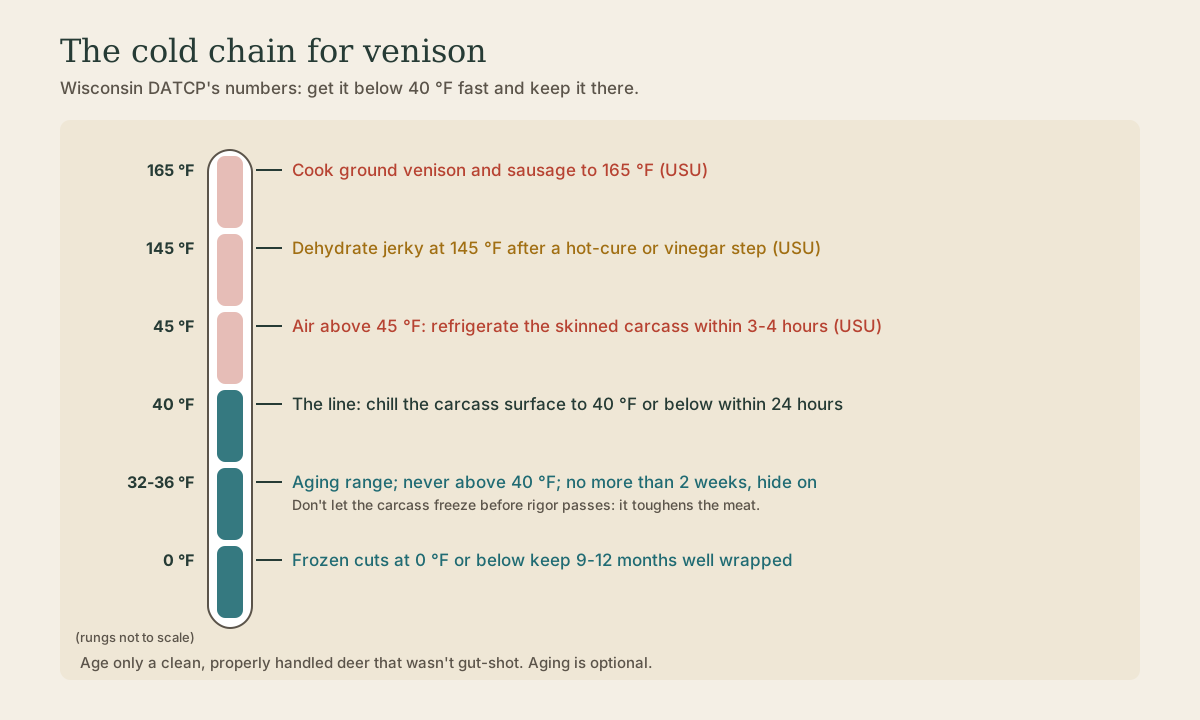
Above 40 °F, bacteria that cause foodborne illness grow quickly, so chill the carcass surface to 40 °F or below within 24 hours 2. If the air is above 45 °F, get the skinned carcass into refrigeration within about 3-4 hours 3. Hold it at 40 °F or less, but don’t let it freeze before rigor mortis passes, which toughens the meat 2.
Aging
Aging lets the meat’s own enzymes tenderize it.
- Range: 32-36 °F, never above 40 °F 2; Utah State suggests 34-36 °F in a clean, dry, well-ventilated place 3.
- Time: no longer than 2 weeks 2; many hunters stop at about a week.
- Hide on during cold aging to limit shrinkage and discoloration 2.
- Only a good carcass: age a deer only if it’s been handled properly, is clean, and wasn’t gut-shot 2.
- Optional: aging isn’t needed for meat headed for sausage or grind 3. Moisture encourages mold, so a walk-in cooler or a dedicated refrigerator is best 3.
Quick check
Wisconsin DATCP also says no longer than 2 weeks, and only a clean deer that wasn’t gut-shot.
Quick check
Hold it cold, at 40 °F or less, but not frozen, until rigor is over.
When it’s warm
Wisconsin’s November rifle season can be shirtsleeve weather. Venison hanging without refrigeration in warm weather spoils 2. Options:
- Skip aging. Skin and quarter the deer and get the quarters into a refrigerator, a cooler on ice, or a processor’s cooler the same day 2.
- Coolers: put the quarters in food-grade bags (not trash bags, which may contain toxic resins) over ice, drain the meltwater, and keep the cooler in the shade 2.
- Age in a refrigerator instead: quarters or deboned muscles in a refrigerator at 34-38 °F for a few days.
Quick check
Aging is optional; warm hanging deer spoil.
Try it
Before the season, set up a place to hang and skin a deer: a gambrel, a stout beam or tree limb, a hoist or come-along, a clean tarp underneath, and a thermometer where it will hang. Check the thermometer’s readings on a few November nights.
What to take from this
Hang by the hind legs, skin soon, cut from the inside so no hair reaches the meat, and trim bloodshot areas. Chill the carcass surface to 40 °F within 24 hours, faster in warm weather, but don’t freeze it before rigor passes. Age only a clean, properly handled, non-gut-shot deer, at 32-36 °F with the hide on, for no more than two weeks; in warm weather, skip aging and get the meat cold right away.
Lesson complete
Nice work.
Sources for this lesson
- 1Catherine N. Cutter. Field Dressing Deer Pocket Guide. Penn State Extension. 2015. verifiedGloves and clean knife between cuts; tie a leg or prop the carcass; shallow cut at the bottom of the breastbone; two fingers in a V, blade up, to the pelvis; split breastbone and pelvis; cut around and tie off the anus; free the diaphragm; roll out the entrails and remove windpipe and esophagus; bag and chill heart and liver; discard if organs smell bad or look abnormal; prop open, clean, dry; ice or snow in bags in the cavity; skin and refrigerate below 40 °F at home or camp.
- 2Caring for Venison in Warm Weather (DFS-MB-023). Wisconsin Department of Agriculture, Trade and Consumer Protection. 2013. verifiedField-dress immediately; ice or snow in sealed bags above 40 °F; don't carry deer on the hood or roof or in a trunk; chill the carcass surface to 40 °F within 24 hours; gloves; discard if organs smell offensive or show green discharge or black blood; food-grade bags, not trash bags; aging 32-36 °F, never above 40 °F, no longer than 2 weeks, hide on, only if clean and not gut-shot; don't freeze before rigor; limit sawing through bone, especially the spine; freeze at 0 °F, 9-12 months; thaw in the refrigerator.
- 3Margie P. Memmott, Brian A. Nummer, Charlotte P. Brennand. Venison. Utah State University Extension. 2017. verifiedRefrigerate the skinned carcass within 3-4 hours if air is above 45 °F; age at 34-36 °F in a clean, dry place; aging optional for sausage; trim venison fat for its strong flavor; sausage with pork or beef fat, cooked to 165 °F; jerky by hot-cure or vinegar methods dried at 145 °F; pressure-can only; frozen cuts 1 year, ground 6-9 months.