Beef Primals and Cuts
Beef on the farm: choosing an animal for the meat you want, dressing percentage and what a steer really yields, keeping knives sharp by grinding, honing, and steeling, stunning and bleeding, quartering between the last two ribs, chilling and aging, and the primal cuts of each quarter.
- 5 min
- 8 steps
- 3 questions
- Lesson 44 of 55
In this lesson
- Choose the animal for the meat
- What a steer yields
- Keep the knives sharp
- Stun, bleed, and dress
- Quartering
- Chill and age
- Try it
- What to take from this
Picking up where you left off.
Choose the animal for the meat
USDA’s bulletin is blunt about expectations 1:
- For meat like U.S. Choice: a 1,000- to 1,200-pound steer or 900- to 1,000-pound heifer on full feed at least 150 days. Feeding time builds fat in the lean (marbling), and the outside fat that comes with it is mostly trimmed off.
- For leaner beef: a steer or heifer grown on forage to 800 to 900 pounds.
- Under 17 to 18 months, properly cooked beef should be reasonably tender. Grass-fed yearlings of 400 to 600 pounds are lean and tender but less flavorful.
- “Many persons who slaughter on the farm expect the meat from an 800-pound forage-fed steer to taste like U.S. Choice or Prime.” It won’t.
Care is the same as for a hog: pen it clean and dry the day before, no feed for 24 hours, water always, and keep it calm 1.
What a steer yields
- Dressing percentage: a well-fed steer’s carcass is about 60 percent of live weight. A 1,000-pound steer gives a 600-pound carcass 1.
- Cutting loss (bone and fat trim) runs 20 to 30 percent or more. At 25 percent, that 600-pound carcass gives about 450 pounds of meat, and anywhere from 300 to 550 depending on fat 1.
- Rule of thumb: a quarter waste, a quarter ground beef and stew meat, a quarter steaks, and a quarter roasts 1.
Quick check
After a typical 25 percent cutting loss, that’s about 450 pounds of meat.
Keep the knives sharp
The beef bulletin’s knife routine applies to all butchering 1:
- Grind a new knife’s bevel on a water- or oil-cooled stone, no more than 1/4 inch back from the edge, the same on both sides.
- Hone on a fine stone set in a block or on a damp cloth: push down only with the guiding fingers (sideways pressure is how fingers get cut), and sweep heel to tip.
- Steel often, on a smooth steel, at 20 to 25 degrees, alternating sides.
Test on your thumbnail: a sharp edge bites in; a dull one slides; a wire edge rasps 1.
Stun, bleed, and dress
On the farm, stun with a .22 long rifle bullet aimed where lines from each side of the poll to the opposite eye cross, with the animal tied to a tree or strong post. Bleed within 2 minutes: grasp the lower jaw, pull the head back, and cut across the throat ear to ear as deeply as possible 1. Dressing (removing the legs, siding, opening the brisket, hoisting, rumping, and gutting) is laid out step by step in the bulletin 1 and follows the same principles as skinning a hog: open the hide from the inside out, blade up, keep hair and dirt off the meat, and tie off the bung 2. A beef carcass needs a beam or limb 12 to 15 feet up 1.
Quartering
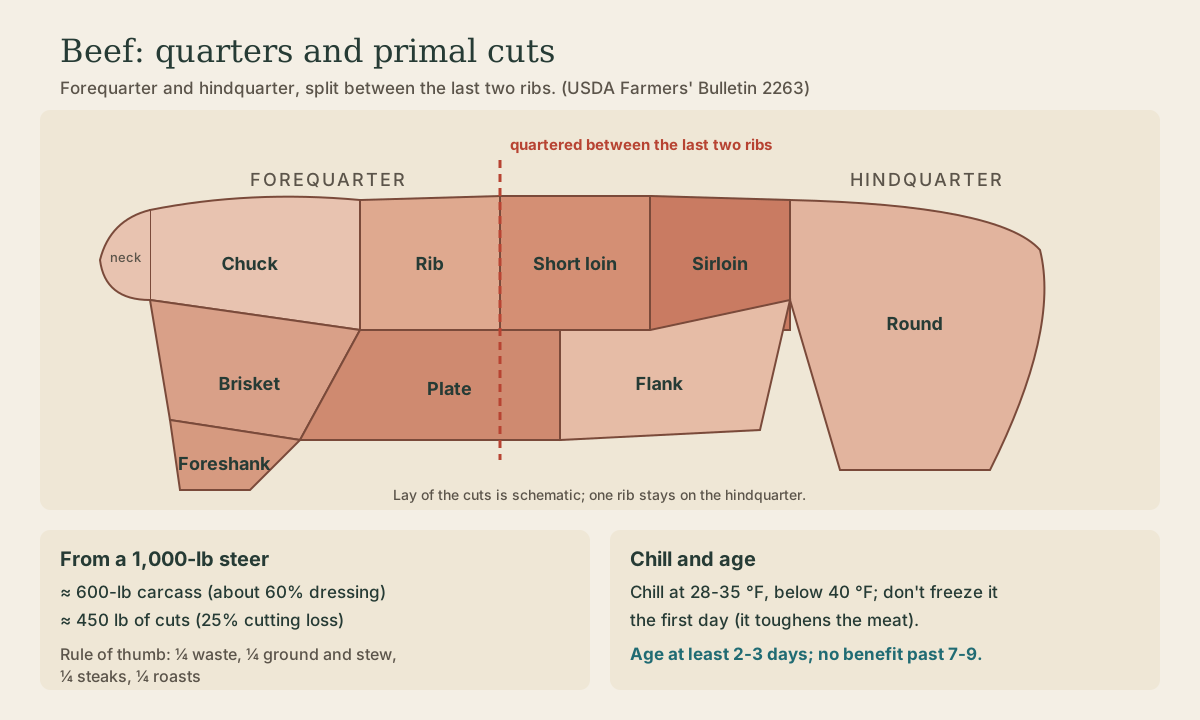
Split the carcass down the backbone into sides, then separate each side into quarters between the last two ribs, leaving one rib on the hindquarter 1. Leave a 4-inch strip uncut on the flank side while sawing so the forequarter doesn’t drop; cut it when someone is holding the quarter 1.
- Forequarter: chuck, rib, brisket, plate, and foreshank. For a novice, the bulletin separates the chuck from the rib between the sixth and seventh ribs, a rib farther back than retail practice, because an older animal’s blade cartilage may have turned to bone 1. The chuck then splits into blade and arm sections; the fourth to sixth rib ends make short ribs or ground beef.
- Hindquarter: flank first, then the loin (short loin and sirloin) and the round 1.
Quick check
That line separates the rib (forequarter) from the short loin (hindquarter).
Chill and age
Chill at 28 to 35°F, below 40°F, and don’t let it freeze the first day 1. Then age at least 2 to 3 days so rigor is complete; “there is no benefit to aging beyond 7 to 9 days,” and long aging can shorten freezer life 1.
Cutting orders for a locker plant: loin and rib steaks an inch or more for broiling, round and chuck steaks 1/2 to 3/4 inch for braising, about 3/4 pound bone-in per person, 1/2 pound per serving for ground beef 1.
Playback is optional. If the player is unavailable, open the video at its source.
Quick check
Long aging can shorten freezer life.
Try it
Price a quarter of beef from a local farm with your own numbers: ask the hanging weight, multiply by 0.75 for take-home meat, and divide the total price (including processing) by that. Then write a cutting order for a hindquarter: steak thickness, roast sizes, and how much goes to ground beef.
What to take from this
Choice-like beef needs a grain-finished animal of about 1,000 pounds on feed 150 days; forage-raised beef is leaner and won’t taste like Choice. A steer dresses at about 60 percent, and after 25 percent cutting loss a 1,000-pound steer gives about 450 pounds of meat: a quarter each waste, ground, steaks, and roasts. Grind, hone, and steel knives at 20 to 25 degrees. Quarter between the last two ribs, chill below 40°F without freezing, and age 2 to 3 days, never past 7 to 9.
Lesson complete
Nice work.
Sources for this lesson
- 1H. Russell Cross. Beef Slaughtering, Cutting, Preserving, and Cooking on the Farm (Farmers' Bulletin 2263). U.S. Department of Agriculture (Project Gutenberg edition). 1977. verifiedPen clean and dry, no feed 24 hours, water always; 1,000-1,200 lb steer or 900-1,000 lb heifer on full feed 150 days for Choice-like meat, under 17-18 months for tenderness; dressing about 60 percent, cutting loss 20-30 percent, rule of thumb one-quarter each waste, ground and stew, steaks, roasts; knife sharpening by grinding, honing, and steeling at 20-25 degrees, thumbnail test; stun with a .22 at the crossing of lines from poll to opposite eyes; bleed within 2 minutes; quarter between the last two ribs leaving one on the hindquarter; chill at 28-35 F, below 40 F, don't freeze the first day; age at least 2-3 days, no benefit beyond 7-9; forequarter separated between the sixth and seventh ribs for novices.
- 2H. Russell Cross. Pork Slaughtering, Cutting, Preserving, and Cooking on the Farm (Farmers' Bulletin 2265). U.S. Department of Agriculture (Project Gutenberg edition). 1978. verifiedIssued June 1978, revised 1981. Sausage from trimmings, more than 50 percent lean, 20-30 percent fat, ground through 1/2-in. then 1/8-in. plates, 2 lb salt, 6 oz pepper, 1-2 oz sage per 100 lb, seasoned sausage frozen no more than 2-3 months; dry cure 8-2-2 in three rubs, 36-42 F, bellies about 7 days per inch; sweet pickle cure 3-1/2 to 4 days per pound, ropy brine; soak 2 minutes per day in cure; smokehouse from a barrel and buried stovepipe; hardwoods only; ham and bacon smoking schedules; trichinae destroyed at 137 F or by specified freezing; lard rendering near 212 F and never above 255 F, leaf fat best, organ fat separately, no copper or brass, cool fast and stir to creamy.