Kombucha
Fermented sweet tea made safely: what a SCOBY is, the sugar and starter proportions, 7 to 10 days at 60 to 70 °F, why pH must fall to 4.2 but not below 2.5, bottling for a second fermentation without exploding bottles, mold versus a healthy culture, and the alcohol question.
- 5 min
- 8 steps
- 3 questions
- Lesson 28 of 55
In this lesson
- What it is
- The brew
- Why pH matters
- Bottling and second fermentation
- A healthy culture, and mold
- Alcohol
- Try it
- What to take from this
Picking up where you left off.
What it is
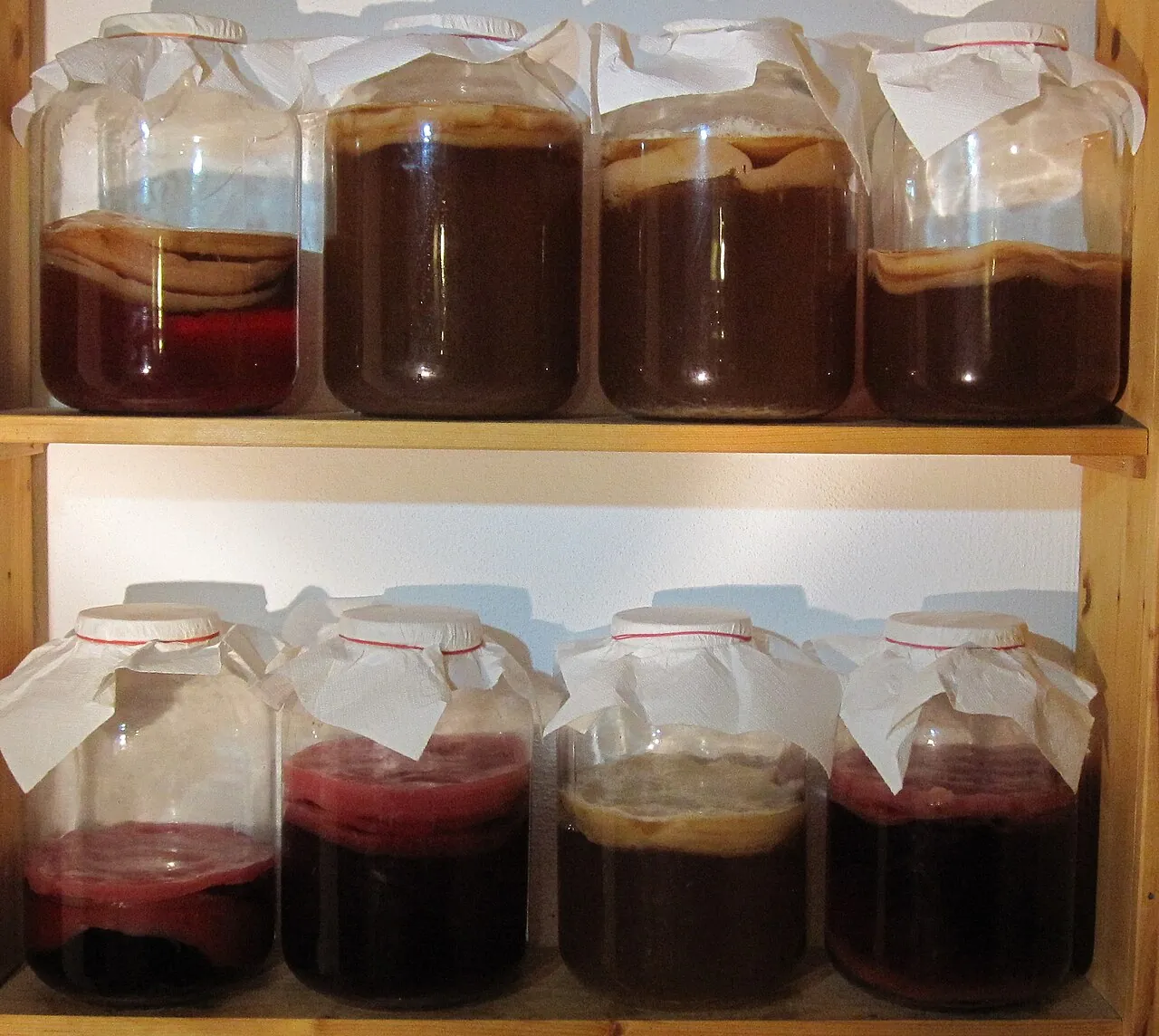
Kombucha is sweetened tea fermented by a SCOBY, a symbiotic culture of bacteria and yeasts that floats on top as a rubbery cellulose mat 1. The yeasts turn sugar into alcohol and carbon dioxide; the bacteria (Acetobacter and Gluconobacter among them) turn the alcohol into acids. The result is a tart, slightly fizzy drink.
Unlike sauerkraut, kombucha has no tested consumer recipe from a food-safety lab; the safety rests on sanitation, a good starter, and getting the acidity right 1 2.
The brew
Kansas State’s guidance 1:

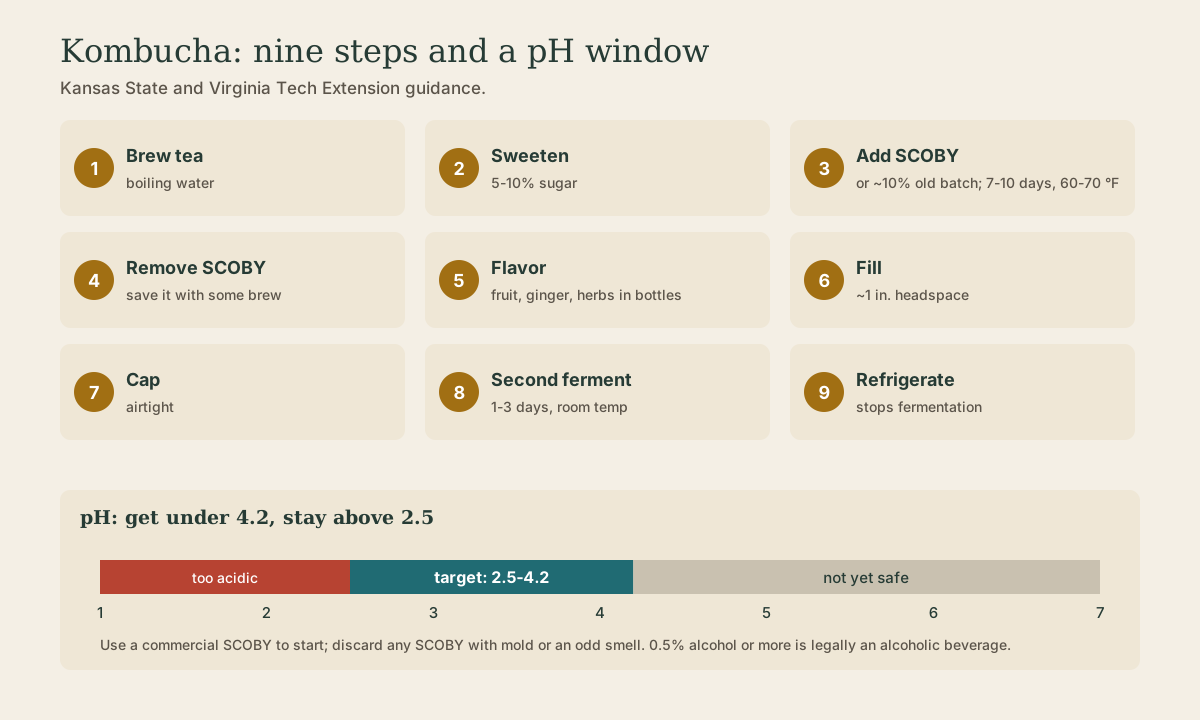
- Tea: black or green tea steeped in boiling water; Virginia Tech says water above 165 °F 2.
- Sugar: 5 to 10% of the tea by weight, dissolved while hot. A quart of water weighs about 2 lb, so 5-10% is roughly 1/4 to 1/2 cup of sugar per quart.
- Cool the sweet tea to room temperature before adding the culture.
- Starter: a SCOBY, or about 10% of the volume as finished kombucha from a previous batch. Start your first batch with a commercial SCOBY: it’s produced under controlled conditions, free of contaminants, with a reliable mix of microbes 1.
- Ferment 7 to 10 days at 60-70 °F, covered with a clean, porous cloth, in a non-metallic food-grade container such as glass 1 2.
Quick check
After that, save the SCOBY and some finished brew (about 10%) for the next batch.
Why pH matters
The acid is the safety factor. Virginia Tech’s rule: the brew must reach pH 4.2 or lower during fermentation, and should never drop below 2.5, which is dangerously acidic 2. Over-fermented kombucha can end up vinegar-sour; a weak, slow ferment can leave the pH high enough for harmful organisms. Kansas State calls regular pH monitoring and a controlled fermentation time essential 1.
At home that means pH strips or an inexpensive meter, checked at day 7 and again before bottling.
Quick check
Below 4.2 keeps pathogens out; below 2.5 it’s dangerously acidic.
Bottling and second fermentation
After the first fermentation 1:
- Lift out the SCOBY and set it aside with some kombucha for the next batch.
- Put flavorings (chopped fruit, ginger, herbs) into clean bottles.
- Fill with kombucha, leaving about 1 inch of headspace, and cap tightly.
- Leave at room temperature 1 to 3 days to build carbonation.
- Refrigerate once it tastes right, which stops the fermentation.
Fruit adds sugar, so pressure builds fast in warm bottles. Use bottles made for carbonated drinks, and open one test bottle a day over the sink.
Playback is optional. If the player is unavailable, open the video at its source.
Quick check
Sealed bottles left warm keep building carbonation.
A healthy culture, and mold
A healthy SCOBY is pale tan to cream, sometimes with brown stringy yeast strands hanging from it; new layers form on top with each batch. Mold looks different: dry, fuzzy spots, white with blue or green, sitting on the surface. Don’t reuse a SCOBY that smells unusual or shows mold; throw out the batch and start over with a fresh culture 2.
Alcohol
Fermentation always makes some alcohol. Under federal law, kombucha with 0.5% alcohol by volume or more at any point is an alcoholic beverage, which is why sellers have to test and track it 1. Home brew, especially with a long, warm second fermentation, can pass that line.
Try it
Brew a gallon with a commercial SCOBY: 1 gallon of water, 8 tea bags of black tea, 1 cup of sugar (about 5%), and 2 cups of starter liquid. Check the pH at days 5, 7, and 10 and taste each time; bottle when it’s below 4.2 and tart enough, with a few slices of ginger per bottle.
What to take from this
Kombucha is sweet tea (5-10% sugar) fermented by a SCOBY for 7-10 days at 60-70 °F in glass. Start with a commercial culture, then keep a SCOBY and about 10% of the brew for the next batch. Check that the pH falls to 4.2 or below but not under 2.5. Bottle with about an inch of headspace, second-ferment 1-3 days, and refrigerate. Discard any moldy or off-smelling culture, and remember that 0.5% alcohol is the legal line.
Lesson complete
Nice work.
Sources for this lesson
- 1Kelly Getty, Rashmi Gaikwad. Kombucha Fermentation (MF3672). Kansas State University Research and Extension. 2024. verifiedSweet tea with 5-10% sugar, a SCOBY or about 10% of a previous batch as starter, 7-10 days at 60-70 °F; start with a commercial SCOBY; monitor pH; nine steps including bottling with about 1 in. headspace and a 1-3 day second fermentation, then refrigerate; 0.5% alcohol by volume or more makes it an alcoholic beverage under federal law.
- 2Joell Eifert, Renee Boyer, Emily Pomfrey Wells, Thomas Saunders, Lily Yang. What Do I Need to Know to Sell Kombucha at the Farmers Market? (FST-297). Virginia Cooperative Extension. 2019. verifiedSteep tea in water above 165 °F, add 10% inoculum, ferment 7-10 days in a non-metallic food-grade container; pH must reach 4.2 or lower and should not fall below 2.5; discard a SCOBY with mold or an unusual smell.