Heating with Wood: Stoves and Chimneys
Setting up and running a wood stove so it heats the house and not the walls: the stove's listing label or 36-inch clearances, a floor pad 12 inches past the sides and 18 past the door, stovepipe that rises and has its crimped ends pointing down, a listed all-fuel chimney that follows the 3-2-10 rule, firewood under 20% moisture, hot fires instead of smoldering ones, a look up the flue after every cord, and exactly what to do in a chimney fire.
- 6 min
- 7 steps
- 4 questions
- Lesson 16 of 55
In this lesson
- Clearances
- Stovepipe
- The chimney
- Dry wood and hot fires
- Creosote
- Try it
Picking up where you left off.
A good wood stove can heat a Wisconsin house on a few cords a winter. A badly installed or badly run one is one of the most common ways a house burns down. Both outcomes come down to a handful of rules: how far the stove sits from things that burn, how the smoke gets out, and how dry the wood is.
Clearances
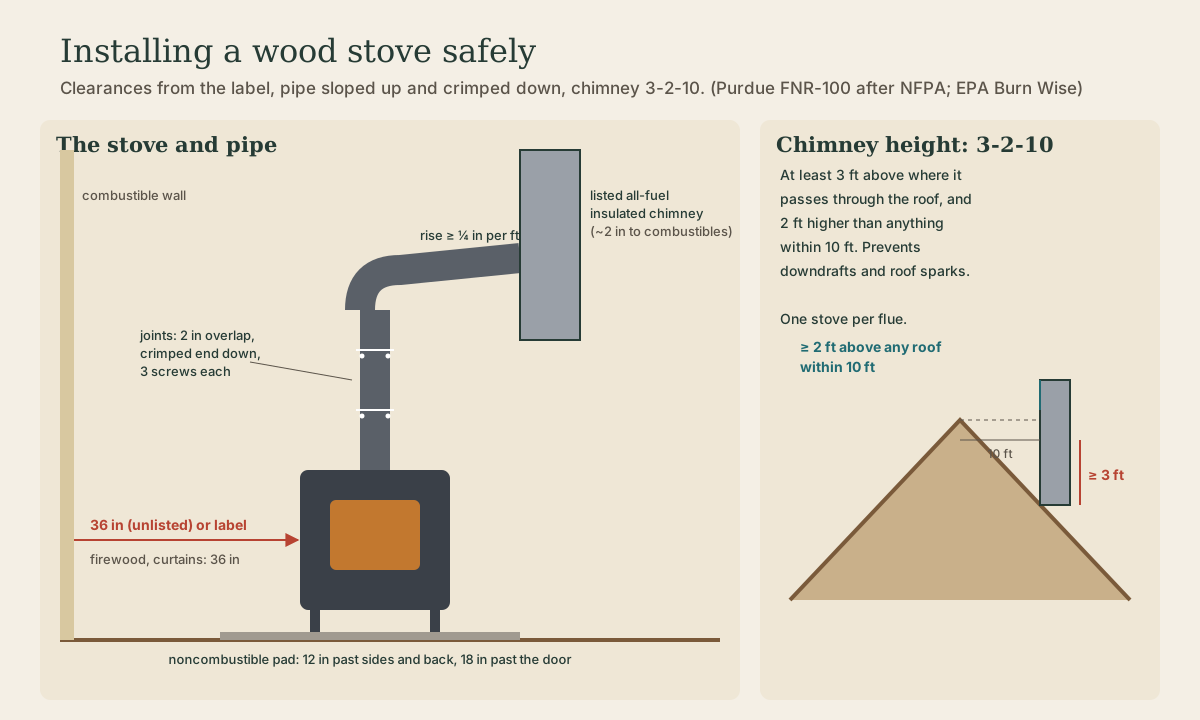
Stoves heat the walls around them by radiation, and wood framing behind drywall can char and ignite at temperatures far below a flame. Purdue’s extension bulletin, written from the National Fire Protection Association’s rules, gives the unprotected minimums for an unlisted radiant stove 1:

- 36 inches to combustible walls and to the ceiling above.
- 18 inches from single-wall stovepipe to combustibles.
- 36 inches for firewood, curtains, furniture, and paper 1.
A listed stove, one tested to a UL standard and labeled, comes with its own clearances on the back plate, often much smaller. Follow the label and the manual; they’re what an inspector and your insurer will check.
Clearances can be reduced with wall shields of sheet metal or noncombustible board spaced an inch out from the wall on noncombustible spacers, open at the bottom so air circulates behind them. Brick or stone laid flat against a wall protects very little, because masonry conducts heat straight through 1. A quick check: with the stove running hard, you should be able to hold your hand on the nearest wall 1.
Floors need protection too, unless the stove sits on concrete: a noncombustible pad extending 12 inches past the sides and back and 18 inches past the loading door, where coals fall out 1.
Quick check
A listed stove’s label may allow less. Shields spaced an inch out with air behind them allow reductions; brick laid flat against the wall does not.
Stovepipe
The stovepipe (connector) runs from the stove to the chimney 1:
- Same diameter as the stove’s outlet; 24-gauge steel or heavier.
- Any horizontal run must rise at least ¼ inch per foot toward the chimney.
- Each joint overlaps about 2 inches with the crimped (male) end pointing down toward the stove, so liquid creosote runs back inside instead of leaking out.
- Three sheet-metal screws per joint.
- One 90° elbow is best, two at most.
- Never run a stovepipe through a wall, ceiling, or closet. Use a listed thimble or chimney section where you go through anything combustible.
Quick check
Liquid creosote running down stays inside the pipe instead of leaking out at the joints.
The chimney
Use either a lined masonry chimney in good condition or a UL-listed all-fuel prefabricated chimney; the insulated double-wall type usually needs 2 inches from combustibles and stays warm, so it collects less creosote 1. Give each stove its own flue 1.
Height follows the 3-2-10 rule: the chimney must be at least 3 feet above where it passes through the roof and at least 2 feet higher than any part of the roof within 10 feet horizontally 1. A short chimney drafts poorly, smokes into the room when the wind blows, and drops sparks on the shingles.
Quick check
The 3-2-10 rule prevents downdrafts and keeps sparks off the roof.
Dry wood and hot fires
The single biggest factor in a clean, efficient, safe stove is dry wood. The EPA’s guidance 2:
- Season split wood at least six months, stacked off the ground with only the top covered; covering the sides traps moisture.
- Burn it under 20% moisture. Split a piece and press a moisture meter into the fresh face.
- Build hot fires. A smoldering, air-starved fire makes smoke, wastes wood, and coats the flue.
- Keep the doors closed except to load, so carbon monoxide stays out of the room.
- Never burn trash, cardboard, plastic, painted or pressure-treated wood, plywood, or particle board.
Playback is optional. If the player is unavailable, open the video at its source.
Creosote
Smoke is fuel that didn’t burn. As it rises and cools in the pipe and chimney, it condenses on the walls as creosote: first a black liquid, then a crust. Given enough of it, a hot fire ignites it, and a chimney fire burns hot enough to crack masonry and ignite framing and the roof 1.
You can’t stop creosote completely, but you can keep it small 1:
- Burn seasoned wood.
- After starting a fire or loading, run it hot for 10–20 minutes before turning the air down.
- Look up the flue after every cord or at least once a year and brush it when deposits build. Modern airtight stoves can build creosote faster than old leaky ones 1. EPA also recommends a yearly inspection by a certified professional 2.
- Empty ashes into a covered metal can and set it outside on a noncombustible surface 2.
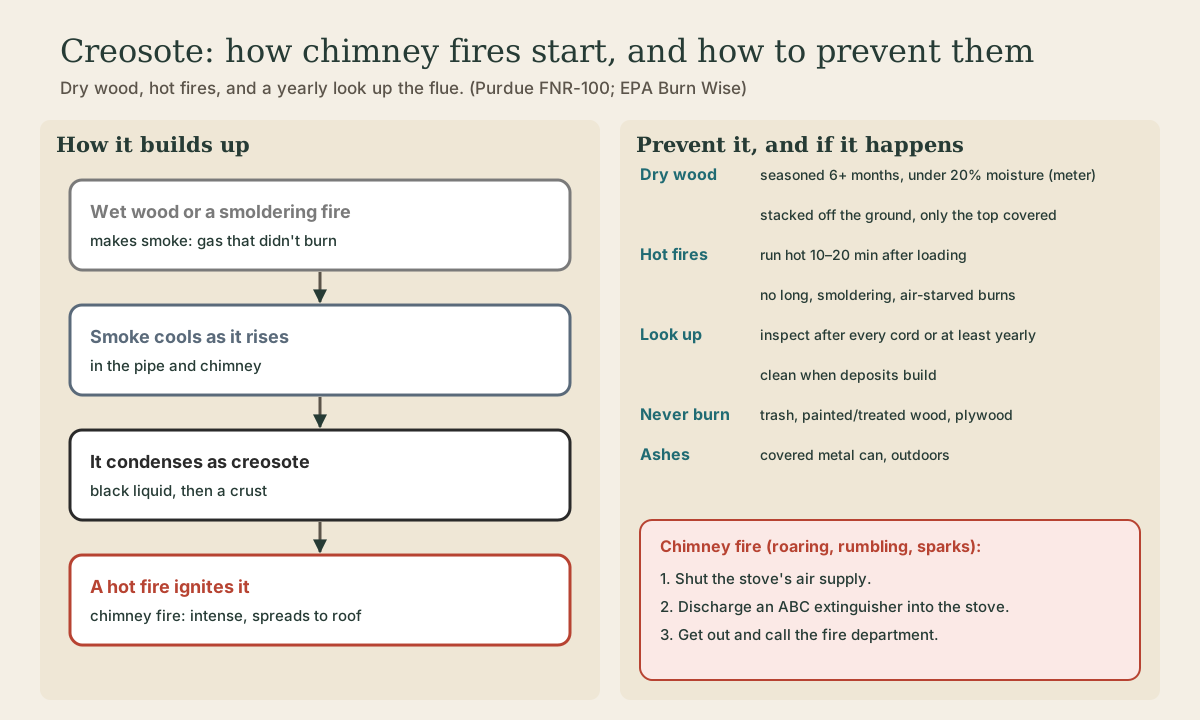
If you have a chimney fire (a roar like a train, the pipe glowing, sparks out the top): shut the stove’s air supply, discharge an ABC dry-chemical extinguisher into the stove, and get out and call the fire department 1. Have the chimney inspected before using it again.
Quick check
Smoke is unburned fuel; when it cools in the flue, it condenses as creosote.
Try it
Measure your stove’s clearances against its label, or 36 inches if it has none. Check that every pipe joint has the crimp pointing down and three screws. Go outside and measure the chimney against the 3-2-10 rule. Then buy a moisture meter, split a piece from the middle of your woodpile, and see if it reads under 20%.
Lesson complete
Nice work.
Sources for this lesson
- 1Wood Stove Installation and Operation (FNR-100). Purdue University Cooperative Extension Service (after NFPA recommendations). 1986. verifiedUnprotected clearances for a radiant stove 36 in to combustible walls and ceiling (circulating 12 in, stovepipe 18 in), reducible with shields spaced 1 in out with air circulation; brick or stone against a wall gives little protection unless spaced out; floor protection 12 in beyond the sides and 18 in beyond the door side; other combustibles 36 in away. Stovepipe 24-gauge or heavier, same diameter as the outlet; horizontal runs rise at least 1/4 in per foot toward the chimney; joints overlap about 2 in, crimped end down, three sheet-metal screws each; preferably one 90-degree elbow, two if needed. Prefabricated chimneys must be UL-listed all-fuel, insulated type usually 2 in clearance. Chimney at least 3 ft above the roof penetration and 2 ft above any roof within 10 ft; one appliance per flue. Creosote forms when smoke cools and condenses; burn seasoned hardwood, run hot 10-20 minutes after loading, inspect after every cord or at least yearly; in a chimney fire limit air, discharge an ABC extinguisher into the stove, call the fire department. (Older publication; asbestos-board shielding it mentions is no longer used; follow the stove's listing and current code.)
- 2Best Wood-Burning Practices (Burn Wise). U.S. Environmental Protection Agency. verifiedThe Burn Wise program ran 2009-2025; the site is now a historic record. Burn only dry, split wood seasoned at least six months, stored off the ground with only the top covered; wood burns best under 20% moisture, checked with a moisture meter. Build hot fires; smoldering fires are neither safe nor efficient; keep doors closed (carbon monoxide). Remove ashes to a covered metal container outdoors. Never burn trash, cardboard, plastics, painted or treated wood, plywood, particle board, or wet or moldy wood. Buy local firewood. Have the appliance and chimney inspected annually by a certified professional.