Planning a Vegetable Garden
Planning a Wisconsin vegetable garden that works: a site with 6–8 hours of sun, good drainage, out of frost pockets and 50 feet from black walnuts; perennials on the north side, tall crops behind short ones, rows east to west, and beds grouped by plant family so they can rotate; then timing by soil temperature rather than the calendar: cabbage family started indoors in mid-March, tomatoes and peppers in mid-April, cool-season crops in at 50 °F soil in late April, warm-season crops at 60–70 °F soil around Memorial Day, and squash and melons in early June.
- 4 min
- 5 steps
- 3 questions
- Lesson 4 of 55
In this lesson
- Pick the site
- Lay it out
- Time it by soil temperature
- Fertilize and mulch
- What to take from this
Picking up where you left off.
Pick the site
The site decides more than any variety you choose. UW Extension’s checklist 1:
- Sun: 6 to 8 hours of direct sun for fruiting crops like tomatoes, peppers, squash, and corn. Leafy greens and herbs tolerate a few hours less; beets, carrots, chard, kale, and turnips get by in part shade of 4 to 6 hours 1.
- Drainage: well-drained soil, and not in a low spot, where cold air pools on still nights and frost comes earliest in fall and latest in spring 1.
- Black walnut: keep at least 50 feet away 1. Walnut roots and leaves release juglone, a compound that stunts or kills tomatoes and many other vegetables.
- Close to the house and to water, because a garden you walk past every day gets weeded and picked.
Quick check
The compound is juglone.
Lay it out
Sketch the garden on paper with north at the top, then 1:

- Put perennials (asparagus, rhubarb, berries) along the north or northwest side, where they won’t be tilled and won’t shade anything.
- Put tall crops (corn, pole beans, trellised tomatoes and cucumbers) to the north of short ones so they don’t shade them.
- Run rows east to west.
- Group crops by plant family: tomato family (tomatoes, peppers, eggplant, potatoes), cabbage family (cabbage, broccoli, kale, radishes, turnips), squash family (squash, cucumbers, melons, pumpkins), and legumes (beans, peas).
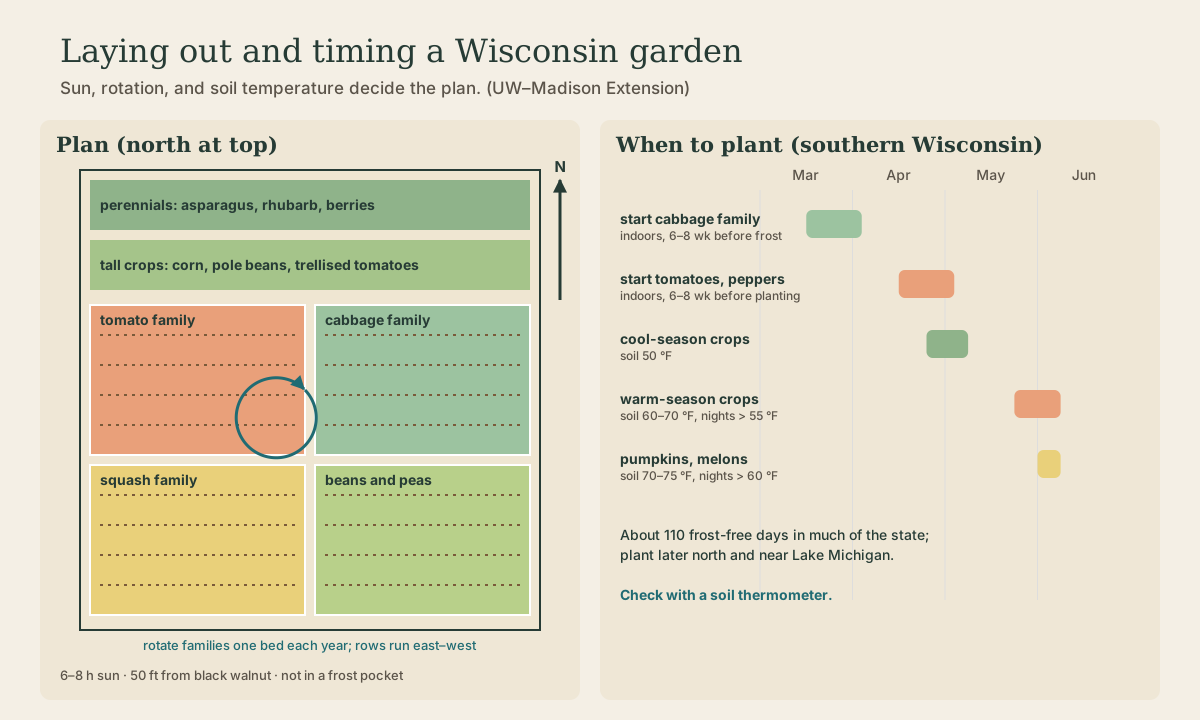
Why families? Diseases and insects that attack one crop usually attack its relatives too, and they overwinter in the soil and debris where their hosts grew. Moving each family to a different bed every year, in a three- or four-year cycle, keeps them from building up, and legumes leave a little nitrogen behind for whatever follows. That’s the reason to lay the garden out as four equal beds from the start.
Playback is optional. If the player is unavailable, open the video at its source.
Quick check
Perennials like asparagus and rhubarb go along the north edge too.
Time it by soil temperature
Wisconsin has roughly 110 frost-free days 1, so timing matters. Use soil temperature, not the calendar; a soil thermometer is cheap.
Start indoors under lights:
- Cabbage family: 6 to 8 weeks before the last spring frost, mid to late March in southern Wisconsin 1.
- Tomatoes, peppers, eggplant: 6 to 8 weeks before they go out, mid to late April 1.
- Harden off transplants for 7 to 10 days, setting them outside a little longer each day 1.
Plant outdoors (southern Wisconsin) 1:
| Crops | When | Soil temperature | Nights |
|---|---|---|---|
| Cool-season: peas, lettuce, spinach, onions, cabbage family | late April to the first week of May | 50 °F | |
| Warm-season: tomatoes, peppers, beans | last week of May to the first week of June | 60–70 °F | above 55 °F |
| Pumpkins, melons, sunflowers | first week of June | 70–75 °F | above 60 °F |
Pumpkins, melons, beans, and sunflowers go straight into the ground as seed after frost rather than being transplanted 1. Plant later in central and northern Wisconsin, where spring arrives one to three weeks behind Madison.
Quick check
Soil temperature is a better guide than the date.
Fertilize and mulch
Work compost in before planting, and side-dress fruiting crops again when tomatoes and cucumbers begin to set fruit 1. Mulch after the soil warms with clean straw, untreated grass clippings, or shredded leaves to hold moisture and smother weeds; black plastic warms the soil 5 to 10 °F for heat-loving crops 1.
What to take from this
Choose a site with 6–8 hours of sun and good drainage, out of frost pockets and 50 feet from black walnut. Put perennials on the north edge and tall crops north of short ones, run rows east–west, and group beds by plant family so you can rotate them each year. Start the cabbage family indoors in mid-March and tomatoes in mid-April, then plant by soil temperature: 50 °F for cool-season crops in late April, 60–70 °F with warm nights for warm-season crops around Memorial Day, and 70–75 °F for squash and melons in early June.
Lesson complete
Nice work.
Sources for this lesson
- 1Vijai Pandian. Vegetable Gardening 101. UW–Madison Division of Extension, Kenosha and Racine Counties. 2022. verified6-8 hours of sun; well-drained, organic-rich soil; about 110 frost-free days. Start cole crops 6-8 weeks before the last spring frost (mid-late March) and tomatoes, peppers, and eggplant 6-8 weeks before transplanting (mid-late April); direct-seed pumpkins, melons, sunflowers, and beans after frost; harden off 7-10 days. Site 50 feet from black walnut, away from low spots; perennials (asparagus, rhubarb, berries) on the north or northwest side; group by family; tall crops to the north; rows east-west. Shade-tolerant crops: greens and herbs in 3 hours or less, roots and chard in 4-6. Raised beds 1:1 topsoil and compost; in-ground gardens 4-6 inches of compost. Plant cool-season crops late April to the first week of May at 50 F soil; warm-season crops the last week of May to the first week of June at 60-70 F soil with nights above 55 F; pumpkins and melons the first week of June at 70-75 F soil with nights above 60 F. Black plastic mulch warms soil 5-10 F; organic mulches; trap crops and companion plantings.