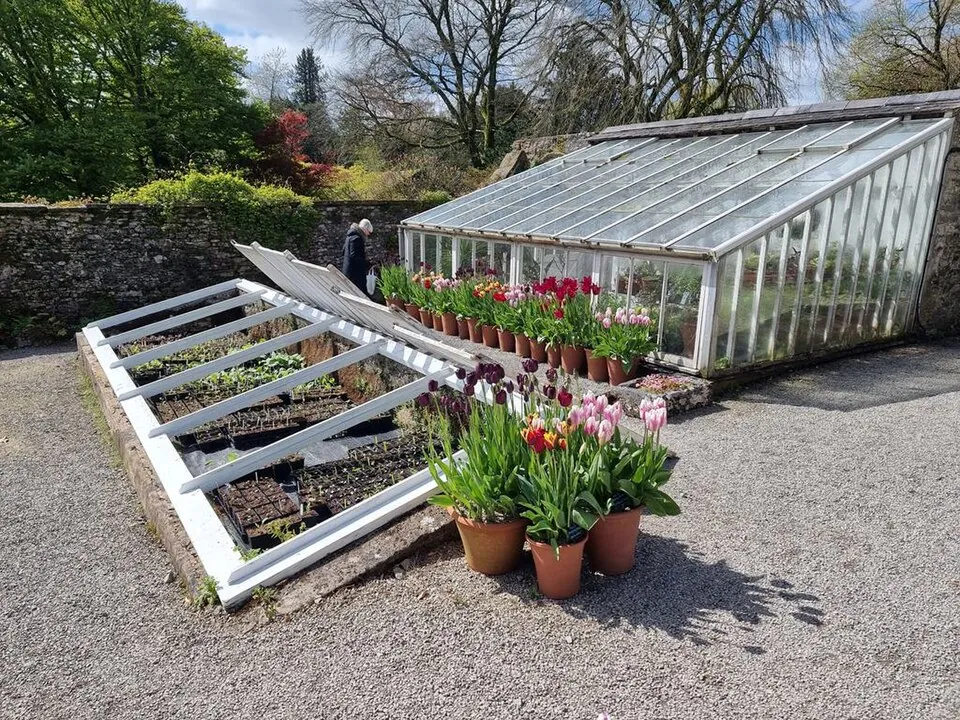
Season Extension
Getting more than 110 days out of a Wisconsin garden: floating row covers (5–10 °F warmer, frost protection to about 28 °F, and an insect barrier), cloches and hot caps (three to four extra weeks for tomatoes in spring), cold frames for hardening off and early and late greens, hoop houses of 4–6 mil polyethylene that add six to eight weeks, and black plastic that warms soil for heat lovers; plus the rule that every one of them must be vented on sunny days, and why fresh-manure hot beds don't belong in a food garden.
- 4 min
- 7 steps
- 3 questions
- Lesson 5 of 55
In this lesson
- Why bother
- Row covers
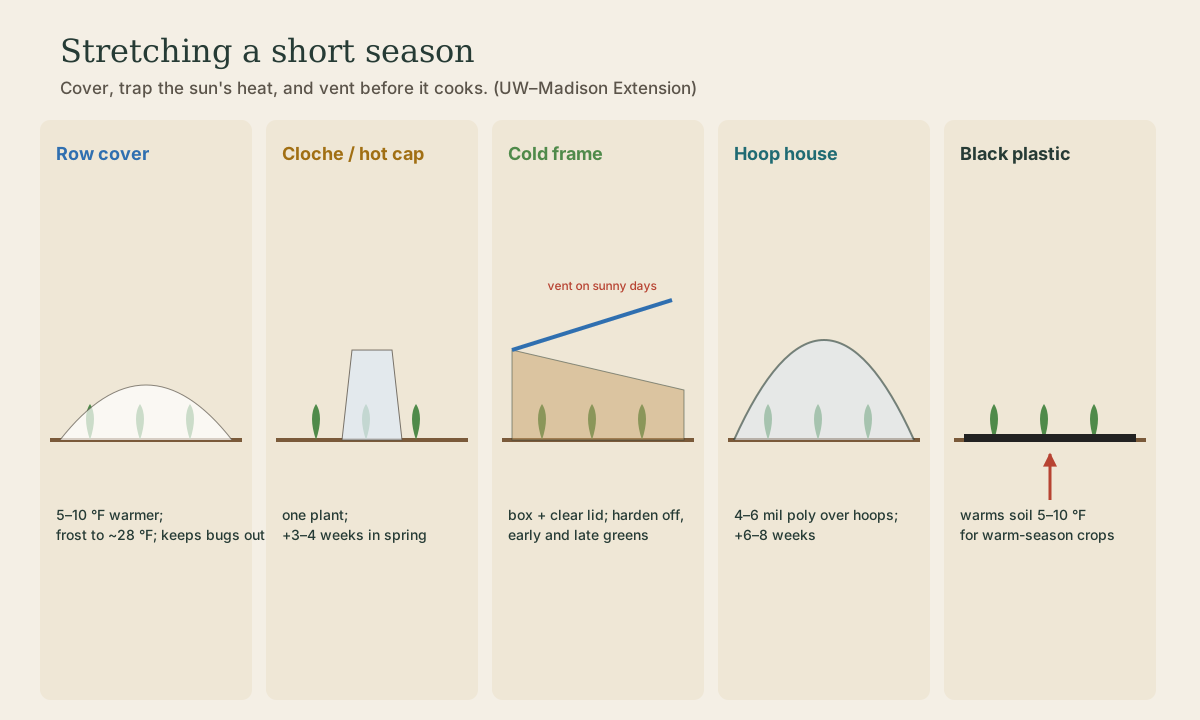
- Cloches and hot caps
- Cold frames
- Hoop houses
- Warming the soil
- What to take from this
Picking up where you left off.
Why bother
With roughly 110 frost-free days in much of Wisconsin 1, every week matters. Covers and structures that trap the sun’s heat let you plant earlier in spring and harvest later in fall; together they can stretch the season by six to eight weeks 2. They all work the same way: clear or translucent covers let sunlight in, the soil and plants warm, and the cover slows the heat from escaping at night.
Row covers
Floating row covers are lightweight fabrics of spun polyester or polypropylene laid right over the plants, letting light, air, and water through. They keep covered plants 5 to 10 °F warmer than uncovered ones and protect down to about 28 °F 2. They’re also excellent insect barriers, and they shield young plants from wind and pounding rain 2. Lay them loosely so plants can push them up, and weigh the edges down with soil or sandbags. For crops that need bees, such as squash and cucumbers, take them off when flowering starts.
Quick check
It also keeps insects like flea beetles off.
Cold frames
A cold frame is a bottomless box with a clear, hinged lid, and it’s the most useful and versatile season extender of all 2:

- harden off transplants in spring,
- grow lettuce, radishes, and spinach weeks before and after their normal outdoor season,
- store carrots and parsnips or force bulbs in winter 2.
Old storm windows make good lids; plexiglass or double-layer plastic is lighter 2. The danger isn’t cold. A closed frame in spring sun overheats fast and wilts or cooks the plants, so hinge the lid and prop it open on sunny days 2. An automatic vent opener that opens with heat solves the problem for the days you’re not home.
Add a thermostatically controlled heating cable in sand under a frame and it becomes a hot bed for germinating seeds in sunlight. The old method of heating with fresh manure isn’t recommended for food crops because of the food-safety risk 2.
Quick check
A closed frame in spring sun can get hot enough to wilt and cook plants.
Hoop houses
A hoop house is a cold frame you can walk into, or at least reach into: metal or plastic pipe bent into hoops over a bed, covered with 4 to 6 mil polyethylene buried at the edges. It adds six to eight weeks to the season 2. A low tunnel (hoops a couple of feet tall over a single bed) is the small, cheap version. Like a cold frame, a hoop house has to be vented on warm days by lifting the ends or sides 2.
Playback is optional. If the player is unavailable, open the video at its source.
Quick check
Weeks at both ends of the season add up in a 110-day climate.
Warming the soil
Black plastic mulch laid on the bed a week or two before planting warms the soil 5 to 10 °F 1, which helps tomatoes, peppers, melons, and squash, the crops that sulk in cold soil. Cut holes to plant through it.
What to take from this
Row covers give 5–10 °F and frost protection to about 28 °F, and they keep insects off. Cloches add three to four weeks for single plants. Cold frames are the most versatile: harden off, grow greens early and late, and vent them on sunny days. Hoop houses of 4–6 mil poly add six to eight weeks and need venting too. Black plastic warms the soil 5–10 °F for heat lovers. Skip fresh-manure hot beds for food crops.
Lesson complete
Nice work.
Sources for this lesson
- 1Vijai Pandian. Vegetable Gardening 101. UW–Madison Division of Extension, Kenosha and Racine Counties. 2022. verified6-8 hours of sun; well-drained, organic-rich soil; about 110 frost-free days. Start cole crops 6-8 weeks before the last spring frost (mid-late March) and tomatoes, peppers, and eggplant 6-8 weeks before transplanting (mid-late April); direct-seed pumpkins, melons, sunflowers, and beans after frost; harden off 7-10 days. Site 50 feet from black walnut, away from low spots; perennials (asparagus, rhubarb, berries) on the north or northwest side; group by family; tall crops to the north; rows east-west. Shade-tolerant crops: greens and herbs in 3 hours or less, roots and chard in 4-6. Raised beds 1:1 topsoil and compost; in-ground gardens 4-6 inches of compost. Plant cool-season crops late April to the first week of May at 50 F soil; warm-season crops the last week of May to the first week of June at 60-70 F soil with nights above 55 F; pumpkins and melons the first week of June at 70-75 F soil with nights above 60 F. Black plastic mulch warms soil 5-10 F; organic mulches; trap crops and companion plantings.
- 2Barb Larson. Extending the Gardening Season (University of Wisconsin Garden Facts XHT1158). UW–Madison Division of Extension. verifiedHoop houses, cold frames, hot beds, cloches, and floating row covers extend the season six to eight weeks. Cold frames are the most useful: harden off transplants, grow lettuce, radishes, and spinach early and late, store root vegetables, force bulbs; hinge the lid to vent on sunny days. Hot beds add soil heat with a thermostatically controlled cable; fresh-manure hot beds aren't recommended for food crops. Hoop houses: pipe hoops covered with 4-6 mil polyethylene buried at the base add six to eight weeks; ventilate the ends on warm days. Cloches and hot caps add three to four weeks in spring. Floating row covers of spun polyester or polypropylene keep plants five to ten degrees warmer, protect to about 28 F, and block insects.