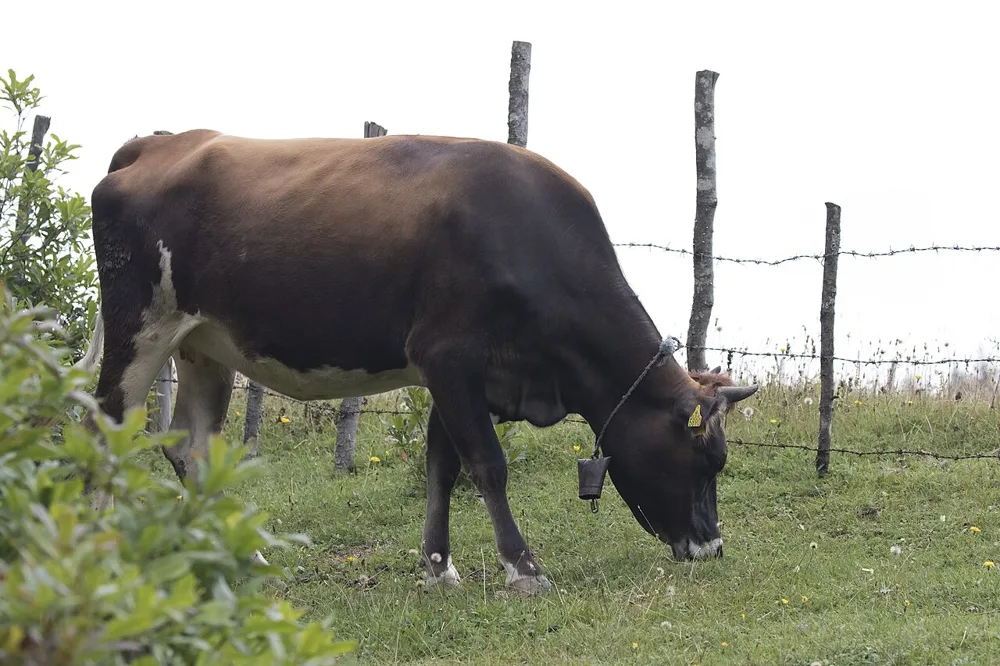
A Family Cow
What keeping a milk cow actually commits you to: a 12-month cycle of calving, about 305 days of milking (twice a day), breeding back by day 90 through 21-day heats, a 283-day pregnancy, and a 6–8 week dry period; colostrum for the calf and the freezer; drying off and feeding a dry cow without letting her get fat; watching for milk fever; and Wisconsin's raw-milk law, under which you can drink your own but can't sell it.
- 4 min
- 7 steps
- 3 questions
- Lesson 15 of 55
In this lesson
- The twelve-month cycle
- Calving
- Milking
- Drying off
- The law
- Try it
Picking up where you left off.
A family cow turns grass into a gallon or more of milk a day, plus butter, cheese, a calf, and manure for the garden. In exchange she needs milking twice a day, every day, for about ten months a year, and a plan that gets her bred and calving on schedule. Most of keeping a cow is understanding that cycle.
The twelve-month cycle
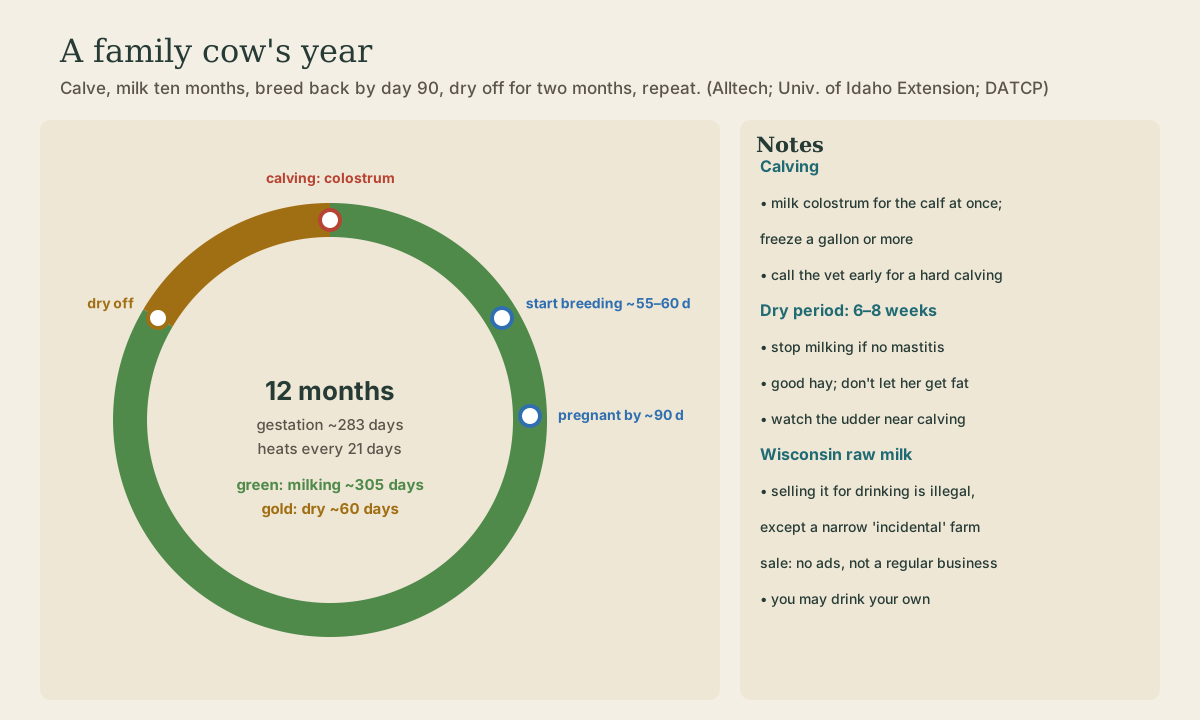
A cow only milks after she calves, so dairying runs on a yearly loop 1:
- Calving. Milk starts.
- Lactation: about 305 days of milking.
- Rebreeding. Most cows start cycling again 20–25 days after calving. Breeding usually starts around 55–60 days, and to calve again in a year she must be pregnant by about day 90. Heats come every 21 days, so that’s only a couple of chances 1.
- Gestation: about 283 days.
- Dry period: about 60 days before the next calf. You stop milking, her udder rests, and the calf finishes growing 1.
305 days of milk plus 60 dry is 365: one calf and one lactation a year. Miss the breeding window and the cycle stretches, with a longer dry period, a fatter cow, and lost milk 1. Learn her heat signs, line up a bull or an AI technician before you need one, and write down every heat.
Quick check
305 days of milk plus 60 days dry is 365; with 21-day heats starting around day 55–60, there are only a couple of chances.
Calving
Most cows calve on their own. Call the vet early if something looks wrong, not after she’s exhausted 2. The calf needs colostrum, the thick first milk full of antibodies, right away: wash and dry the udder, milk out colostrum for the calf, and freeze a gallon or more for emergencies 2. In the days after calving, watch her for milk fever (low blood calcium: wobbly, cold ears, going down) and ketosis 2.

Milking
Twice a day, about twelve hours apart, the same times every day. A routine that stays the same keeps her calm and keeps the milk coming. Clean, dry teats before milking; strip the first squirts from each quarter to check for clots or watery milk, an early sign of mastitis; milk out fully; and cool the milk quickly.
Playback is optional. If the player is unavailable, open the video at its source.
Drying off
Plan 6–8 weeks dry. Dry periods shorter than six weeks can lower the next lactation, and longer than eight tend to bring health and nutrition problems at calving 2. A cow free of mastitis can be dried off simply by stopping milking. A heavy producer may need a few partial milk-outs and less feed for a few days 2.
While she’s dry 2:
- Feed good hay; about 10 pounds of average alfalfa covers a dry cow’s protein needs, and grass hay makes up the rest.
- Don’t let her get fat. Fat cows have more calving and health problems.
- Aim for about two parts calcium to one part phosphorus in the diet to help prevent milk fever, with free-choice minerals and clean water.
- Check her and her udder daily as calving gets close.
Quick check
Shorter can lower the next lactation; longer and she tends to get fat and have problems at calving.
The law
In Wisconsin, selling raw (unpasteurized) milk for drinking is illegal. The one exception is a narrow “incidental” sale to a consumer at the farm, for that person’s own household. It isn’t incidental if it’s a regular business or advertised in any way, and cow shares and herd shares don’t count as ownership 3. You may drink your own cow’s milk and serve it to family and nonpaying guests. Butter, yogurt, and cream sold to anyone require a licensed plant and pasteurized milk; cheese can be made from raw milk only if aged at least 60 days 3.
Quick check
You may drink your own and serve it to family and nonpaying guests. Herd shares don’t count as ownership.
Try it
Before buying a cow, write out a year on a calendar: her calving date, the 55–90 day breeding window, the dry-off date 60 days before the next calf. Then decide who milks on the days you can’t, find a vet who sees cattle, and line up hay for the winter: a cow eats a lot of it.
Lesson complete
Nice work.
Sources for this lesson
- 1Dairy herd fertility. Alltech (KEENAN). verifiedA 305-day lactation plus a 60-day dry period gives a 12-month calving interval; no biological evidence that dry periods over 60 days help most cows. To calve every 365 days a cow must be in calf before about 90 days after calving; most cows ovulate again 20-25 days after calving, rebreeding usually starts after 55-60 days in milk, and with 21-day cycles that allows about two chances. Gestation about 283 days.
- 2Dry Cow Management (Current Information Series No. 245). University of Idaho Cooperative Extension (Edward A. Fiez). 1974. verifiedPlan a 6-8 week dry period; shorter than 6 weeks may lower production, longer than 8 invites health problems; don't let dry cows get fat. Cows free of mastitis can be dried off simply by not milking. About 10 lb of average alfalfa hay a day meets a dry cow's protein needs; aim for about 2:1 calcium to phosphorus to help prevent milk fever; free-choice trace minerals; clean water. Check dry cows daily and the udder in the last days before calving. Remove the calf at birth, wash and dry the udder, milk colostrum for the calf, and freeze a gallon or more; call the vet early for a difficult calving; watch for milk fever and ketosis.
- 3Raw Milk. Wisconsin Department of Agriculture, Trade and Consumer Protection. verifiedSelling or distributing raw milk for human consumption is illegal in Wisconsin (Wis. Stat. 97.24, ATCP 65.52), except an 'incidental sale' directly to a consumer at the farm where it's produced, for that consumer's family or nonpaying guests; not incidental if done as a regular business or advertised in any way. Cow shares and herd shares don't count as ownership. Licensed producers may drink their own raw milk and serve it to family and nonpaying guests. Dairy products sold to consumers require a dairy plant license and pasteurized milk, except cheese aged at least 60 days. Raw milk may be sold as animal feed with required labeling.