Bees
Keeping honey bees alive in Wisconsin comes down to managing varroa mites. How the mites hurt a colony (feeding on bees, spreading deformed wing virus, breeding in capped brood); the year as a mite calendar: check food and mites on the first 40-degree days in March, sample monthly with a powdered sugar roll from April to October, act above 3 percent (and at 1–2 percent in spring), get the fall surge down before winter bees are raised, and use the broodless period for oxalic acid; plus what Wisconsin requires (no hive registration, an import report for bees or used equipment) and DATCP's free inspections.
- 4 min
- 5 steps
- 3 questions
- Lesson 10 of 55
In this lesson
- The mite problem
- Counting
- A mite calendar
- Wisconsin rules and help
- What to take from this
Picking up where you left off.
The mite problem
Wisconsin winters are hard on bees, but the problem every beekeeper here has to manage is varroa mites and the viruses the mites carry. Varroa feed on bees’ body fluid (hemolymph) and spread viruses such as deformed wing virus, which kills bees 1. The mites breed inside capped brood cells, alongside the developing bees, so they multiply right along with the colony 1.

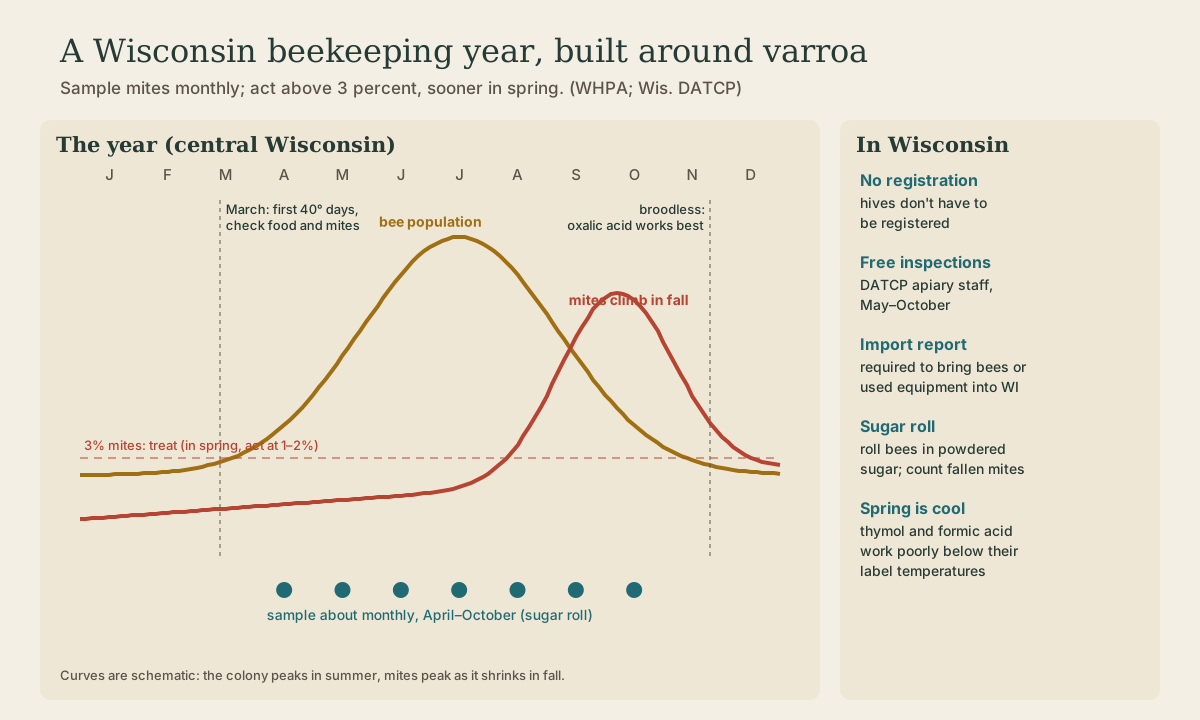
The threshold to remember: when more than 3 percent of the bees carry mites, a colony declines quickly and dies if it isn’t treated 1. So the core skill of beekeeping here isn’t building boxes or harvesting honey. It’s counting mites and acting on the count.
Quick check
In spring, treat even at 1–2 percent, because mites grow through the season.
Counting
Sample each hive about monthly from April through October 1. The simplest method, and the one most Wisconsin beekeepers use, is the powdered sugar roll: scoop bees from a brood frame into a jar with a screened lid, add powdered sugar, roll it to coat them, and shake the dislodged mites out onto a white surface to count 1. The bees go back to the hive unharmed. Alcohol washes and sticky boards are other options 1.
Playback is optional. If the player is unavailable, open the video at its source.
A mite calendar
The timing of mites in a Wisconsin colony is predictable 1:
- March: on the first day or two in the 40s, open the hive briefly to check food stores and mites. Overwintered colonies carry mites into spring, often at high levels, so consider treating even at 1 to 2 percent now, because the count only grows through the season.
- May through August: the bee population booms, which hides a rising mite population. A low percentage in July doesn’t mean the problem is solved.
- Late summer and fall: the bee population shrinks and the mite count climbs sharply. This is the dangerous stretch, because the bees that must carry the colony through winter are being raised now.
- Late fall and early winter: when the colony has no brood, all the mites are on the adult bees where treatments can reach them; that’s when oxalic acid works best 1.
Spring temperatures are often too cool for thymol or formic acid products to work well 1. Whatever you use, follow the label exactly; misused treatments can kill the queen, contaminate honey, and breed resistant mites 1. In southern Wisconsin the season runs a week or two longer at each end, and in the north a week or two shorter 1.
Quick check
Keep sampling monthly through October.
Wisconsin rules and help
- No hive registration is required 2.
- Bringing honey bees or used beekeeping equipment into Wisconsin requires a Honey Bee Import Report first 2. Used equipment can carry American foulbrood.
- DATCP’s apiary staff offer free hive inspections, May through October, including mite testing and disease diagnosis 2. For a first-year beekeeper, that’s an expert second opinion for free.
Quick check
DATCP also offers free inspections May through October.
What to take from this
Varroa mites are the problem to manage. Sample monthly from April to October with a powdered sugar roll and act above 3 percent, or at 1–2 percent in spring. Expect a fall surge hidden by the summer population, get mites down before winter bees are raised, and use the broodless period for oxalic acid. Follow labels. No registration is needed, but used equipment brought into Wisconsin needs an import report, and DATCP inspections are free.
Lesson complete
Nice work.
Sources for this lesson
- 1Liz Walsh, Kent Pegorsch. Best Management Practices for Varroa Mite Control in Wisconsin. Wisconsin Honey Producers Association. 2018. verifiedVarroa feed on bee hemolymph and spread viruses such as deformed wing virus; they reproduce in capped brood. Colonies with more than 3 percent of bees carrying mites decline rapidly and die if untreated. Sample monthly April through October; the powdered sugar roll is the simplest method. Overwintered colonies have mites in spring: check stores and mites on the first 40-degree days in March and consider treating even at 1-2 percent, since mites grow in spring, plateau in summer while the bee population masks them, and climb sharply in fall. Spring is often too cool for thymol and formic acid; oxalic acid works best when the colony is broodless. Southern Wisconsin's season runs a week or two longer; the north's is shorter. Follow treatment labels.
- 2Apiary and Beekeeping Inspections. Wisconsin Department of Agriculture, Trade and Consumer Protection. verifiedWisconsin beekeepers aren't required to register colonies. DATCP's apiary program offers free, voluntary inspections May through October to diagnose pests and diseases, test for Varroa, and give management advice. Anyone importing honey bees or used beekeeping equipment into Wisconsin must file a Honey Bee Import Report first.