Chickens
A small laying flock done right: register your premises with DATCP (required in Wisconsin, backyard flocks included), give each hen at least 3–4 square feet inside and about 10 in the run on well-drained ground, feed chicks and pullets a low-calcium pullet feed until they lay and then a 3–4 percent calcium layer ration (never the reverse), keep scratch as a treat, and plan for Wisconsin winters, predators, and the day the hens stop laying.
- 4 min
- 5 steps
- 3 questions
- Lesson 9 of 55
In this lesson
- Before the chicks
- Housing
- Feed
- Through the year
- What to take from this
Picking up where you left off.
Before the chicks
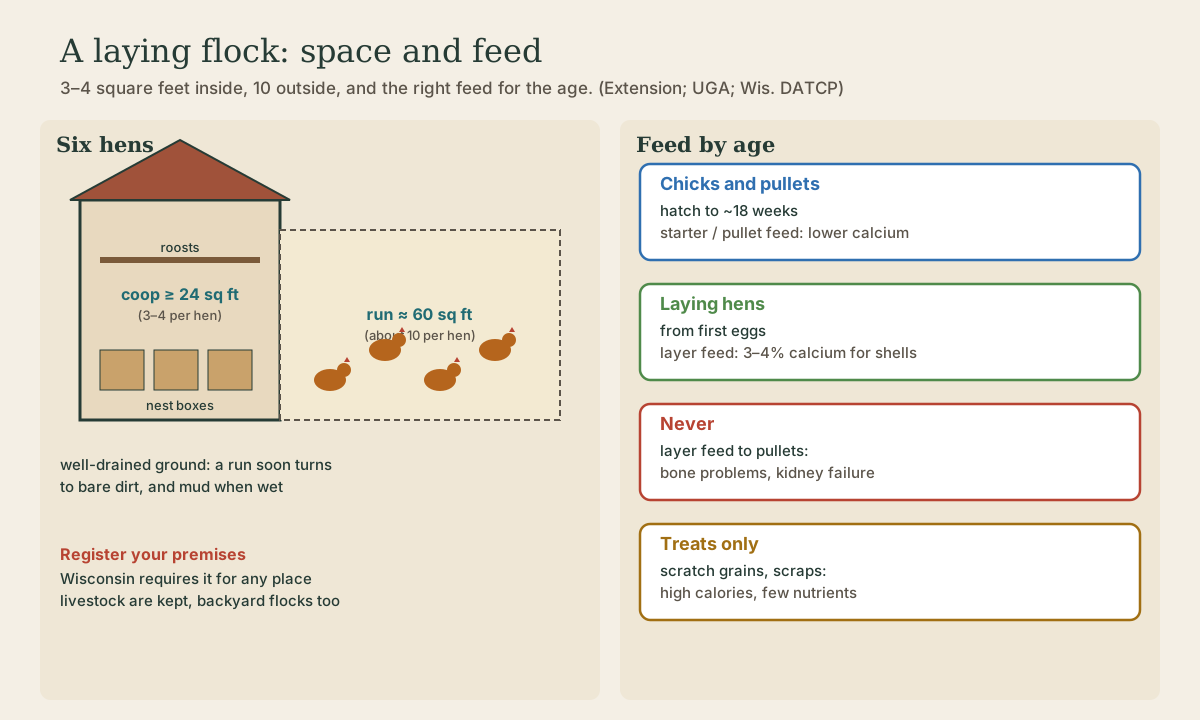
Wisconsin requires every place where livestock are kept to be registered as a livestock premises with DATCP: family farms, hobby farms, and backyard poultry flocks alike 1. Registration takes an address, a contact, and a list of species, and gives the location an ID number so that in a disease outbreak, such as avian influenza, animal movements can be traced within 48 hours 1. Register as soon as birds arrive. Check township or city rules too; many limit numbers or ban roosters.
Decide what the flock is for. Laying breeds lay best in their first two years and taper after. Dual-purpose breeds lay fewer eggs but dress out better when they’re retired to the stew pot (the butchering course’s poultry module covers processing).
Quick check
It lets animal movements be traced within 48 hours in a disease outbreak.
Housing
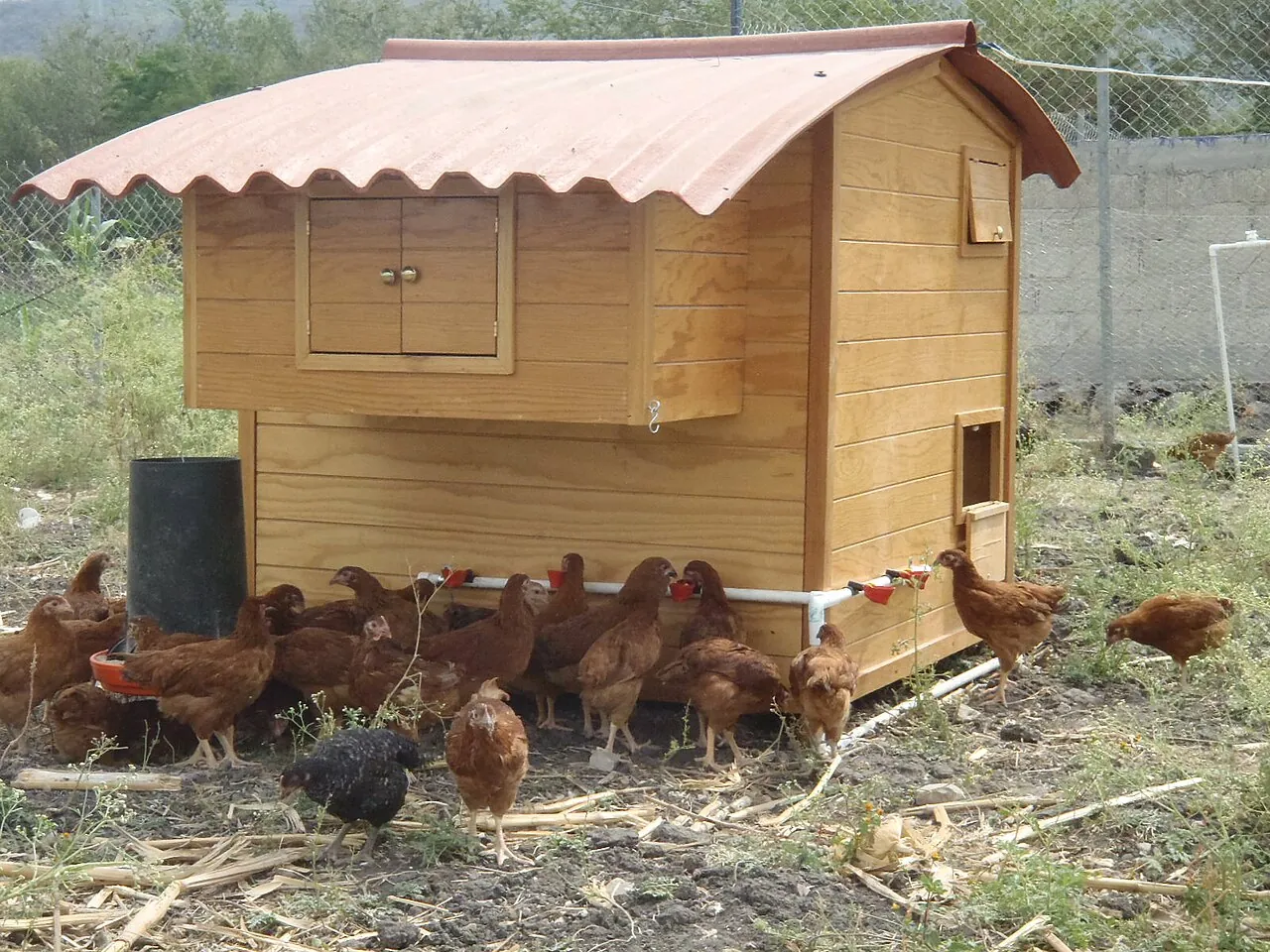
Give each laying hen at least 3 to 4 square feet inside the coop and about 10 square feet outside 2. For six hens, that’s a coop of about 24 square feet and a run of about 60. A run that size will soon be bare dirt and turn to mud in wet weather, so put it on well-drained ground 2 and add wood chips or straw.

Inside the coop:
- Roosts higher than the nest boxes, so hens sleep on the roosts instead of in the nests.
- Nest boxes, about one for every three or four hens, dark and bedded.
- Ventilation high up under the eaves. In a Wisconsin winter, the danger is less cold than damp: moist air from breath and droppings condenses and freezes, and that’s what frostbites combs. Chickens tolerate cold well if the coop is dry and draft-free at roost level.
- Predator proofing: hardware cloth, not chicken wire, on windows and the run, buried or skirted at the base, and the pop door closed every night. Raccoons, foxes, minks, weasels, and hawks all take chickens.
- Water that doesn’t freeze: a heated base under the waterer in winter.
Quick check
Crowding brings pecking, disease, and dirty eggs.
Feed
Chickens need formulated feed; it’s balanced for what they can’t get scratching around 3:
- Chicks and pullets (hatch to about 18 weeks): a starter, then pullet or grower feed, with less calcium 3.
- Laying hens: a layer feed with 3 to 4 percent calcium, because they put a shell’s worth of calcium into an egg nearly every day 3. Many keepers also put out oyster shell free-choice.
- Never feed layer ration to young pullets: the extra calcium can cause bone problems or even fatal kidney failure 3.
- Scratch grains and kitchen scraps are treats, high in calories and low in protein and vitamins. They can supplement a formulated feed but not replace it 3.
Playback is optional. If the player is unavailable, open the video at its source.
Quick check
Pullet feed until the first eggs, then switch.
Through the year
- Winter: egg production drops with the short days and hens often molt in fall, dropping feathers and stopping laying for a while. That’s normal rest, not a problem to fix.
- Spring: production climbs with the light; it’s also when to order chicks and set up a brooder at the right temperature.
- Summer: shade and plenty of water; chickens handle cold far better than heat.
- Every day: food, water, eggs collected, door closed at night. Clean bedding out in spring and fall; it’s excellent compost (the garden module) once it’s aged.
What to take from this
Register your premises with DATCP before the birds arrive. Give each hen 3–4 square feet inside and about 10 outside, on well-drained ground, with roosts above the nests, high ventilation, hardware cloth, and a door you close at night. Feed pullet feed until the first eggs, then layer feed at 3–4 percent calcium, never the reverse, and keep scratch as a treat. Expect fewer eggs in winter and a fall molt.
Lesson complete
Nice work.
Sources for this lesson
- 1Livestock Premises Registration. Wisconsin Department of Agriculture, Trade and Consumer Protection. verifiedWisconsin law (2004) requires registering any location where livestock are kept or congregate, including family farms, hobby farms, and backyard poultry flocks, with an address, contact, and species list; each gets a unique number so animal movements can be traced within 48 hours in a disease outbreak; register as soon as animals arrive.
- 2Space Allowances in Housing for Small and Backyard Poultry Flocks. Extension Foundation (extension.org), Poultry. verifiedLaying hens: at least 3-4 square feet per hen indoors and 10 square feet per hen outdoors; runs are quickly stripped of plants and turn muddy, so site them on well-drained ground. Meat chickens 3-4 square feet indoors; turkeys 6 indoors and 20 outdoors; ducks 5 indoors (waterfowl droppings are over 90 percent water); geese about three times the duck allowance.
- 3Feeding Poultry Right. University of Georgia Department of Poultry Science, Poultry Tips. 2016. verifiedLaying hens need far more calcium to form eggshells every day; a layer diet contains 3-4 percent calcium and should be fed only to laying birds; fed to young pullets it can cause bone problems or death from kidney failure. Pullets from 1 to 18 weeks get a pullet diet without the high calcium. Scratch grains are high in calories and low in key nutrients and shouldn't be a sole feed; foraging supplements, not replaces, a formulated feed.