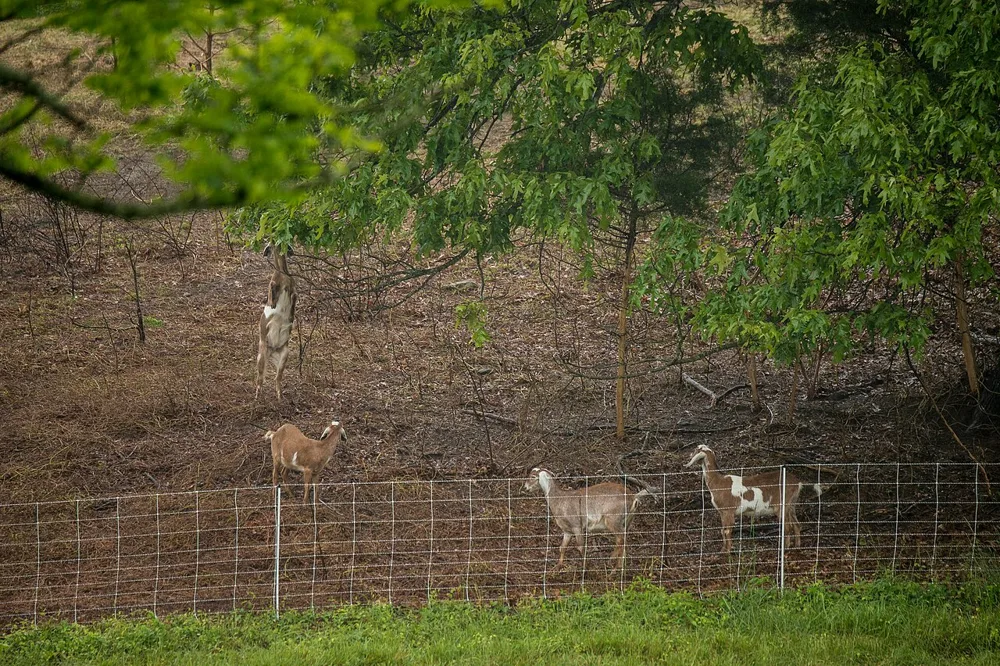
Goats
Goats for milk, meat, or brush: why one goat is never enough, fencing that actually holds them (woven wire with an electric offset, or high-tensile electric), browse first and grain second, the healthy-goat checklist (102–104 °F, chewing cud, head and tail up), CD-T vaccination on schedule, barber pole worm and FAMACHA eyelid scores, 30-day quarantine for newcomers, five-month pregnancies with twins or triplets, and hoof trimming.
- 5 min
- 9 steps
- 3 questions
- Lesson 12 of 55
In this lesson
- Before you get goats
- Feeding
- A healthy goat
- Vaccines
- Worms and FAMACHA
- Breeding and kidding
- Routine care
- Try it
Picking up where you left off.
Goats will clear brush, give milk, and raise meat kids on land too rough for cattle. They also escape through fences, get wormy, and holler when they’re alone. Plan for those three things and goats are easy.
Before you get goats
- Never keep one goat. They’re herd animals; a lone goat is stressed and noisy. Start with at least two, such as two does, or a doe and a wether.
- Fence first. Fencing is a goat keeper’s biggest expense, and it has to keep goats in and predators out 1. Two systems work: woven wire with electric offset wires, or multi-strand, high-tensile electric 1. Goats test every gap.
- Buy healthy animals from a reputable breeder, and isolate any newcomer for at least 30 days before it meets the herd. Don’t lend, borrow, or board goats or equipment 1.
- Provide a dry, draft-free shelter, especially for kidding, plus shade and a way to catch and restrain goats for hoof trimming and treatments 1.
Feeding
Goats are browsers: given the choice, they’d rather eat leaves, brush, and weeds than lawn grass. Pasture and browse should supply most of their nutrition 1. A rough guide is 1,000 pounds of grazing animal per 1 to 2 acres, depending on rainfall, season, and how much hay and grain you feed 1.
Supplement with hay in winter and grain where it’s needed: late pregnancy, early lactation, poor pasture, or drought. Always provide free-choice goat minerals, and make feed changes gradually. Sudden switches to rich feed or grain cause enterotoxemia, acidosis, and bloat 1.
.jpg)
A healthy goat
Know what normal looks like 1:
- Rectal temperature 102–104 °F; heart 60–90 beats a minute; breathing 15–30 a minute; chewing cud regularly.
- Head up, ears up, tail up, bright eyes, good coat, good appetite, curious, and keeping up with the herd.
A goat standing off alone, hunched, not chewing cud, or off its feed is sick.
Vaccines
The core vaccine is CD-T, against the clostridial bacteria behind enterotoxemia (“overeating disease”) and tetanus 1:
- Does: 1–2 months before kidding, so antibodies pass to the kids in colostrum. Two shots the first time an animal is vaccinated.
- Kids: at about 8 and 12 weeks, or earlier if the doe wasn’t vaccinated. If she wasn’t, give tetanus antitoxin at castration or disbudding.
- Bucks and wethers: once a year.
Quick check
Her antibodies pass to the kids in colostrum; kids then get shots at about 8 and 12 weeks.
Worms and FAMACHA
Internal parasites are the number-one health problem in goats, and the worst is the barber pole worm, a blood-sucking stomach worm that causes anemia 1. After decades of overuse, worms have developed resistance to every class of dewormer, so the goal is control, not eradication 1:
- Don’t overstock or overgraze; rest pastures; let goats browse up off the ground.
- Deworm selectively, only the goats that need it, and find out which drugs still work on your farm.
- Keep and breed from goats that resist worms.
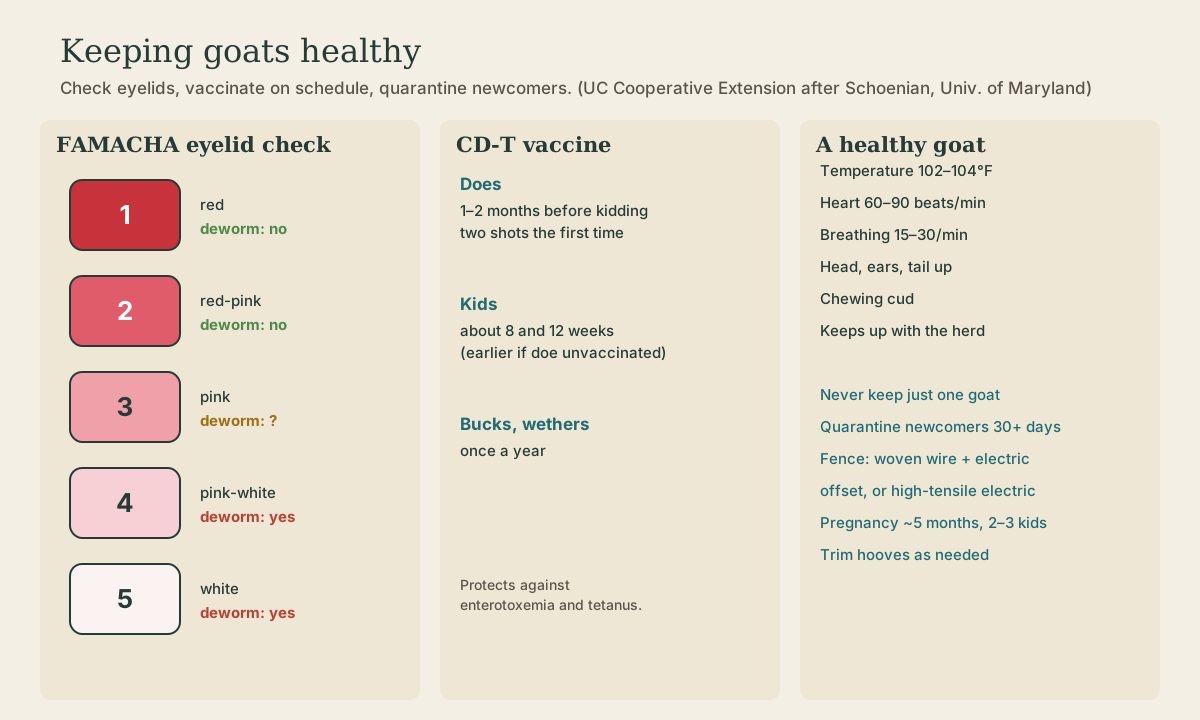
The FAMACHA system makes “who needs it” a quick check: roll down the lower eyelid and compare its color to the card 1.
| Score | Eyelid | Deworm? |
|---|---|---|
| 1 | red | no |
| 2 | red-pink | no |
| 3 | pink | judgment call |
| 4 | pink-white | yes |
| 5 | white | yes |
Playback is optional. If the player is unavailable, open the video at its source.
Quick check
Scores 1–2 don’t need deworming; 3 is a judgment call; 4–5 do.
Quick check
Treating only the goats that need it slows resistance.
Breeding and kidding
Goats are seasonal breeders, most fertile in fall, with a 21-day heat cycle. Pregnancy lasts about five months, and twins or triplets are common 1. Most does kid without help. Check her if there’s no progress an hour after the water bag breaks, and get experienced help if you’ve been trying to assist for 30 minutes. Make sure every kid gets colostrum within 24 hours 1.
Try it
Before buying goats, walk your fence line and fix every gap a goat could squeeze through, then add an electric offset wire. Buy two goats from the same healthy herd, ask the seller about their CD-T vaccinations and deworming history, and learn to read a FAMACHA eyelid the first week you have them.
Lesson complete
Nice work.
Sources for this lesson
- 1General Goat Health and General Goat Husbandry. University of California Cooperative Extension (John Harper, adapted from Susan Schoenian, University of Maryland Extension). verifiedVital signs: rectal temperature 102-104 F, heart 60-90/min, rumination 1-2/min, respiration 15-30/min, FAMACHA under 3; healthy goats have head, ears, and tail up, chew cud, and keep up with the herd. Biosecurity: buy from reputable breeders, isolate new animals at least 30 days, closed herd. CD-T: does 1-2 months before kidding, two shots the first time; kids about 8 and 12 weeks, earlier if dam unvaccinated, tetanus antitoxin at castration or disbudding if dam unvaccinated; bucks and wethers annually. Internal parasites are the number one health problem; resistance to all dewormers; deworm selectively. FAMACHA: 1 red and 2 red-pink no; 3 pink ?; 4 pink-white and 5 white yes. Fencing a major expense: multi-strand high-tensile electric, or woven wire with electric offset wires. Pasture or browse the primary feed; free-choice goat minerals; rule of thumb 1,000 lb of grazing animal per 1-2 acres. Goats breed seasonally, most fertile in fall; 21-day cycle; pregnancy about five months; usually 2-3 kids; colostrum within 24 hours. Guardian dogs, donkeys, llamas; disbud at 1-2 weeks; band castration at 1-7 days; hoof trimming as needed.