Planning for Wisconsin's Zones and Seasons
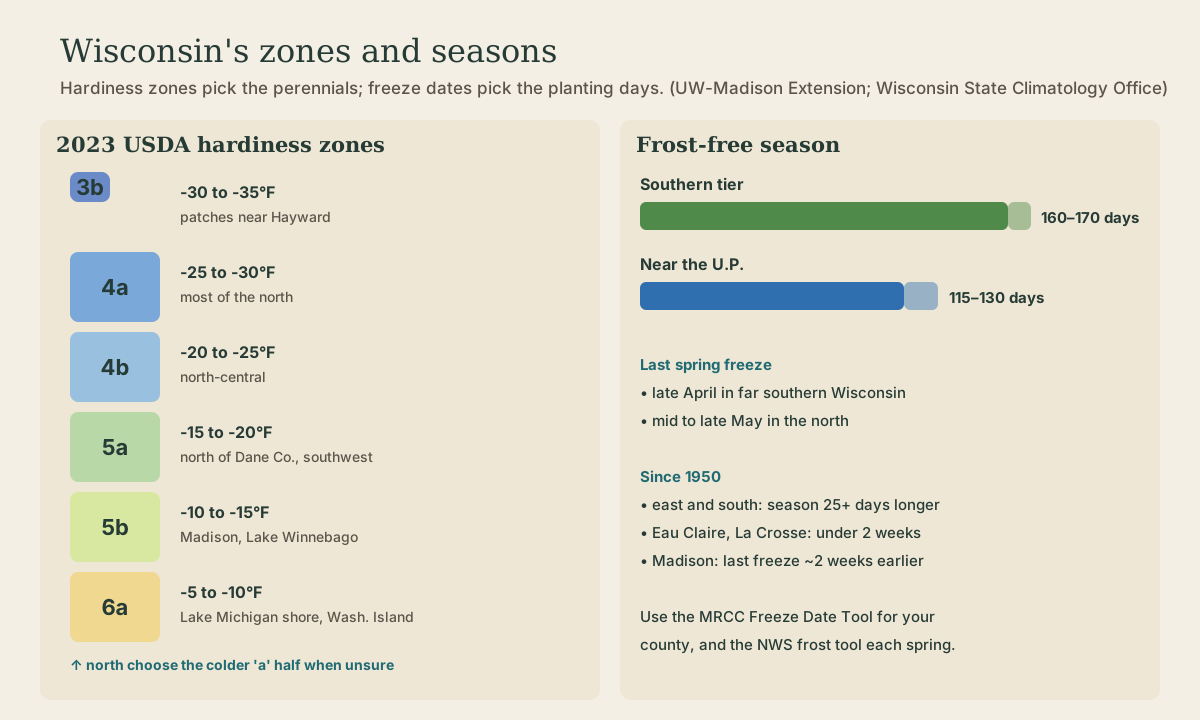
The two numbers that drive Wisconsin planting plans: the 2023 USDA hardiness zone (now 3b through 6a, about half a zone warmer than the 2012 map, so choose the colder 'a' half when unsure) for perennials, trees, and fruit; and the frost-free season (about 160–170 days on the southern tier, 115–130 near the U.P., last freeze late April in the far south to late May in the north) for annuals, with the MRCC freeze-date and NWS frost tools for your own county.
- 4 min
- 5 steps
- 3 questions
- Lesson 2 of 55
In this lesson
- Hardiness zones
- Frost-free season
- Your own numbers
- Try it
Picking up where you left off.
Two questions decide what you can grow: will it survive the winter, and is the season long enough for it to finish? Wisconsin answers them differently from one end of the state to the other, and both answers have moved in recent decades.
Hardiness zones
The USDA Plant Hardiness Zone Map is based on the average coldest winter night over 30 years, not the single coldest night on record. Zones are 10 °F apart, each split into a colder “a” half and a warmer “b” half 1. A plant labeled hardy to zone 5 should survive winters averaging down to −20 °F; zone 5a means −15 to −20, 5b means −10 to −15 1.
The 2023 map (1991–2020 data) moved about half the country half a zone warmer than the 2012 map. Wisconsin now spans four zones instead of three 1:
| Zone | Average coldest night | Where in Wisconsin |
|---|---|---|
| 6a | −5 to −10 °F | Lake Michigan shore from Kenosha into southeastern Sheboygan County; Washington Island |
| 5b | −10 to −15 °F | Madison; around Lake Winnebago |
| 5a | −15 to −20 °F | north of Dane County; the southwest |
| 4b / 4a | −20 to −30 °F | most of the north |
| 3b | −30 to −35 °F | only small patches near Hayward and in southern Douglas and northern Washburn counties |
Part of that shift is warming winters, and part is better data from more weather stations 1. Either way, the map is an average. When you’re unsure whether you’re in the “a” or “b” half, choose plants hardy to the colder “a” zone 1. One unusually cold winter can kill a marginal fruit tree that took five years to start bearing. Low spots and frost pockets can run a half zone colder than the map.
Quick check
Zones are in 10 °F steps, split into a colder ‘a’ and warmer ‘b’ half.
Quick check
One unusually cold winter can kill a tree that’s marginally hardy.
Frost-free season
Annual vegetables don’t care about winter; they care about the stretch between the last spring freeze and the first fall freeze. In Wisconsin 2:
- Last spring freeze: usually ends in late April in far southern Wisconsin, but freezes continue through mid to late May in the north.
- Season length: about 160–170 days along the southern tier of counties, 115–130 days near the Upper Peninsula.
- It’s getting longer. Since 1950 the frost-free season has stretched more than 25 days in eastern and southern Wisconsin, but less than two weeks at Eau Claire and La Crosse. Madison’s last spring freeze now comes about two weeks earlier than it used to, Milwaukee’s about a week, Wausau’s only two or three days 2.
A longer season isn’t all gain: pests like mosquitoes, ticks, and aphids emerge earlier and fit in more generations 2.
Quick check
The southern tier gets about 160–170 days.
Your own numbers
Statewide averages only get you started. Two free tools give your own numbers 2:
- The Midwestern Regional Climate Center Freeze Date Tool shows historical first and last freeze dates for stations near you, and how they’ve shifted, at different temperature thresholds.
- The NWS Milwaukee Frost and Freeze Decision Support Tool, active March through October, maps the chance of frost over the next seven days using both temperature and wind, since calm nights are the ones that frost.
Use the historical date to plan seed starting and transplanting, then the forecast tool to decide whether tonight is the night to cover the tomatoes.
Try it
Look up your zip code on the USDA hardiness map and your nearest station in the MRCC Freeze Date Tool. Write your zone, your average last spring and first fall freeze, and the days between on the first page of your garden notebook. Then check every perennial, fruit tree, and berry you plan to buy against the colder half of your zone.
Lesson complete
Nice work.
Sources for this lesson
- 1What's Up Doc? The New USDA Plant Cold Hardiness Zone Map, Hardiness and Winter Injury. UW-Madison Extension (Dr. Laura Jull). 2023. verifiedThe 2023 USDA map (1991-2020 data) uses the 30-year average annual minimum winter temperature in 10 F zones split into a (colder) and b (warmer); about half the U.S. shifted half a zone warmer from 2012. Wisconsin now has zones 3-6: 6a (-5 to -10 F) along the Lake Michigan shore from Kenosha into southeastern Sheboygan County and Washington Island; 5b (-10 to -15 F) Madison and around Lake Winnebago; 5a (-15 to -20 F) north of Dane County and the southwest; 4b (-20 to -25) and 4a (-25 to -30) most of the north; 3b (-30 to -35) only small areas in southern Douglas, northern Washburn, and Sawyer County near Hayward. When in doubt, choose plants hardy to the colder 'a' zone.
- 2How Longer Growing Seasons Are Reshaping Wisconsin's Gardens and Farms; Frost and Freeze Potential in Wisconsin. Wisconsin State Climatology Office, UW-Madison. verifiedFreezing conditions typically end in far southern Wisconsin in late April and persist in the north through mid to late May. Growing season about 160-170 days along the southern tier and 115-130 days near the Upper Peninsula. Since 1950 the frost-free season lengthened more than 25 days in eastern and southern Wisconsin and under two weeks at Eau Claire and La Crosse; Madison's last spring freeze is about two weeks earlier, Milwaukee's about a week, Wausau's two to three days. Tools: Midwestern Regional Climate Center Freeze Date Tool (historical county freeze dates) and the NWS Milwaukee Frost and Freeze Decision Support Tool (seven-day frost potential using temperature and wind).