Managing a Woodlot
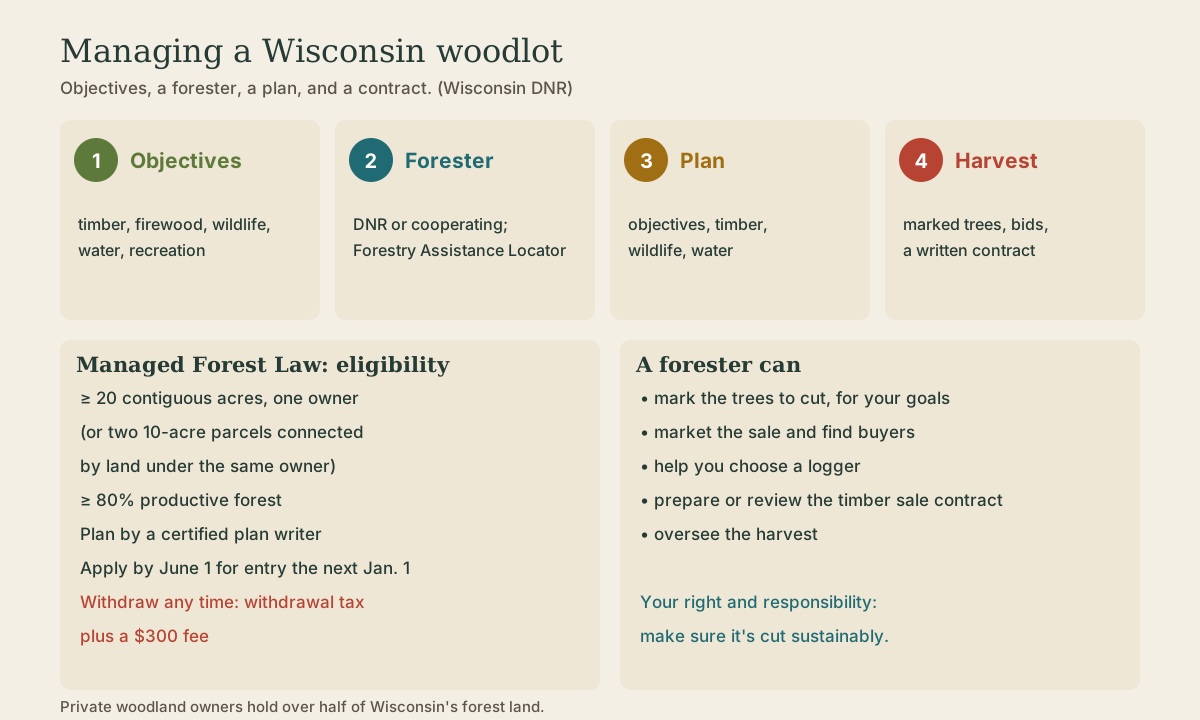
Running a Wisconsin woodlot on purpose: setting objectives, getting help from a DNR or cooperating forester, writing a management plan, what the Managed Forest Law requires (20 acres, 80 percent productive forest, a certified plan writer, a June 1 deadline), and how a forester-led timber sale works.
- 4 min
- 8 steps
- 3 questions
- Lesson 19 of 55
In this lesson
- Why manage it
- Objectives first
- Get a forester
- A management plan
- The Managed Forest Law
- Selling timber
- Try it
- What to take from this
Picking up where you left off.
Why manage it
Private owners hold more than half of Wisconsin’s forest land 1. A woodlot left alone still changes, just not toward any goal of yours. Managing it means deciding what you want from it, then cutting, planting, and protecting toward that: firewood every winter, sawlogs for your own lumber (see the Wood Drying course), wildlife habitat, maple sap, hunting, a quiet place to walk, or income every couple of decades.
Objectives first
Write down what you want, in order of priority. They pull in different directions: big sawtimber needs patience and room; deer and grouse like young, dense growth; firewood favors thinning out the crooked and the crowded. A forester can only plan toward goals you’ve named.
Get a forester
The DNR’s Forestry Assistance Locator lists DNR service foresters and cooperating foresters by county; foresters help landowners reach their management objectives 1. A first walk with a forester is the best hour you can spend: they’ll identify your stands, their age and health, invasive species, and what the woods could become.
A management plan
A plan puts your objectives, the stands you have, and the work to do on paper, with a schedule. For the Managed Forest Law, the plan must address landowner objectives, timber management, wildlife management, and water quality, and it must be written by a certified plan writer 2.
The Managed Forest Law
Wisconsin’s Managed Forest Law (MFL) lowers property tax in exchange for following a forest management plan. It’s the only forest tax law open to new enrollment 2. To enroll 2:
- At least 20 contiguous acres under the same ownership, or at least 10 contiguous acres connected by land under the same ownership to another parcel of at least 10 acres.
- At least 80 percent of each parcel must be productive forest.
- A management plan by a certified plan writer.
- Apply by June 1 for entry the following January 1.
Land can be withdrawn voluntarily at any time, but withdrawal brings a withdrawal tax plus a $300 fee 2.
Quick check
A certified plan writer prepares the management plan; applications are due June 1.
Quick check
Withdrawal is voluntary and allowed at any time, but it isn’t free.
Selling timber
When it’s time to harvest, the DNR’s advice is to hire a forester 3. Consulting and industrial foresters can:
- mark the trees to cut according to your objectives,
- market the sale to buyers,
- help you choose a logger,
- prepare or review the timber sale contract,
- and oversee the harvest 3.
Always use a written timber sale contract between you and the buyer; the DNR publishes a sample contract and a warning about timber theft and fraud 3. In the DNR’s words, “it is your right and responsibility to make sure that your timber is cut in a sustainable manner” 3.
Playback is optional. If the player is unavailable, open the video at its source.
Quick check
A forester can also market the sale, help choose a logger, and prepare or review the contract.
Try it
Walk your woods (or a friend’s) with a notebook and a map. Mark where the stands change: conifers, mixed hardwoods, a wet lowland, an old field coming back. For each, write what you’d want from it in 20 years. Then look up your county’s foresters in the Forestry Assistance Locator and book a site visit.
What to take from this
Private owners hold over half of Wisconsin’s forest. Set objectives, get a DNR or cooperating forester, and put a management plan on paper. The Managed Forest Law needs 20 contiguous acres (or two connected 10-acre parcels), 80 percent productive forest, a plan by a certified plan writer, and an application by June 1; withdrawing costs a withdrawal tax plus $300. For a timber sale, let a forester mark trees and help with the logger and the written contract.
Lesson complete
Nice work.
Sources for this lesson
- 1Forest Landowners. Wisconsin Department of Natural Resources. verifiedPrivate woodland owners hold over half of Wisconsin's forested land; DNR service foresters and cooperating foresters, found through the Forestry Assistance Locator; management planning, harvesting guidance, forest tax laws, and cost-sharing.
- 2Managed Forest Law. Wisconsin Department of Natural Resources. verifiedAt least 20 contiguous acres under the same ownership, or at least 10 contiguous acres connected by land under the same ownership to another parcel of at least 10 acres; at least 80 percent productive forest; a management plan written by a certified plan writer addressing objectives, timber, wildlife, and water quality; application deadline June 1 for entry the following January 1; voluntary withdrawal any time with a withdrawal tax plus a $300 fee.
- 3Harvesting Guidance for Landowners. Wisconsin Department of Natural Resources. verifiedConsulting and industrial foresters can mark trees for your objectives, market the sale, help select a logger, prepare or review contracts, and oversee the harvest; a written timber sale contract between landowner and buyer; it is the landowner's right and responsibility to see timber cut sustainably; sample timber sale contract and timber theft guidance.