
Two Institutions, Two Operating Systems
Why a city and a nonprofit that share a goal still run on different legal systems: how each makes decisions, five questions before any joint action, turning one shared goal into parallel decisions, a decision-rights matrix, and common category errors.
- 7 min
- 9 steps
- 3 questions
- Lesson 25 of 36
In this lesson
- The municipal operating system
- The nonprofit operating system
- Five questions before any cross-sector action
- Translate a shared goal into parallel decisions
- Decision-rights matrix
- Common category errors
- Field exercise: follow one real decision
- Working rule
Open alongside this lesson
-
City Committees, Boards, and Commissions (opens in a new tab)
Compare a commission, committee, and council with Shake Rag Alley's private nonprofit board.
-
Boards, Commissions, and Committee Notifications (opens in a new tab)
Notice how arts, landmarks, planning, redevelopment, and utilities sit inside public authority.
Picking up where you left off.
A city and a charitable nonprofit can care about the same people, place, and outcome while operating under different legal systems. That is the essential fact of cross-sector leadership.
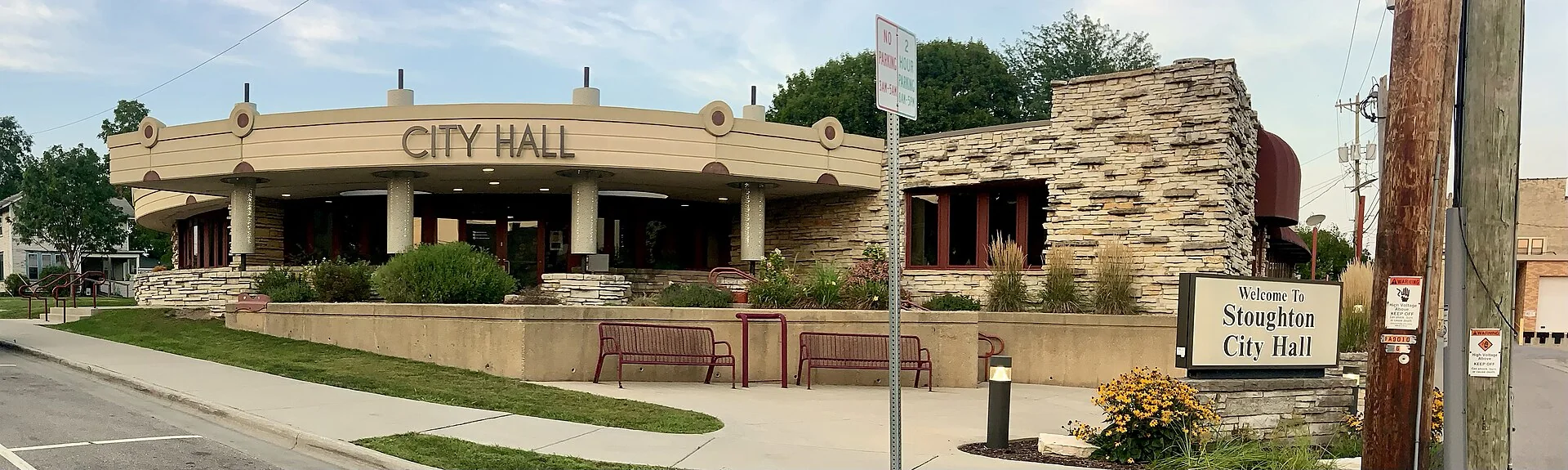
The City of Mineral Point and Shake Rag Alley might both care about historic preservation, arts access, tourism, youth programming, and a healthy downtown. The City of Stoughton and its local cultural organizations might share similar goals through the Arts Council, Landmarks Commission, Opera House, festivals, and downtown activity 1. Shared purpose can create partnership. It does not create shared authority.


The municipal operating system
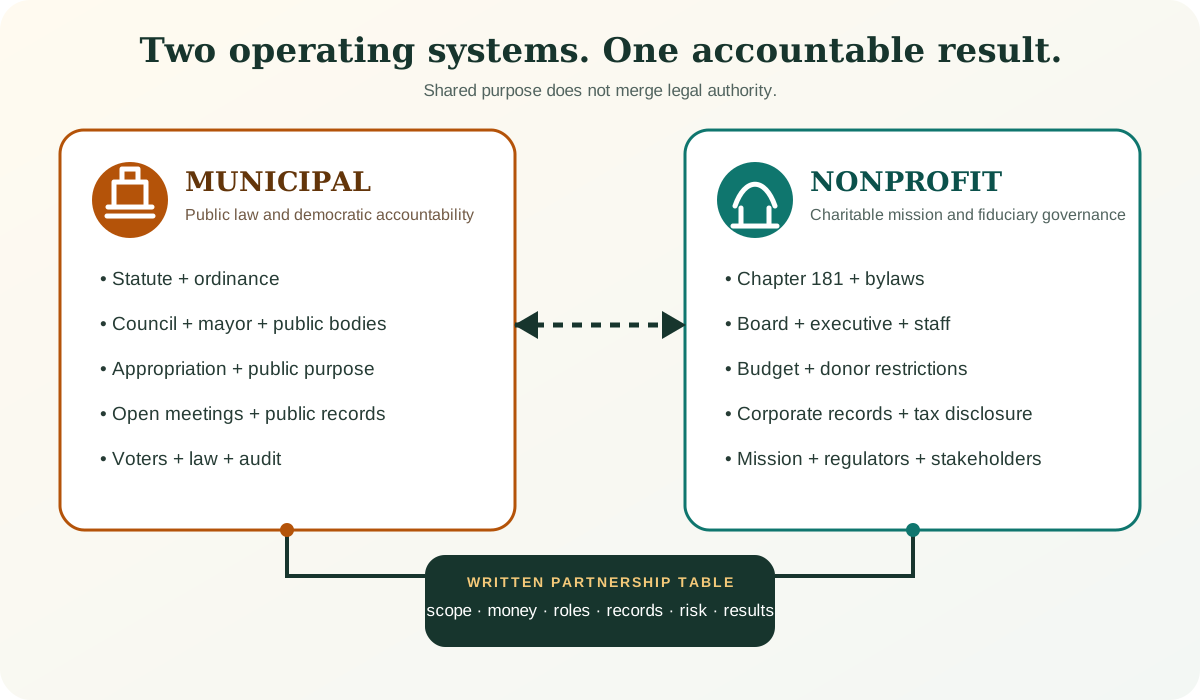
Wisconsin city government begins with public law. The Common Council has the city’s legislative power and management and control of city property, finances, highways, public service, and public business, subject to law 2. The mayor is the chief executive, presides over the council, makes recommendations, exercises defined appointment and veto powers, and must see that laws and official duties are carried out 3.
That creates several lanes:
- Council: ordinances, resolutions, appropriations, many contracts, policy, and oversight.
- Mayor: executive leadership, information, recommendations, defined appointments, presiding, veto, and local duties.
- Boards and commissions: only the authority supplied by statute, ordinance, or delegation.
- Staff and officers: professional and administrative authority defined by law, ordinance, job, policy, or delegation.
- Public: elections, testimony, petitions, records, participation, and political accountability—but not an automatic vote on every administrative decision.
A good idea still needs a lawful route. A mayor cannot turn personal support into a city grant without budget authority and an approved process. A commission cannot expand its own jurisdiction because a project is popular. A council vote cannot make a technical code or procurement requirement disappear.
The nonprofit operating system
A Wisconsin charitable nonstock corporation operates through Chapter 181, its articles, bylaws, board actions, policies, restricted gifts, contracts, and tax-exempt purpose. Directors owe duties to the corporation and govern collectively. They may rely in good faith on qualified officers, employees, experts, or committees under the conditions in state law 4. Board practice also assigns directors responsibility for mission, executive oversight, resources, financial stewardship, and legal and ethical integrity 5.
The usual lanes are:
- Board: mission, strategy, policy, executive oversight, budget, major risk, and decisions reserved by bylaws or policy.
- Executive director: management, staffing, programs, operations, and implementation under board-approved direction.
- Committees: analysis and delegated work within a charter; they do not acquire unlimited authority.
- Individual directors: questions, judgment, relationships, fundraising, advocacy within policy, and assignments—but not unilateral command.
- Members, donors, artists, learners, and community: important stakeholders whose legal authority depends on the governing documents and specific arrangement.
Shake Rag Alley’s public board roster and staff structure make the distinction visible: the organization has directors and officers, but also a professional staff responsible for operating programs and the campus 6.
Five questions before any cross-sector action
Use H-A-R-M-S:
- Hat: In what role am I acting right now?
- Authority: What law, ordinance, bylaw, policy, motion, or delegation lets this actor decide?
- Resources: Which public appropriation, donor restriction, staff time, property, information, and insurance are involved?
- Method: What notice, meeting, procurement, conflict, contract, accessibility, or grant procedure applies?
- Success: What output and outcome will each institution be accountable for?
This prevents “relationship authority”: assuming that because the mayor, board chair, executive director, or major donor supports an idea, the institution has approved it.
Translate a shared goal into parallel decisions
Suppose the idea is a public craft-and-preservation weekend.
The nonprofit may need to decide:
- Does it advance mission and fit staff capacity?
- Who approves program scope and budget?
- Are donations, grants, or sponsorships restricted?
- What participant safety, youth, accessibility, insurance, artist-contract, and campus rules apply?
- Can the organization remain nonpartisan if officials and candidates attend?
The city may need to decide:
- Is the proposed public support authorized and budgeted?
- Is it a grant, purchase of service, sponsorship, permit, facility use, room-tax-supported activity, or something else?
- Who approves it: staff, a commission, the council, or another body?
- What procurement, insurance, accessibility, records, and reporting obligations follow?
- Is the benefit public and are similarly situated applicants treated consistently?
The partnership document then joins the outputs of those two decision paths. It does not replace them.
Quick check
A shared goal becomes parallel decisions: the council acts for the city, the board for the nonprofit.
Decision-rights matrix
Before discussion becomes a promise, draft this:
| Decision | City owner | Nonprofit owner | Joint instrument | Evidence of approval |
|---|---|---|---|---|
| Public funding | council/authorized officer | board or staff acceptance | grant/contract | appropriation, motion, signed agreement |
| Program design | advisory input if agreed | staff under mission/budget | scope of work | approved plan |
| Street or facility use | authorized public official/body | event operator compliance | permit/license | issued permit |
| Historic interpretation | public body for city product | nonprofit for its product | review protocol | written approvals |
| Public communications | authorized spokesperson | authorized spokesperson | message/brand rules | final copy and records |
| Results/reporting | public contract owner | nonprofit project owner | reporting schedule | accepted deliverables |
“Joint” should rarely mean “nobody knows who decides.” Name one owner for every deliverable, one approver for every institutional promise, and one escalation route.
Common category errors
“The city is only a sponsor”
The label does not answer whether public money, public property, procurement, endorsement, records, or constitutional constraints are involved. Read the actual arrangement.
“The nonprofit is private, so city rules stop at the door”
A private nonprofit is not automatically a public body. But a city cannot contract away all of its own duties. Public funds, public records in an authority’s custody, public access obligations, contract terms, or a fact-specific quasi-governmental analysis may matter.
“The board voted, so staff must do it”
A board vote outside its own authority, budget, bylaws, or legal obligations is not good governance. Even a valid strategic decision needs realistic delegation, capacity, and implementation controls.
“The mayor said yes”
Ask what the mayor said yes to, in which role, and subject to what council, staff, legal, budget, commission, or permit action. Support is not the same as final approval.
Field exercise: follow one real decision
Choose one recent city arts, preservation, tourism, land-use, or facility item from an agenda packet.
Build a one-page authority trace:
- What exact decision was requested?
- Which public body or officer owned it?
- What staff, legal, budget, commission, or public input preceded it?
- Where could a nonprofit contribute evidence or public value?
- What could the nonprofit not decide?
- What document shows final action?
- Who implements, monitors, reports, and owns records afterward?
Then repeat the trace from the nonprofit side using a board packet, budget, grant agreement, or executive delegation.
Working rule
Cooperate on outcomes; remain exact about authority.
Trust grows when leaders can explain not only what they want, but who may decide, how the decision becomes valid, whose resources are at risk, and how the public can see the result.
Practice
Shared purpose does not merge legal authority. Each side must act through its own system.
Practice
Individual directors ordinarily participate in collective governance; authority comes from law, governing documents, board action, and delegation.
Lesson complete
Nice work.
Sources for this lesson
- 1Boards, Commissions, and Committee Notifications. City of Stoughton, Wisconsin. verifiedCurrent list including the Arts Council, Landmarks Commission, Opera House Board, Plan Commission, Redevelopment Authority, and Common Council. Cited at: listed public bodies; @cc-stoughton-visit|cultural and tourism context.
- 2Wisconsin Statutes § 62.11 — Common Council. Wisconsin State Legislature. verifiedCouncil authority, quorum, presiding officer, and mayoral voting rule. Cited at: subsecs. (4)–(5).
- 3Wisconsin Statutes § 62.09 — City Officers. Wisconsin State Legislature. verifiedQualifications, oath, term commencement, and mayoral powers and duties. Cited at: subsec. (8).
- 4Wisconsin Statutes § 181.0850 — Reliance by directors or officers. Wisconsin Statutes via Justia. 2025. verifiedCurrent rules on good-faith reliance on officers, employees, experts, and board committees. Cited at: good-faith reliance.
- 5Board Roles and Responsibilities. National Council of Nonprofits. verifiedGovernance practice on fiduciary stewardship, executive oversight, resources, fundraising, and advocacy. Cited at: board responsibilities.
- 6About Us. Shake Rag Alley Center for the Arts. verifiedCurrent mission, staff and board roster, programs, campus history, and organization timeline. Cited at: staff and board.
Further reading
- City Committees, Boards, and Commissions. City of Mineral Point, Wisconsin. verifiedCurrent list and basic explanation of Mineral Point's public decision and advisory bodies.
- Visit Stoughton. City of Stoughton, Wisconsin. verifiedCity page connecting tourism, the Arts Council, Opera House, festivals, and the downtown arts and entertainment district.
- Mayor. City of Stoughton, Wisconsin. verifiedOfficial description of the mayor's local responsibilities, current officeholder, and contact information.
Previous: Advocacy, the Annual Board Cycle, and Your Capstone Meeting