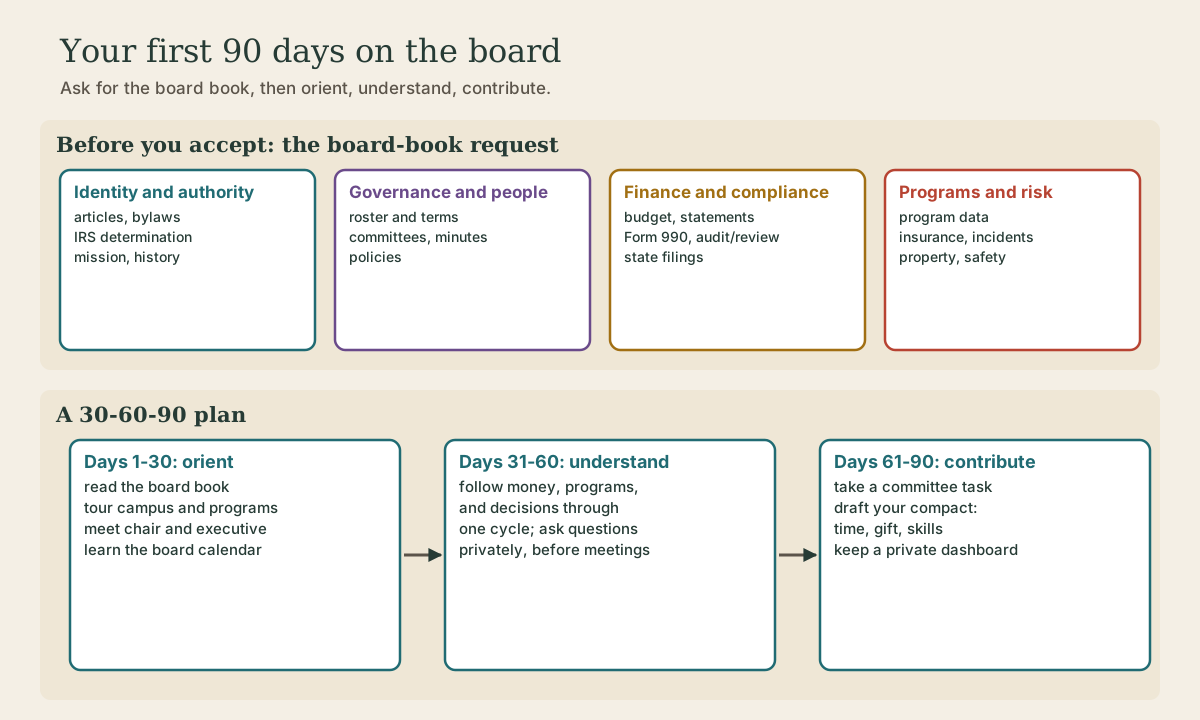
Your First 90 Days and Board-Service Compact
A new director's first 90 days: questions to ask before accepting a term, the board-book request (identity, governance, finance, programs and risk), a 30-60-90 plan, asking questions without ambushing, a board-service compact, a private dashboard, and when to escalate.
- 7 min
- 8 steps
- 3 questions
- Lesson 4 of 36
In this lesson
- Before accepting or renewing a term
- Your board-book request
- A 30–60–90 plan
- How to ask without ambushing
- Draft your board-service compact
- Your private dashboard
- When to slow down and seek advice
Picking up where you left off.
The first 90 days are for becoming reliably informed, not proving your value by launching a project.
A new director is most dangerous when enthusiasm outruns authority. You may see a neglected opportunity, know a donor, have finance experience, or want to fix a process. Start by understanding why the system works as it does, which person owns the decision, and what commitments already exist.
Before accepting or renewing a term
Ask for a candid conversation with the board chair and executive director. Clarify:
- term length, start and end, re-election, and removal rules;
- meeting frequency, preparation time, attendance expectation, and retreat;
- committee and officer expectations;
- personal-giving and fundraising expectations;
- confidentiality and public-speaking boundaries;
- conflict-disclosure process;
- volunteer work distinct from director work;
- known strategic, financial, facilities, staffing, legal, or reputational issues;
- D&O and other insurance;
- indemnification provisions;
- whether the organization is current on corporate, charitable, tax, grant, payroll, raffle, and other filings.
No responsible organization can promise zero risk. A healthy recruitment conversation names material challenges without recruiting you to take sides in unresolved personnel or board conflicts.
Your board-book request
Request secure access to:
Identity and authority
- articles of incorporation and amendments;
- IRS determination letter;
- current bylaws;
- current director/officer roster and terms;
- committee charters;
- recent resolutions or delegations of authority;
- current strategic plan and annual goals.
Governance and people
- board-member agreement or expectations;
- conflict-of-interest policy and annual disclosure;
- code of ethics/conduct;
- whistleblower and non-retaliation policy;
- document retention and destruction policy;
- confidentiality, privacy, communications, and complaint policies;
- executive director job description, goals, evaluation process, and succession plan;
- board and committee calendar.
Finance and compliance
- current budget and year-to-date actuals;
- latest statement of activities, financial position, and cash forecast;
- restriction and grant schedule;
- bank, spending, contract, reimbursement, credit-card, reserve, investment, and gift-acceptance policies;
- latest Form 990 and state charitable report;
- latest audit, review, compilation, or accountant communication, as applicable;
- insurance summary and significant claims;
- facilities plan, major leases, debt, and material contracts;
- filing calendar and responsible owners.
Programs and risk
- program portfolio and outcome dashboard;
- youth-safety, volunteer, background-screening, incident, emergency, and mandatory-reporting procedures;
- maintenance and capital plan;
- data security and incident-response plan;
- current major-grant agreements and reporting calendar;
- current development plan and donor stewardship standards.
You do not need every personnel file, donor name, minor’s record, or privileged legal communication. Access follows role and need. Sensitive information should be stored in an approved system, not your personal email archive.
A 30–60–90 plan
Days 1–30: orient
- Read mission, articles, bylaws, current plan, current budget, recent financials, latest Form 990, conflict policy, and board expectations.
- Complete disclosures and required training.
- Review three recent board packets and approved minutes.
- Meet the board chair and executive director separately for role orientation.
- Tour the campus with the person responsible for buildings and grounds.
- Attend one program as a learner or disclosed observer.
- Create a glossary of terms, funds, programs, properties, and recurring decisions.
Your output: one page titled What I think the board is accountable for / What I still need to verify.
Days 31–60: understand the system
- Sit with the treasurer or finance lead to walk through reports.
- Learn how a registration becomes revenue, how a gift becomes a restriction, and how an invoice becomes a payment.
- Review the annual program, fundraising, grant, filing, maintenance, and board calendars.
- Attend your assigned committee.
- Ask the executive which board behavior is most useful and which creates rework.
- Identify one stakeholder group you have not heard.
Your output: a one-page operating map with three governance questions.
Days 61–90: contribute in role
- Take ownership of one defined board or committee deliverable.
- Make your personal gift under the organization’s current policy.
- Choose two fundraising roles you can perform credibly.
- Bring one well-framed question to the board, with source and decision relevance.
- Confirm the year’s major board decisions and preparation dates.
- Ask for feedback on your preparation, boundaries, and participation.
Your output: a first-year board work plan with dates and owners.
Quick check
The first 30 days orient, the next 30 learn the system, and only then does a director contribute in role.
How to ask without ambushing
Use this question pattern:
“I noticed fact/source. I understand it may mean tentative interpretation. What context am I missing, and does the board need to decide or monitor anything?”
Examples:
- “The 2024 Form 990 shows contribution revenue rose materially while program-service revenue fell from 2023 1. What portions were restricted or one-time, and how does the internal operating view differ?”
- “The bylaws say X, while the last two packets appear to use Y. Is there a later amendment or board resolution I have not seen?”
- “I see a facilities risk on the tour. Is it in the current condition assessment and capital plan?”
Avoid:
- “Why haven’t you fixed this?”
- “At my company we always…”
- “A donor told me…”
- “I promised I would get the board to…”
Draft your board-service compact
Adapt this and ask whether the board has its own approved agreement:
I will act in the charitable corporation’s interest and in service of its mission. I will prepare for and attend meetings, read financial and program information, ask questions early, disclose actual and potential conflicts, protect information according to policy, and support lawful collective decisions once made. I will not direct staff or promise organizational action without authority. I will make a personally meaningful gift under the board’s policy and participate in fundraising and advocacy roles suited to me. I will complete assigned work, communicate when I cannot, and participate in evaluation and succession. I will resign if I cannot meet these commitments or if continued service would harm the organization.
Add specifics:
- expected attendance percentage;
- packet-read deadline;
- committee and deliverables;
- annual gift timing;
- two development activities;
- training requirements;
- conflict update obligation;
- communication channel for concerns;
- term and annual review date.
The compact should not impose wealth as a qualification for service. BoardSource recommends meaningful giving according to means and clarity about expectations 2. Later lessons unpack alternatives to rigid give/get policies.
Your private dashboard
Track five behaviors monthly:
| Behavior | Evidence |
|---|---|
| Prepared | packet read; questions sent before meeting |
| In role | no staff direction; authority named |
| Financially literate | can explain cash, restrictions, and variances |
| Resource-active | gift, introduction, thanks, story, or event role |
| Reliable | assignments completed or renegotiated early |
This is not a performance contest. It prevents board service from becoming attendance without stewardship.
When to slow down and seek advice
Escalate through the chair and executive—and use qualified counsel, CPA, insurer, HR, safeguarding, or other experts—when you encounter:
- suspected fraud, abuse, retaliation, illegality, or material conflict;
- threat to a child or vulnerable person;
- inability to make payroll or meet restricted obligations;
- unreported tax, employment, grant, charitable-solicitation, or gaming issue;
- material injury, data breach, fire, environmental, property, or insurance event;
- proposed insider compensation, property, or vendor transaction;
- disputed authority under bylaws or law;
- executive performance or succession crisis.
Do not investigate personally unless the board properly assigns a process with advice. Preserve evidence, respect need-to-know confidentiality, and avoid retaliation.
Course rule
Your first contribution is dependable judgment. Read before fixing, name authority, learn the system, and make commitments you will actually keep.
Practice
Directors should surface and correct authority gaps through proper collective process.
Practice
The compact should set realistic, ethical behaviors and boundaries.
Lesson complete
Nice work.
Sources for this lesson
- 1Shake Rag Alley Inc — IRS Form 990 Filings. ProPublica Nonprofit Explorer. verifiedSearchable presentation of IRS filing data. The course uses the fiscal-2024 filing filed August 20, 2025 and compares prior years. Cited at: 2023–2024 data.
- 2Recommended Board Practices. BoardSource. verifiedCurrent recommendations on board composition, meetings, assessment, executive partnership, strategy, and personal giving. Cited at: personal giving.
Further reading
- About Us. Shake Rag Alley Center for the Arts. verifiedCurrent mission, staff and board roster, programs, campus history, and organization timeline.
- Tax Exempt Organization Search. Internal Revenue Service. verifiedOfficial IRS status, deductibility, and public-filing search entry point.
- Board Roles and Responsibilities. National Council of Nonprofits. verifiedGovernance practice on fiduciary stewardship, executive oversight, resources, fundraising, and advocacy.