Conflicts, Confidentiality, Records, and Director Protection
Balancing candor and accountability: an annual conflict system and transaction steps, four confidentiality categories, required Wisconsin corporate records, federal public-disclosure rules for the 990, layered director protection, and the order of steps in an incident.
- 5 min
- 6 steps
- 3 questions
- Lesson 8 of 36
In this lesson
- Conflict system
- Confidentiality categories
- Records are institutional memory
- Public disclosure
- Protection is layered
- Incident rule
Picking up where you left off.
Good governance protects candor and accountability. “Confidential” cannot mean everything the board knows, while “transparent” cannot mean careless disclosure of personnel, donor, child, legal, security, or negotiating information.
Conflict system
Annual questionnaires should capture employers, businesses, board roles, close relevant relationships, vendor/partner interests, gifts linked to service, and appearance conflicts. Directors update them as facts change.
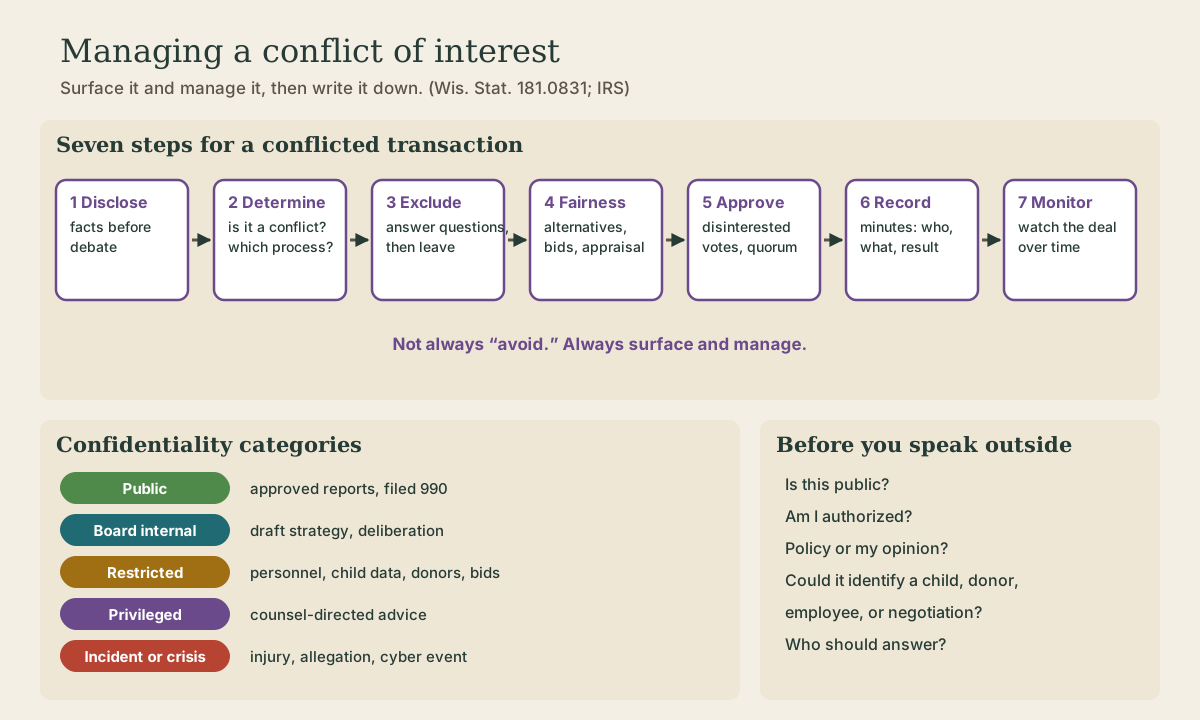
For each transaction:
- disclose facts before debate;
- determine the conflict and process;
- exclude influence—the interested person supplies requested facts, then leaves when required;
- establish fairness through alternatives, bids, comparability, or appraisal;
- use disinterested approval and verify quorum;
- record relationship, recusal, information reviewed, and result;
- monitor the agreement.
Wisconsin’s conflict-transaction statute provides rules and safe pathways; policy may demand more 1. IRS guidance explains how a policy helps identify and manage private-benefit risk 2.
Ask:
- Would we offer these terms to an unrelated party?
- How would this look on Form 990 or to staff and donors?
- Is the interested person’s participation necessary?
- Can trust be protected at reasonable cost?
The answer is not always “avoid.” It is always “surface and manage.”
Confidentiality categories
| Category | Examples | Handling |
|---|---|---|
| Public | mission, approved reports, filed public return | share accurately through authorized channels |
| Board internal | draft strategy, routine deliberation | secure portal; no casual forwarding |
| Restricted | personnel, child data, donor privacy, bids, security | need-to-know, approved system |
| Privileged | counsel-directed legal advice | preserve privilege |
| Incident/crisis | injury, abuse allegation, cyber event | protocol and designated spokesperson |
Policy must preserve protected reporting, cooperation with authorities, and whistleblower rights. Never promise absolute secrecy.
Before speaking externally:
- Is this public?
- Am I authorized?
- Am I stating board policy or personal opinion?
- Could this identify a child, donor, employee, complainant, negotiation, or security control?
- Who should answer?
“I’m a director, but not the authorized spokesperson on that matter. I can connect you.”
Records are institutional memory
Wisconsin requires specified permanent/current corporate records and gives directors/member access rights under defined conditions 3. Maintain:
- articles, bylaws, IRS determination;
- minutes, written actions, resolutions, policies, charters;
- rosters, terms, filings;
- budgets, statements, audits/reviews, tax returns;
- material contracts, grants, restrictions, deeds, debt;
- conflict records;
- controlled executive evaluation/compensation records;
- insurance, claims, incident, and legal records;
- destruction holds for litigation, investigation, audit, or grant review.
Use a role-based repository with multifactor authentication, backups, and offboarding—not personal email as the only copy.
For each record type define:
owner · official copy · location · access · retention · disposal · legal-hold override
Permanent records often include articles, bylaws, approved minutes, major property records, and final returns. Other periods depend on tax, employment, grants, insurance, and contracts; adopt them with advice.
Public disclosure
Federal rules generally require public availability of specified exemption applications and recent annual returns, with donor-identifying exceptions 4. Know where public copies live, who handles requests, what is excluded, and that Form 990 is a public narrative. Never publish a donor schedule or working return just because “990s are public.”
Protection is layered
- sound conduct and documentation;
- entity separation/statutory limits;
- indemnification and expense advancement;
- insurance;
- reasonable expert reliance;
- preventive controls.
Wisconsin director/officer liability limits have boundaries 5. Indemnification has exceptions 6. D&O policies differ on claims-made dates, exclusions, defense, deductibles, limits, and reporting 7.
Ask annually:
- Who and which capacities are insured?
- Is coverage claims-made? What are retroactive/reporting dates?
- Are employment, cyber, abuse, tools, alcohol, vehicles, lodging, property, events, and volunteers addressed by suitable policies?
- Are defense costs inside shared limits?
- Which exclusions matter?
- Who notifies the carrier, how fast, and before admissions?
- Does indemnification align with bylaws and coverage?
- Is tail protection needed?
D&O generally should not be assumed to cover bodily injury, property damage, cyber loss, or abuse.
Incident rule
protect people → call required emergency/authority contacts → follow policy → preserve evidence → notify authorized leadership/insurer/counsel → limit statements → document facts → prevent retaliation
Do not concede liability, conduct amateur forensics, or “clean up” records.
At the first meeting each board year, update conflicts, confidentiality acknowledgments, speaking/incident routes, secure access, insurance understanding, record ownership, and one practice scenario.
Quick check
Then follow policy, preserve evidence, notify leadership, insurer, and counsel, and document facts.
Practice
Disclosure and a documented, disinterested process are essential.
Practice
Protection is layered, conditional, and never a license for misconduct.
Lesson complete
Nice work.
Sources for this lesson
- 1Wisconsin Statutes § 181.0831 — Director conflict of interest. Wisconsin Statutes via Justia. 2025. verifiedCurrent state-law treatment of interested-director transactions and added requirements in governing documents. Cited at: conflict transactions.
- 2Form 1023 — Purpose of Conflict of Interest Policy. Internal Revenue Service. verifiedOfficial explanation of disclosure, recusal, private benefit, and compensation conflicts. Cited at: policy purpose.
- 3Wisconsin Statutes § 181.1601 — Corporate records. Wisconsin Statutes via Justia. 2025. verifiedCurrent corporate-record requirements, including minutes and actions without meetings. Cited at: corporate records.
- 4Exempt Organization Public Disclosure and Availability Requirements. Internal Revenue Service. verifiedOfficial public-inspection and copying rules for annual returns and exemption applications. Cited at: public inspection.
- 5Wisconsin Statutes § 181.0855 — Limited liability of directors and officers. Wisconsin Statutes via Justia. 2025. verifiedCurrent director/officer monetary-liability rule and exceptions; not a substitute for insurance or advice. Cited at: limited liability.
- 6Wisconsin Statutes § 181.0872 — Mandatory indemnification. Wisconsin Statutes via Justia. 2025. verifiedCurrent indemnification rule and exceptions for specified misconduct. Cited at: limitations.
- 7What Do You Know About D&O?. Nonprofit Risk Management Center. verifiedExplains the management-decision focus and important limits of directors and officers liability insurance. Cited at: D&O.
Previous: Meetings That Decide: Agendas, Minutes, and Committees