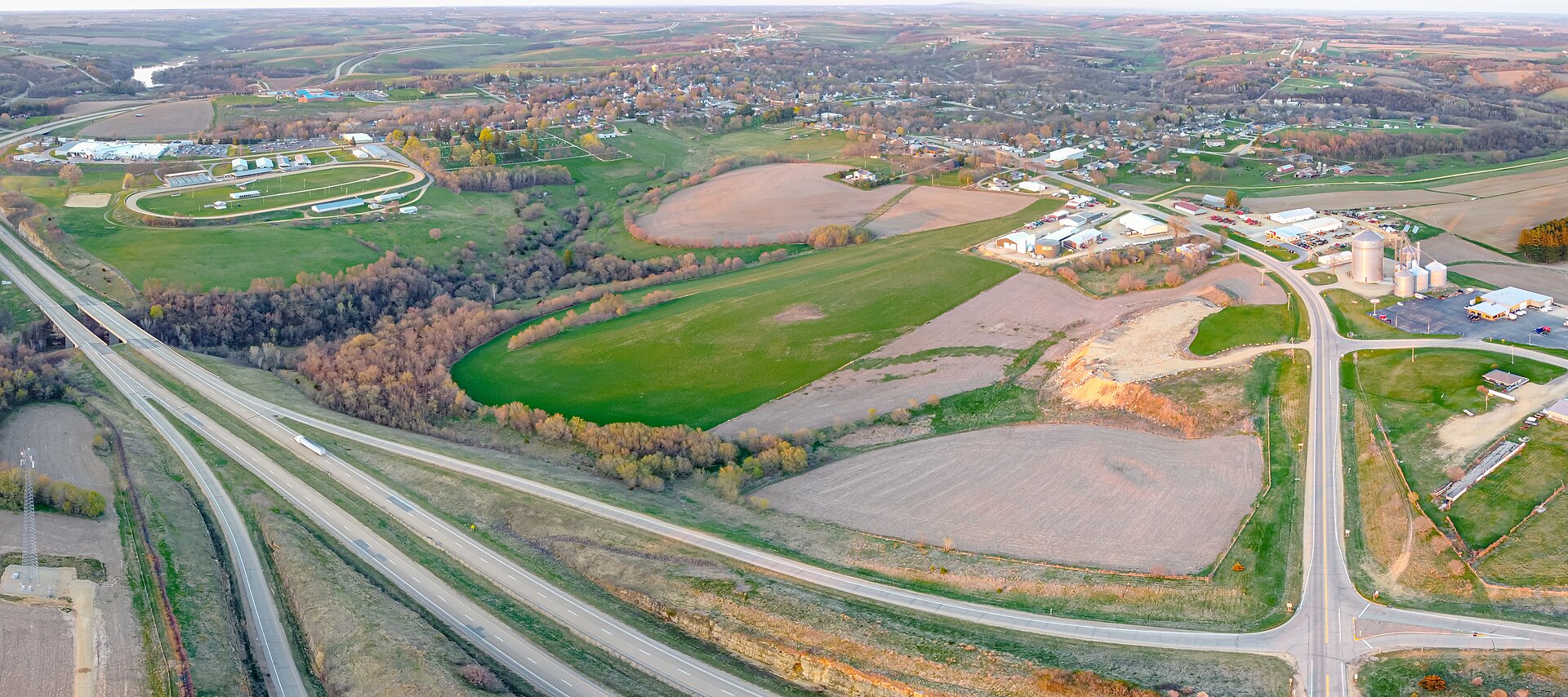
Mineral Point: Place, Memory, and Public Value
Why Mineral Point's history is board business: Indigenous nations before the lead rush, Cornish stone-building, Pendarvis in 1935 and the 1971 National Register district, the local public-value ecosystem, a four-part scorecard, a campus walk, and labeling stories as documented, attributed memory, or legend.
- 6 min
- 9 steps
- 3 questions
- Lesson 2 of 36
In this lesson
- Start before European settlement
- Mining, migration, and built form
- Arts and preservation as an economic transition
- Map the public-value ecosystem
- A four-part public-value scorecard
- Board field lab: walk the mission
- Interpretation rule
- Course rule
Open alongside this lesson
-
Mineral Point Historic District (opens in a new tab)
Use the official record to place the campus inside a larger preservation landscape.
-
Art and History at Shake Rag Alley (opens in a new tab)
Listen for the repeated pattern of industry decline, building rescue, creative use, and tourism.
Picking up where you left off.
Shake Rag Alley’s mission names its rural community and historic campus. Those are not scenic adjectives. They define stakeholders, constraints, partnerships, and the public value the board must protect.

Start before European settlement
Mineral Point’s public history should not begin as though land, minerals, and community appeared when lead prospectors arrived. The Mineral Point Chamber’s history places the city on lands associated with the Kiikaapoi, Sauk and Meskwaki, Ho-Chunk, Myaamia, and Očhéthi Šakówiŋ nations. It also notes that Native American women mined surface minerals in the 1600s for trade with French fur traders 1.
For a board, this creates an interpretive standard:
- do not present “first” and “founding” claims without defining whose history counts;
- distinguish documented evidence, organizational memory, and legend;
- consult appropriate communities when programs use cultural knowledge or representation;
- treat land acknowledgment as an opening to relationship and learning, not a completed obligation.
The organization’s own timeline notes that Federal Spring drew Native people before lead miners camped there 2. A serious campus interpretation plan should connect the spring, land, and human use across periods rather than flattening the story into picturesque mining cabins.
Mining, migration, and built form
European-American settlement accelerated around 1827 as lead drew prospectors. Temporary shelters cut into hills helped produce Wisconsin’s “Badger State” nickname. Cornish immigrants brought hard-rock mining and stone-building knowledge in the 1830s; Irish and German miners also shaped the region 1 3.
Mineral Point became an early center of government: it was Iowa County’s seat in 1829, and Henry Dodge was inaugurated first governor of Wisconsin Territory there in 1836 1. Lead declined; zinc later produced another industrial cycle, with railroad connections carrying materials and linking commerce 3.
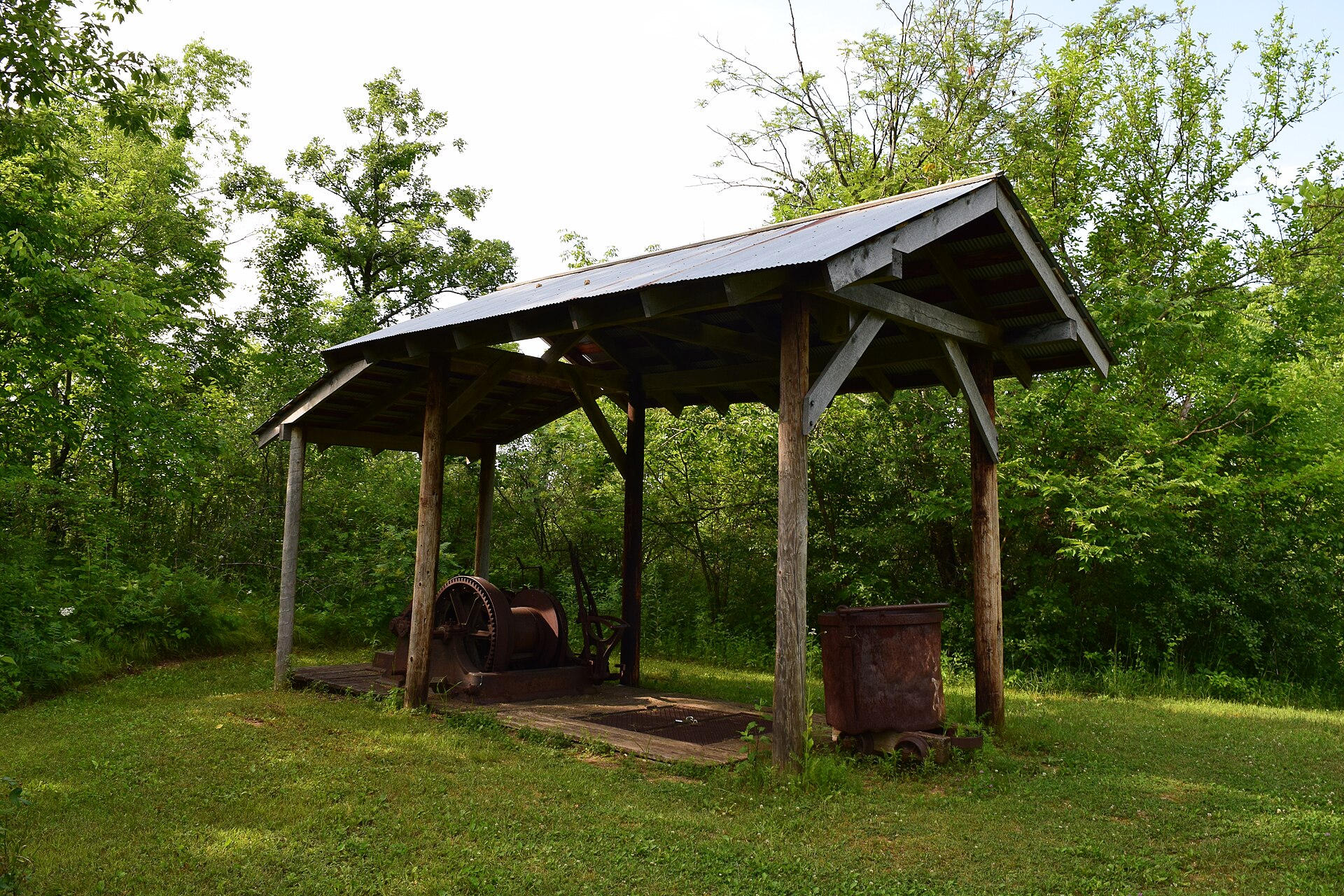

The board implication is not “teach a history survey.” It is to recognize that the campus’s stone, timber, spring, slopes, structures, and name sit inside a history of extraction, labor, migration, poverty, enterprise, and reuse. Preservation choices inevitably interpret that history.
Arts and preservation as an economic transition
In 1935, Bob Neal and Edgar Hellum began restoring miners’ cottages on Shake Rag Street, creating Pendarvis. Artists, craftspeople, and preservationists expanded restoration during the 1960s and 1970s. The Mineral Point Historic District entered the National Register in 1971 1 4.
The PBS Shake Rag lecture describes a repeating pattern: mining and industrial activity declined; buildings deteriorated; artisans and preservationists adapted historic structures into studios, shops, hospitality, and cultural destinations 5.
Shake Rag Alley is one expression of that pattern. The Felly era combined gardens, antiques, blacksmithing, pottery, and public visitation. The 2004 nonprofit acquisition kept the property publicly engaged and turned the campus into arts education infrastructure 2.
This creates a powerful case for support:
Arts education and historic preservation are not separate products sharing an address. Learning activates place; place changes the learning; both contribute to community identity and economic life.
It also creates a risk: romantic stories can hide labor, deferred maintenance, access barriers, environmental costs, or narrow participation. The board must pair narrative with evidence.
Quick check
Artists and preservationists expanded restoration in the 1960s and 70s; the historic district entered the National Register in 1971.
Map the public-value ecosystem
Shake Rag Alley operates among:
- residents and neighborhood property owners;
- adult learners, youth, families, instructors, writers, and performing artists;
- volunteers, donors, alumni, and planned-giving supporters;
- hotels, restaurants, galleries, shops, and tourism organizations;
- the City of Mineral Point, Iowa County, state agencies, and elected officials;
- schools, libraries, historical organizations, foundations, sponsors, and peer arts groups;
- preservation professionals, contractors, insurers, emergency services, and accessibility advocates; and
- Indigenous nations and cultural knowledge holders connected to the region.
These stakeholders do not have equal legal authority, but their interests matter differently. Directors should ask:
- Who receives direct benefit?
- Who supplies money, labor, knowledge, permission, referral, or trust?
- Who bears inconvenience, risk, exclusion, or opportunity cost?
- Whose voice is missing from current evidence?
- Which relationships depend on one staff or board member rather than an institutional connection?
A four-part public-value scorecard
Build an annual place-based dashboard:
| Dimension | Example evidence | Board question |
|---|---|---|
| Creative learning | enrollment, repeat participation, instructor quality, learner work, youth access | What changed for participants? |
| Preservation | condition assessments, maintenance backlog, capital needs, adaptive reuse | Are we preserving responsibly or deferring failure? |
| Community | local participation, volunteer hours, partnerships, free events, neighbor feedback | Who experiences belonging and who does not? |
| Economic/ecosystem | visitor origin, lodging nights, referrals, local purchasing, artist compensation | How does value circulate without distorting mission? |
Avoid one total “impact score.” The dashboard should expose tensions. A national retreat might score high in earned revenue and artist reach while offering little local access. A free family event might score high in community value but create staff strain and no direct revenue. The board’s work is to see the portfolio.
Board field lab: walk the mission
Schedule a 90-minute campus and neighborhood walk with staff guidance.
At each building or program area, record:
- historical significance and current use;
- occupancy, accessibility, life-safety, tool, water, weather, and security concerns;
- program capacity and constraints;
- annual operating cost and foreseeable capital need;
- donor or grant restrictions, naming, or reporting obligations;
- one participant or staff experience the board should understand;
- one story told publicly and its source.
Then walk to Pendarvis or the historic district and identify how Shake Rag Alley is similar to and distinct from other preservation and cultural organizations. Do not promise a project during the walk. Listen, document, and route observations through the executive.
Interpretation rule
Use three labels:
- documented: supported by a reliable record;
- attributed memory: a named person’s account, situated in time;
- legend: a meaningful story not established as fact.
Shake Rag Alley’s official page itself labels the dinner-rag origin of the name a local legend and offers a broader historical use of “Shake Rag” for poor residential areas 2. That is a model of honest storytelling.
Course rule
Govern the place as a living relationship, not a backdrop. Protect history, invite better interpretation, and measure whether the current institution creates value for the community it names.
Practice
Place history informs strategy and accountability, but it does not replace current evidence.
Practice
Honest interpretation can preserve meaning without converting folklore into fact.
Lesson complete
Nice work.
Sources for this lesson
- 1History of Mineral Point. Mineral Point Chamber of Commerce. verifiedLocal historical synthesis beginning with Indigenous lands and mining, then Cornish settlement, zinc, preservation, and arts. Cited at: Indigenous lands and mineral trade; lead and Cornish migration; territorial government; preservation movement.
- 2About Us. Shake Rag Alley Center for the Arts. verifiedCurrent mission, staff and board roster, programs, campus history, and organization timeline. Cited at: timeline; history; name history.
- 3Mineral Point, Wisconsin. Advisory Council on Historic Preservation. verifiedFederal historic-preservation profile of Mineral Point’s mining, architecture, tourism, and adaptive reuse. Cited at: mining population and migration; railroad and zinc.
- 4Mineral Point Historic District. Wisconsin Historical Society. verifiedState record for the National Register historic district and its period of significance. Cited at: district record.
- 5Megan O'Connell. Art and History at Shake Rag Alley. PBS Wisconsin. 2014. verifiedAn 18-minute historical lecture with a full transcript; use as a 2014 institutional-history source, not a current operations source. Cited at: Mineral Point arts and preservation.
Further reading
- City History. City of Mineral Point. verifiedOfficial city overview of settlement, mining, territorial government, and historic sites.
- Wikideas1. Mineral Point, Wisconsin. Wikimedia Commons. 2024. verifiedAerial view released under CC0 1.0.
- TheCatalyst31. Mining equipment on Mineral Point Hill. Wikimedia Commons. 2016. verifiedMineral Point Zinc Mine equipment display released under CC0 1.0.