Donor Conversations, Major Gifts, Stewardship, and Planned Giving
Major-gift conversations: discovery questions, a two-minute case for Shake Rag Alley, preparing the ask, direct, range, and upgrade scripts, handling a no, a written stewardship plan, the Lantern Society and planned gifts, and difficult boundaries such as donors who want control.
- 5 min
- 8 steps
- 3 questions
- Lesson 19 of 36
In this lesson
- The discovery conversation
- The two-minute case
- Prepare the ask
- Ask scripts
- Common questions
- Stewardship plan
- Planned giving
- Difficult boundaries
Picking up where you left off.
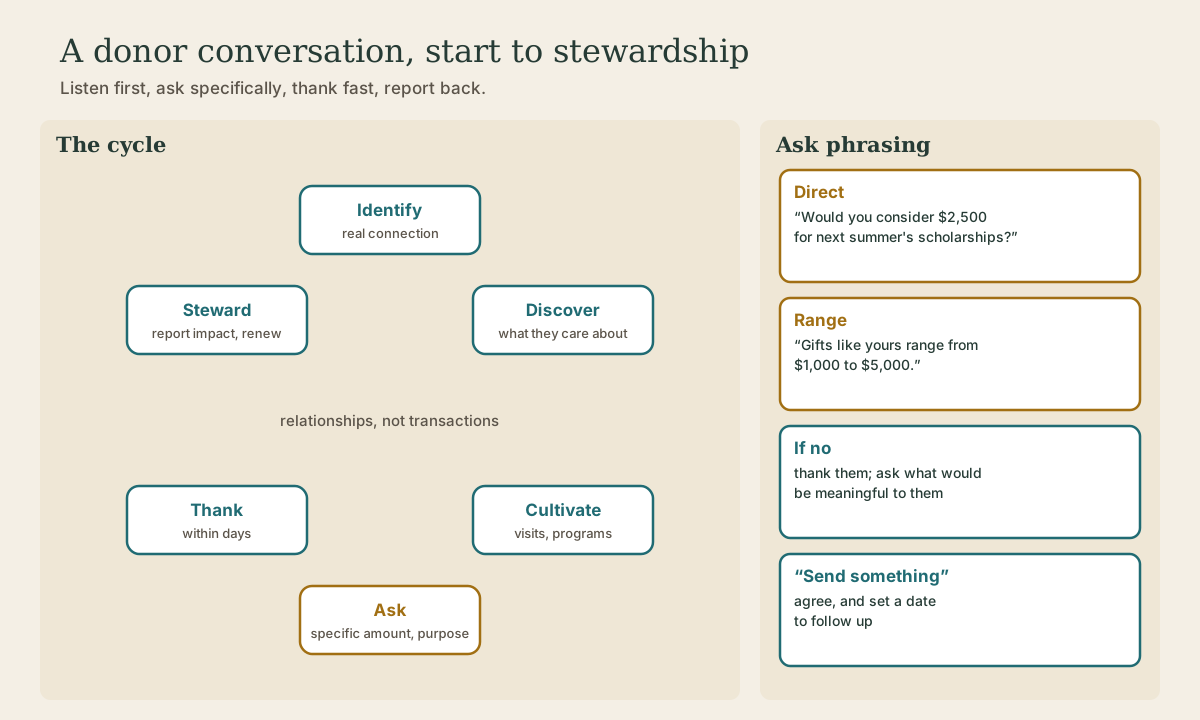
Major-gift work is not a performance. It is a clear conversation about shared purpose, the donor’s agency, and a real organizational plan.
The discovery conversation
Aim to learn, not pitch:
“How did you first encounter Shake Rag?”
“Which experiences or forms of art matter to you?”
“What about Mineral Point or the campus feels distinctive?”
“When you support an organization, what results and communication matter?”
“Is there anyone else who should be part of future conversations?”
Listen for values, desired impact, decision process, time horizon, past experience, recognition/privacy, and restrictions. Do not interrogate about wealth.
Afterward, record only relevant organizational knowledge in the approved system, with next step and consent.
The two-minute case
Adapt:
“Shake Rag Alley brings adults and children into direct creative learning with artists on a historic Mineral Point campus. Fees and lodging help, but they do not fully fund access, artist-centered programming, the systems behind safe learning, or preservation of the place that makes the experience distinctive. This year we are focused on . The total plan is $, with $ committed/earned. We are inviting people who care about ___ to help close $.”
Every blank must be current and verified.
Prepare the ask
Write:
- donor interest and evidence;
- purpose aligned with approved priorities;
- ask amount/range and why plausible;
- unrestricted or accepted restriction;
- project total and committed sources;
- start/end and decision deadline;
- ask lead, relationship partner, staff lead;
- likely questions and honest unknowns;
- recognition/naming authority;
- fallback/alternative;
- follow-up owner/date.
Ask amounts should come from relationship, giving history, research permitted by policy, and plan—not a director’s guess.
Ask scripts
Direct
“You’ve told us that preserving places where artists teach matters to you. Would you consider a gift of $25,000 toward the approved studio-stabilization and access project?”
Then stop. Let the donor think.
Range
“Support for this phase ranges from $10,000 to $50,000. Would a gift in that range be possible for you?”
Renewal/upgrade
“Your unrestricted gift of $2,500 gave the organization flexibility last year. Would you consider renewing at $3,500 as we expand ___?”
If no
“Thank you for being direct. Is it the purpose, amount, timing, or something else? Would you like to stay involved another way?”
No is information, not permission to argue.
If “send something”
“Absolutely. To make it useful, should it focus on youth access, artist learning, the historic campus, or the full annual fund? May I follow up on ___?”
Quick check
And if the answer is no, ask what the barrier is rather than arguing.
Common questions
Why not charge full cost?
Explain access, market, mission subsidy, and true economics with current data.
Why do buildings matter?
Show how safe, distinctive spaces enable programming and preserve public value; provide condition/project evidence.
Can I restrict my gift?
Offer board/management-approved funds. Do not custom-design a tiny restriction that costs more to administer.
Can you guarantee the project?
State conditions, contingency, and what happens if funds exceed or fall short—only as approved in gift language.
What will I receive?
State acknowledgment, recognition, reports, and any benefits. Never imply governance influence.
Stewardship plan
At acceptance, write promises:
| Promise | Owner | Date |
|---|---|---|
| acknowledgment/receipt | development | service standard |
| personal thank-you | director/executive | 48–72 hours |
| restriction setup | finance/development | before use |
| progress report | program lead | agreed date |
| recognition/privacy | communications | per agreement |
| renewal conversation | relationship owner | before anniversary |
Report both progress and material setbacks. Invite learning, not just another ask.
Planned giving
Shake Rag publicly identifies the Lantern Society for those who include the organization in estate plans 1. Planned gifts may involve bequests, beneficiary designations, securities, retirement assets, life insurance, real estate, charitable trusts, or other instruments. Each has legal, tax, liquidity, valuation, restriction, and acceptance issues.
Director role:
- normalize legacy conversation;
- share the official factual language;
- connect the donor with authorized staff;
- encourage independent legal/tax advisers;
- protect confidentiality;
- never draft documents, value assets, promise tax results, or accept complex property.
Starter:
“Some people choose to make Shake Rag part of their long-term plans. If that interests you, I can connect you with the person who can share the organization’s official information. You should make the decision with your own advisers.”
Difficult boundaries
- Donor wants program control: thank them, clarify board/staff authority, offer an approved restriction or decline.
- Donor requests anonymity: confirm what can be anonymous publicly versus legally/administratively.
- Donor is cognitively uncertain or under pressure: pause; involve leadership/counsel; do not exploit vulnerability.
- Director wants credit for a relationship: donor records belong to the organization, not the director.
- Gift creates conflict: use gift-acceptance and conflict procedures.
- Pledge becomes uncertain: listen, document, adjust forecast, and follow policy without humiliation.
Good asking is specific enough for a real yes and safe enough for a real no.
Practice
A respectful ask is prepared around donor interest and an authorized, fundable opportunity.
Practice
Directors should not provide individualized tax/legal advice.
Lesson complete
Nice work.
Sources for this lesson
- 1Ways to Support Shake Rag Alley. Shake Rag Alley Center for the Arts. verifiedCurrent volunteer, donation, planned-giving, event, and legal-name information. Cited at: planned giving.
Further reading
- Nonprofit Fundraising and the Board’s Role. BoardSource. verifiedBoard and staff roles in contributed-income strategy, donor portfolios, cultivation, solicitation, and stewardship.
- The Donor Bill of Rights. Association of Fundraising Professionals. verifiedWidely used ethical expectations for mission information, board stewardship, use of gifts, acknowledgment, privacy, and access to financial information.
- Gift Acceptance Policies. National Council of Nonprofits. verifiedPolicy guidance for restricted, noncash, hard-to-value, burdensome, and mission-conflicting gifts.