Humidity, Sump Pumps, and Radon
Keeping basement air dry enough to stop mold and condensation, sizing a dehumidifier, keeping a sump pump working through a storm, and radon: why to test in Dane County, how to read the result, and what a mitigation system does in an old basement with stone walls or a dirt floor.
- 4 min
- 6 steps
- 2 questions
- Lesson 93 of 111
In this lesson
- Dry air
- Sizing a dehumidifier
- Sump pumps
- Test for radon
- Fixing it
- Try it
Picking up where you left off.
Dry air
Mold and condensation follow humidity. EPA’s advice: keep indoor humidity below 60 percent, ideally 30 to 50 percent, and check it with a $10-50 humidity meter. Condensation on walls, windows, or pipes is the sign it’s too high 1. Vent the dryer outdoors, insulate cold water pipes that sweat, and use a dehumidifier when needed 1.
Quick check
A $10-50 humidity meter tells you where you are.
Sizing a dehumidifier
Dehumidifiers are rated in pints per day. ENERGY STAR’s guide for spaces under 2,000 square feet 2:
| Basement feels | Humidity | Capacity |
|---|---|---|
| Damp, musty at times | 50-75% | 20-30 pints/day |
| Damp all the time, damp spots | 75-90% | 25-40 pints/day |
| Walls or floor sweat, seepage | 90-100% | 30-50 pints/day |
Bigger is better than too small. Run the hose to a floor drain or sump so you don’t empty buckets. Basements are often below 65°F, where coils can frost; look for a unit rated for low temperatures 2.
A dehumidifier treats the air, not the cause: fix gutters and grading first (lesson 1).
Sump pumps
If you have a sump pump, it has to work exactly when storms knock out power. Check it, the dehumidifier, and any water alarms regularly; a battery back-up keeps a sump running in a storm, and its battery should be checked twice a year. Water alarms near the sump, floor drains, and laundry give early warning 3.
Test for radon
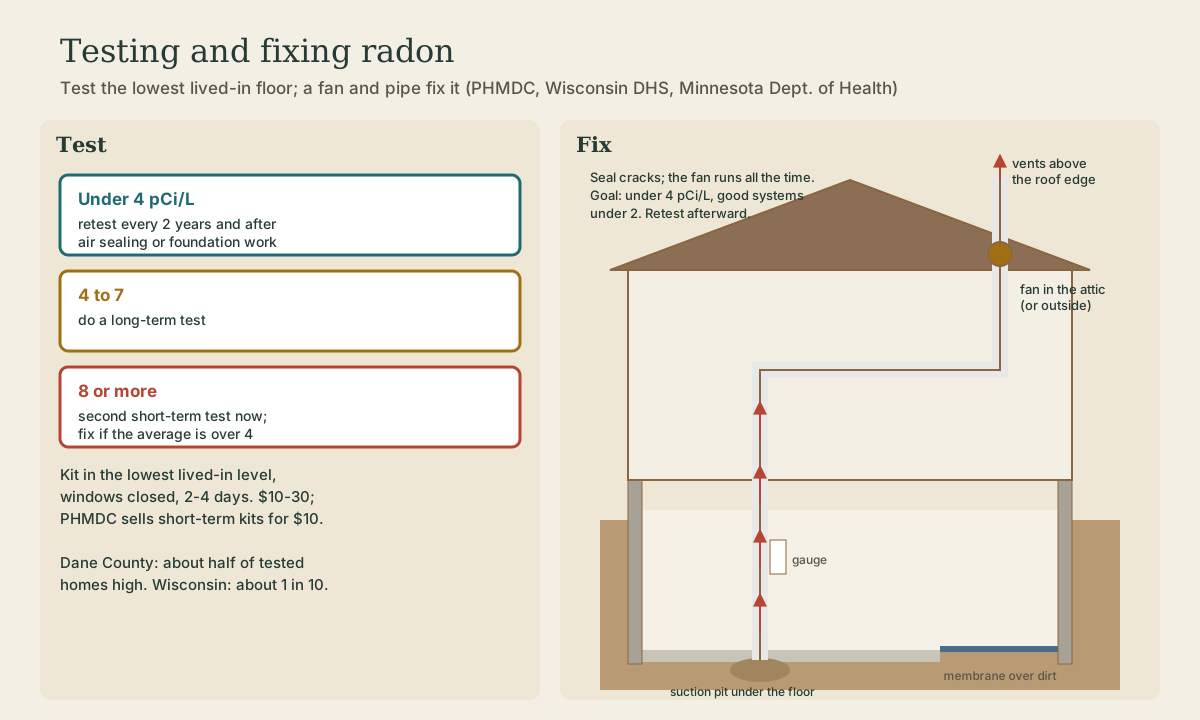
Radon is a radioactive gas from uranium breaking down in the ground; it seeps in through foundations 4. It’s the second leading cause of lung cancer, and smokers’ risk is about 10 times higher 5. About 1 in 10 Wisconsin homes has high radon 4, but in Dane County roughly half of homes tested over three years came back high 5. An old fieldstone foundation with cracks and gaps is no protection, and the only way to know is to test 5.
How to test 5:
- Put the kit in the lowest lived-in level of the house, windows closed, for 2 to 4 days. A basement counts if you spend at least 7 hours a week there.
- Kits cost $10-30 4; Public Health Madison & Dane County sells short-term kits for $10 and long-term ones for $15 5.
- Read the result in picocuries per liter: under 4, retest every two years and after air sealing, heating changes, or foundation work; 4 to 7, do a long-term test; 8 or more, do a second short-term test right away and fix the house if the average is over 4 5.
Quick check
A basement counts as lived-in if you spend about 7 hours a week there.
Fixing it
A mitigation system uses a fan to pull air from the soil under the house and vent it through a pipe above the roof edge, while cracks and openings in the foundation are sealed 6 4. Common types 6:
- Sub-slab suction: a pit dug under the basement floor.
- Drain tile suction: through existing drain tile, with the sump covered.
- Sub-membrane: for dirt floors and crawl spaces, a plastic sheet sealed over the dirt and up the walls, with the pipe pulling from beneath it. That’s the method for an old basement with a dirt floor or a dirt corner.
The fan belongs in an unconditioned space like the attic or outside, never in or below living space; a U-tube gauge on the pipe shows it’s running; and the exhaust must be at least 10 feet up and 10 feet from windows and doors. Systems should bring radon below 4 pCi/L, and good ones below 2. Expect roughly $1,500 to $3,000. Retest at least 24 hours after it starts 6. Wisconsin DHS lists qualified contractors 5.
Try it
Buy a short-term radon kit and a cheap humidity meter on the same trip. Set both in the basement for the same few days. One tells you whether the air is safe to breathe, the other whether it’s dry enough to keep mold away, and together they tell you what, if anything, the basement needs next.
Lesson complete
Nice work.
Sources for this lesson
- 1A Brief Guide to Mold, Moisture and Your Home. U.S. Environmental Protection Agency. verifiedKeep indoor humidity below 60 percent, ideally 30 to 50 percent; a $10-50 humidity meter measures it. Condensation on windows, walls, or pipes signals high humidity: dry it and reduce the source. Vent dryers and stoves outdoors, use dehumidifiers and air conditioners, insulate cold water pipes, and make sure the ground slopes away from the foundation.
- 2Dehumidifiers. ENERGY STAR (U.S. EPA). verifiedCapacity in pints per 24 hours; better to oversize. Small to medium rooms under 2,000 sq ft: slightly to moderately damp (50-75% RH, musty) 20-30 pints; very damp (75-90%, damp spots) 25-40; wet (90-100%, sweating walls or seepage) 30-50; larger spaces more. Hose to a floor drain or sump. Below about 65°F coils can frost; choose a unit rated for low temperatures.
- 3Sharon C. Park. Preservation Brief 39: Holding the Line: Controlling Unwanted Moisture in Historic Buildings. National Park Service, Heritage Preservation Services. 1996. verifiedUncontrolled moisture is the most prevalent cause of deterioration in older buildings. Five sources: above-grade exterior moisture, below-grade ground moisture, leaking plumbing and equipment, interior moisture, and construction water. Diagnosis may take up to four seasons; fix obvious defects like clogged gutters and broken pipes at once. Handling surface runoff is one of the most important measures: a 2 in per hour rain can produce 200 gallons from downspouts in an hour for a house. Saturated soil wets footings and enters basements through cracks; builder's trenches with loose or rubble backfill can hold water against walls; leaking downspout drains and unsealed pipe penetrations feed basements; irrigation near foundations. The ground stays drier by sloping grade away, carrying downspout water well away, ground gutters where there are none, and reducing splash-back; excavation, dampproofing, and footing drains only after those. Try for 6 in of fall in the first 10 ft around the foundation; cover window wells; extension pipes for downspouts. Don't seal damp walls inside with waterproof coatings such as cement parging or vinyl: it drives capillary moisture higher up the wall. Rising damp usually comes from high water tables. Check dehumidifiers and sump pumps; battery back-up for sumps in storms; water alarms.
- 4Radon Information for Wisconsin. Wisconsin Department of Health Services. verifiedRadon comes from uranium breaking down in the ground and enters through foundations. About 1 in 10 Wisconsin homes has high radon. Test kits $10-30 online, at hardware stores, or from Radon Information Centers. Above 4 pCi/L, a contractor installs a pipe through the foundation with a fan that pulls soil gas from under it and vents it outside. Second leading cause of lung cancer; about 21,000 US deaths a year.
- 5Do I Really Need to Test My Home for Radon?. Public Health Madison & Dane County. verifiedOver the past three years roughly half the homes tested in Dane County had high radon. Radon enters through cracks in floors and walls; it is the second leading cause of lung cancer, and smokers' risk is 10 times higher. Test every two years even after a low result: place the kit in the lowest lived-in level (a basement counts if you spend 7 hours a week there), windows closed, 2-4 days. Short-term kits $10, long-term $15 from PHMDC or the South-Central Radon Information Center (608-243-0392). Under 4 pCi/L: retest after air sealing, HVAC changes, or foundation work; 4-7: a long-term test; 8 or more: an immediate follow-up short-term test, and fix if the average exceeds 4.
- 6Radon Mitigation Systems. Minnesota Department of Health. verifiedSystems should get below 4 pCi/L, quality ones below 2. A fan continuously pulls soil air and vents it through a pipe above the roof edge; cracks and openings are sealed. Types: sub-slab suction, drain tile suction (with sump covers), and sub-membrane, where plastic sheeting covers exposed dirt and runs up the wall, sealed, with the pipe pulling from beneath it. Fan in an unconditioned space, never in or below living space; U-tube manometer shows it's working; exhaust at least 10 ft above ground and 10 ft from openings. Typical cost $1,500 to $3,000. Retest at least 24 hours after the system starts.