Pegged and Drawbored Mortise and Tenon
The joint that holds most frames together - its proportions, how to cut it, and the drawbore, a peg hole offset about 1/8 inch so driving the peg pulls the shoulder tight and keeps it tight as the timber dries.
- 5 min
- 7 steps
- 3 questions
- Lesson 104 of 111
In this lesson
- The basic joint
- Typical proportions
- Cutting the mortise
- Cutting the tenon
- Drawboring
- Pegs
- What to take from this
Picking up where you left off.
The basic joint
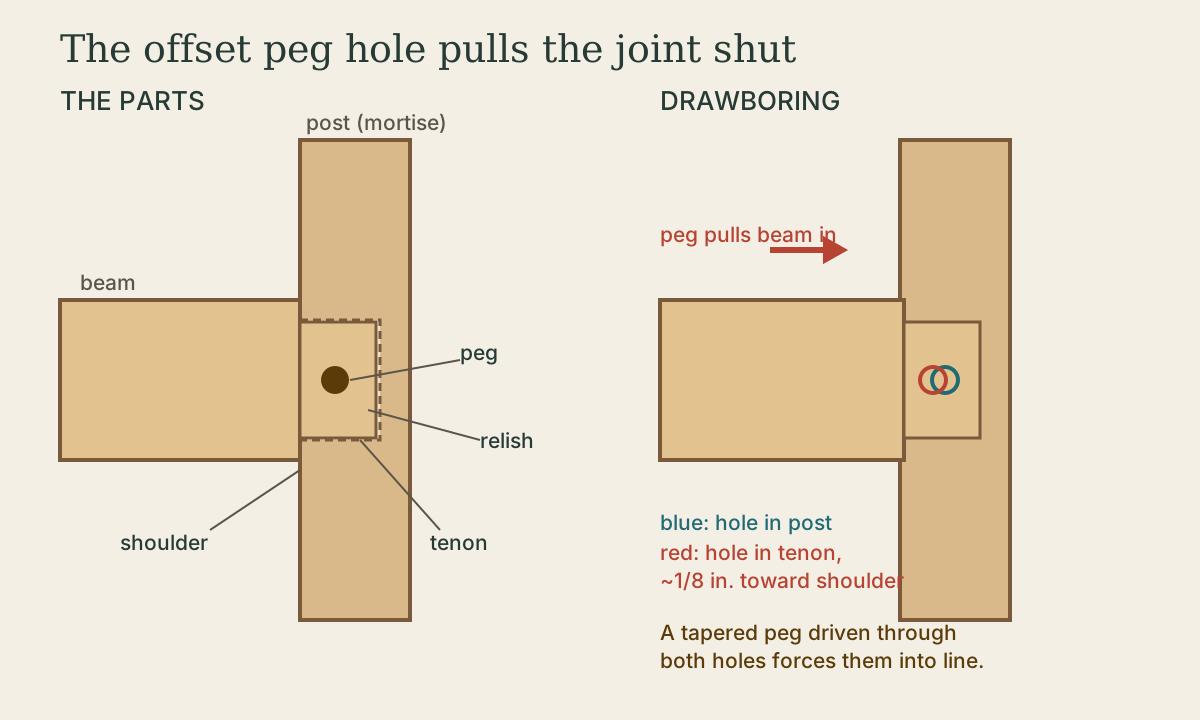
A mortise and tenon joins two timbers at an angle, usually 90 degrees. One timber gets the mortise, a rectangular pocket; the other gets the tenon, a tongue that fits it. The shoulder is where the tenoned timber meets the face of the mortised one. A wooden peg driven through both locks it 1.
The joint carries load several ways: the shoulder or a housing bears compressive and gravity loads; the tenon resists shear; the peg resists the tenon pulling out.
Typical proportions
Exact sizes come from the frame design, but common practice in small frames 2:
- Tenon thickness: often 1 1/2 inches, about a quarter of a 6-inch timber, matched to a 1 1/2-inch chisel. Larger frames use 2-inch tenons.
- Tenon length: commonly 4 to 5 inches into a post; deeper in through-tenons.
- Placement: tenons usually sit a set distance in from the reference face, the same on every joint, so they line up with mortises laid out from the same face.
- Pegs: typically 1 inch in diameter, oak or another strong hardwood, riven or turned and dry.
- Relish: enough wood between the peg hole and the end of the tenon that the peg can’t tear out, and enough between the hole and the edge of the timber.
The Timber Frame Engineering Council publishes engineering guidance on pegged joints, including peg edge distances and drawboring, for frames that need to be engineered 3.
Quick check
About a quarter of the timber; larger frames use 2-in. tenons.
Cutting the mortise
- Lay out from the reference face: the mortise width, length, and the peg hole location.
- Bore a row of overlapping holes to depth, staying inside the lines.
- Chop the ends square with the framing chisel, working in from the ends.
- Pare the long walls flat with the chisel or slick, checking with a square.
- Make the mortise a little deeper than the tenon is long, so the tenon bottoms out on nothing and the shoulder seats.
Cutting the tenon
- Lay out shoulders all around and cheek lines on the end and edges, from the reference face.
- Crosscut the shoulders to depth, on the waste side, with a saw (a circular saw does most of it; finish with a handsaw).
- Rip the cheeks, or kerf and break out the waste, then pare the cheeks flat and parallel to the reference face with the slick.
- Chamfer the end of the tenon slightly so it starts into the mortise easily.
- Test the fit: snug, pushed home with a mallet, not pounded.
Drawboring
A pegged joint whose holes line up exactly holds the timbers together, but as green timbers shrink, a gap can open at the shoulder. Drawboring fixes that.
- Assemble the joint dry and mark the post’s peg hole location onto the tenon, or bore the post first and mark through it.
- Take the joint apart and bore the tenon’s hole about 1/8 inch closer to the shoulder than the mark 4.
- Reassemble and drive a slightly tapered peg through. The peg must force the tenon hole into line with the post holes, which pulls the tenon deeper into the mortise and draws the shoulder tight.
As the timbers dry and shrink, the bent peg acts like a spring and keeps pulling, so the joint stays tight 4. The offset grows with timber size and depends on species; too much offset can split the tenon or break the peg. The Timber Frame Engineering Council’s 2020 design guide covers drawboring for engineered work 3.
Quick check
Offsetting the tenon hole toward the shoulder means the peg has to push it farther into the mortise to line up, drawing the shoulder tight.
Pegs
- Make pegs from dry, straight-grained oak, hickory, or locust. Riven pegs follow the grain and are strongest.
- Shape them octagonal or round, with a long taper on the leading end so they start and steer through offset holes.
- Leave them long, drive them home with a heavy mallet, and trim flush or leave a short projection after the frame is raised.
What to take from this
A mortise and tenon joins timbers with a pocket and tongue, locked by a peg; small frames often use 1 1/2-inch tenons and 1-inch dry hardwood pegs, with enough relish beyond the peg hole. Bore and pare mortises, saw and pare tenons from the reference face. Drawbore by offsetting the tenon hole about 1/8 inch toward the shoulder, so the tapered peg pulls the joint tight and keeps it tight as the timber shrinks.
Practice
If there’s too little wood beyond the peg, the peg tears out through the end of the tenon under load. Enough relish prevents that.
Lesson complete
Nice work.
Sources for this lesson
- 1Jack A. Sobon, Roger Schroeder. Timber Frame Construction: All About Post-and-Beam Building. Storey Publishing. 2012. verifiedClassic reference (first published 1984) on timber selection, tools, joinery, frame types, assembly, and raising. Cited at: Joinery.
- 2Will Beemer. Learn to Timber Frame: Craftsmanship, Simplicity, Timeless Beauty. Storey Publishing. 2016. verifiedHeartwood School's step-by-step guide from timber sourcing to a finished 12×16 frame, including layout, joinery, and raising. Cited at: Joinery.
- 3Timber Frame Engineering Council Technical Bulletins. Timber Framers Guild. verifiedEngineering guidance including TFEC 1 design standard references, Rules of Timber Joinery Design (2011), Seasoning Checks in Timbers (2018), and Draw Boring of Pegged Joints (2020).
- 4Master Carpenter Video: How to Drill and Assemble a Timber-Frame Joint. Fine Homebuilding. 2012. verifiedDrawbored joints with the tenon hole offset about 1/8 inch so the peg pulls the shoulder tight and keeps it tight as timbers shrink.