Cable, Conduit, and Boxes
Every wire has to be protected: by a cable jacket, a raceway, an enclosure, or burial. When to use NM-B (dry only) versus UF (wet and damp), what rigid metal conduit, EMT, PVC, and flexible conduit are each good and bad at (PVC for corrosive barns, never EMT where it gets wet or hit), and the box rules: every splice in a box, cable clamped, 6 inches of free conductor, metal boxes grounded.
- 4 min
- 6 steps
- 3 questions
- Lesson 51 of 111
In this lesson
- The rule behind all of it
- Cable
- Conduit
- Boxes
- Why it matters
- What to take from this
Picking up where you left off.
The rule behind all of it
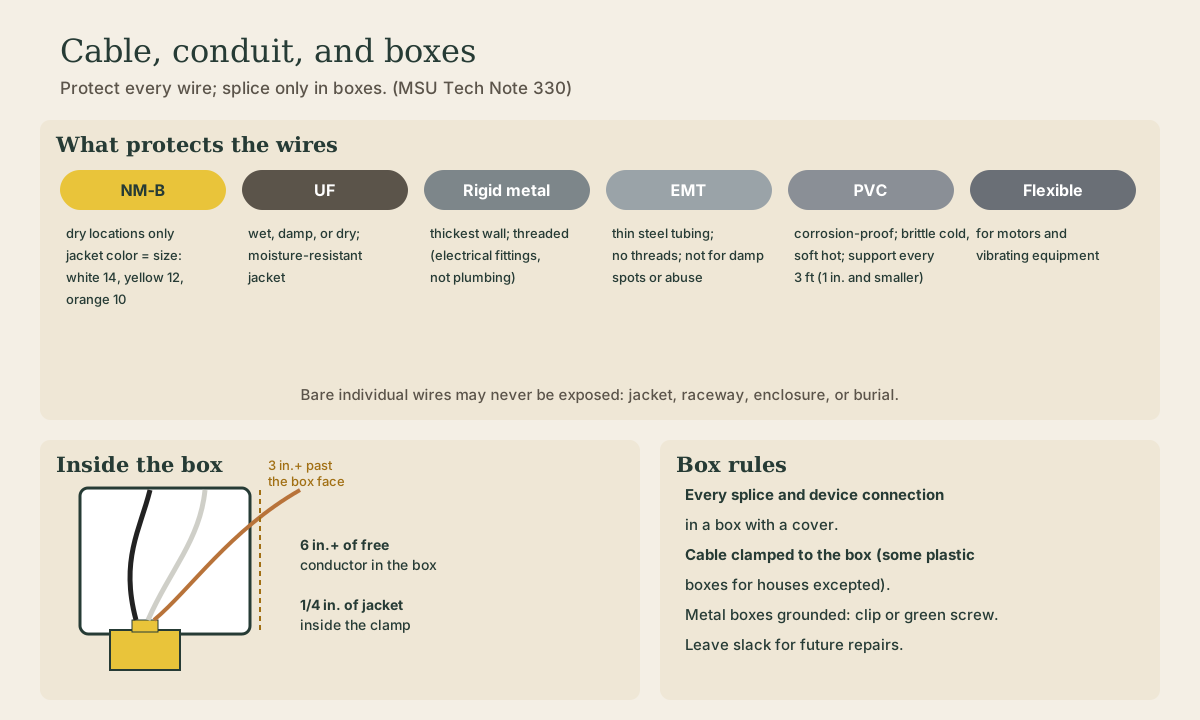
Individual circuit wires may never be left exposed. They have to be protected from damage by a cable jacket, a conduit or other raceway, an enclosure like a box or panel, or burial at adequate depth 1. Every wiring method is one of those.
Cable
NM-B (nonmetallic-sheathed cable, the stuff called Romex) is the standard for concealed wiring in houses. It’s for dry locations only: not damp basements against foundation walls, not outdoors, not in animal barns or milkhouses 1. Its outer jacket color tells you the size: white 14 AWG (15 A), yellow 12 AWG (20 A), orange 10 AWG (30 A) 1.
UF (underground feeder) cable has a solid, moisture-resistant jacket molded around the wires and is suitable for wet, damp, and dry locations 1. It’s the usual choice for a buried run to a yard light or for wiring in a damp outbuilding.
A cable called “12/2 with ground” has two insulated 12 AWG conductors (black and white) plus a bare ground; “12/3” adds a red conductor, for three-way switches or a shared-neutral circuit.
Quick check
Animal buildings are damp and corrosive; MSU recommends PVC there.
Conduit
Where cable isn’t suitable, wires run in conduit, which is made for electrical work; plumbing pipe and fittings don’t count 1:
| Conduit | Strengths | Limits |
|---|---|---|
| Rigid metal (RMC) | thickest wall, strongest; threaded | heavy; threads differ from plumbing, so use electrical fittings; can corrode in barns |
| Intermediate metal (IMC) | threadable, lighter than rigid | — |
| EMT (thin-wall steel) | light, easy to bend | too thin to thread; corrodes in damp air; not where it can be hit; needs raintight fittings outdoors |
| PVC (gray, Schedule 40 or heavier 80) | corrosion-proof, recommended in agricultural buildings | brittle when cold, soft and saggy when hot; support every 3 ft for 1 in. and smaller; glued joints are permanent; expands and contracts |
| Flexible | connections to motors and vibrating equipment | short runs |
In a Wisconsin shop or barn, that table translates simply: PVC where it’s wet or corrosive, EMT in a dry heated shop, rigid metal where things get hit, flexible conduit for the last few feet to a motor.
Quick check
Support 1-inch and smaller PVC at least every 3 feet and allow for expansion.
Boxes
Boxes are where wiring becomes connections, and the rules are about keeping those connections protected and serviceable 1:
- Every splice and every connection to a switch, receptacle, or light is made inside a box, with a cover.
- The cable is secured to the box so it can’t pull loose, with about a quarter inch of jacket inside the clamp. Some nonmetallic boxes in houses are allowed to rely on stapling near the box instead.
- Leave at least 6 inches of free conductor in the box, with at least 3 inches extending outside the box face, so there’s enough to work with later.
- Metal boxes must be grounded, with a grounding clip or a green grounding screw in the box’s tapped hole.
Quick check
Slack lets you make, inspect, and remake connections without splicing on extra wire.
Why it matters
Most wiring failures aren’t dramatic. They’re a cable stapled too tight, NM run through a damp crawl space, a splice buried in a wall without a box, a conduit cracked by a cold-weather bump. Each one is a place where insulation gets damaged or a connection heats up out of sight.
Playback is optional. If the player is unavailable, open the video at its source.
What to take from this
Every wire is protected by a jacket, raceway, enclosure, or burial. NM-B is for dry locations (white 14, yellow 12, orange 10); UF handles wet and damp. Rigid metal is strongest, EMT is light but hates moisture and abuse, PVC is corrosion-proof but needs support and expansion room, and flexible conduit serves motors. All splices go in boxes, cables are clamped, 6 inches of conductor stays in the box, and metal boxes are grounded.
Lesson complete
Nice work.
Sources for this lesson
- 1Electrical Tech Note 330: Wiring Circuits, Basic Rules. Michigan State University, Biosystems & Agricultural Engineering. verifiedEach hot wire is about 120 V to earth and 240 V hot to hot; voltages above about 15 V can be dangerous; NM-B cable for dwellings is commonly 14 AWG for 15 A circuits (white jacket), 12 AWG for 20 A (yellow), and 10 AWG for 30 A (orange); NM cable is for dry locations only; keep the equipment grounding conductor continuous; one wire per device screw terminal.