Lead Paint and Asbestos Before You Open a Wall
Every upgrade in this course means cutting, drilling, scraping, or tearing out something old, and in a house built in 1905 that something probably has lead paint on it and may contain asbestos. EPA's guidance for homeowners: assume lead is there, contain the dust, mist before you scrape, clean with a HEPA vacuum and wet wipes, and leave suspected asbestos alone unless it's damaged or in the way, in which case it's a job for accredited professionals.
- 5 min
- 5 steps
- 3 questions
- Lesson 82 of 111
In this lesson
- Lead paint
- Working lead-safe
- Asbestos
- Try it
Picking up where you left off.
Before you cut a hole for a new switch box, pull trim to fish a cable, or scrape a window sash, stop and think about what’s in the material. In a house this old, the answer is often lead, and sometimes asbestos.
Lead paint
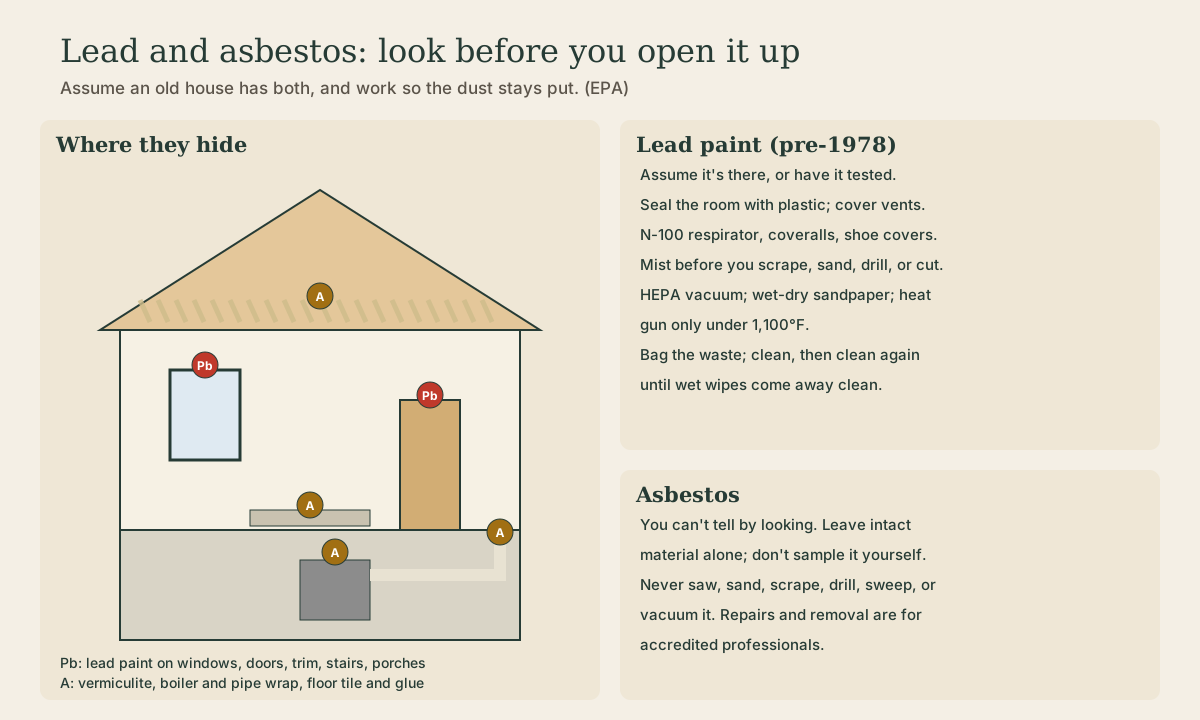
Any home built before 1978 may have lead-based paint, and the older the home, the more likely it is 1. In a 1905 house, assume the original paint layers on windows, doors, trim, stairs, porches, and siding contain lead. Disturbing it is the danger: sanding, scraping, drilling, cutting, and demolition make fine lead dust that settles through the house.
Who the rules cover. EPA’s Renovation, Repair and Painting (RRP) Rule requires contractors working in pre-1978 homes to be lead-safe certified. It generally doesn’t apply to homeowners working on their own home, but it does if you rent out all or part of the house, run a child care center in it, or buy and renovate houses to sell 1. EPA recommends having surfaces tested by a certified lead inspector or risk assessor, or, if you can’t, assuming lead is present 1.
Quick check
EPA still recommends hiring a certified contractor or following DIY lead-safe practices.
Working lead-safe
EPA’s do-it-yourself practices 1:
- Set up. Clear the room. Cover the floor with plastic sheeting and seal doors; tape plastic over anything that can’t leave. Turn off forced-air heating and cooling and tape plastic over the vents. Keep family members out.
- Protect yourself. A disposable N-100 respirator, disposable coveralls, shoe covers, a hat, eye protection, and gloves. No eating or drinking in the work area. Wash your hands and face at every break, and wash work clothes separately.
- Keep the dust down. Mist surfaces before sanding, scraping, drilling, or cutting. Use wet-dry sandpaper or sanding sponges, a HEPA vacuum, power tools with HEPA dust collection, chemical strippers used per their directions, or a heat gun under 1,100°F.
- Control the waste. Bag debris, plastic, and used protective gear in heavy plastic bags, sealed with duct tape.
- Clean, then clean again. Clean the work area every day. At the end, HEPA-vacuum everything, mop, and wipe surfaces with wet disposable cloths until the cloths come away clean.
For electrical work, the dust is mostly concentrated: a box cut into a plastered wall, a few feet of trim pulled to fish a cable. Contain that small area well, with plastic on the floor below and a HEPA vacuum nozzle at the drill bit, and the job stays small.
Quick check
EPA’s DIY practices pair misting with containment, a HEPA vacuum, and wet cleaning.
Asbestos
Asbestos was used in building materials for its strength and heat resistance. EPA lists where it may be found in homes, and an old house can have several 2:
- Vermiculite attic and wall insulation (covered in the insulation module)
- Wrap and coatings on hot-water and steam pipes, and old boilers, furnaces, and their door gaskets
- Vinyl floor tiles, the backing of sheet flooring, and their adhesives
- Textured paint and patching compounds on walls and ceilings
- Roofing and siding shingles
- Asbestos paper, millboard, or cement sheets around wood stoves
You can’t tell asbestos by looking, unless it’s labeled; if in doubt, treat it as asbestos and leave it alone 3. Material that’s in good condition and won’t be disturbed is best left in place; it releases fibers when it’s damaged, cut, sanded, drilled, or scraped 3. Don’t take samples yourself; done wrong, sampling can be more hazardous than leaving the material alone 3.
If suspected asbestos is damaged, or is in the way of your project, have it inspected, and leave repair (sealing or enclosing it) or removal to trained, accredited professionals 3. Meanwhile: don’t dust, sweep, or vacuum possible asbestos debris; don’t saw, sand, scrape, or drill it; and don’t sand old floor tile. Cover it with new flooring instead 3.
Quick check
If it’s damaged or in the way, repair or removal is for accredited professionals.
Try it
Before your next project, walk the work area and list every material you’ll cut or disturb: plaster, paint, trim, flooring, pipe wrap, insulation. Mark each one “assume lead,” “possible asbestos,” or “neither.” For anything in the first two columns, decide before you start: test it, work lead-safe, or call a professional.
Lesson complete
Nice work.
Sources for this lesson
- 1Lead-Safe Renovations for DIYers. U.S. Environmental Protection Agency. verifiedHomes built before 1978 may have lead-based paint. The RRP Rule generally doesn't apply to owners working on their own home, but EPA recommends lead-safe practices: find out if lead paint is present (or assume it), contain the work area with plastic sheeting, turn off forced air and cover vents, wear an N-100 respirator, coveralls, and shoe covers, mist before sanding or scraping, use a heat gun under 1,100 °F or chemical strippers, use power tools with HEPA vacuum attachments, clean with a HEPA vacuum and wet methods daily, bag waste, and clean again at the end.
- 2Learn About Asbestos. U.S. Environmental Protection Agency. verifiedWhere asbestos may be found in homes: vermiculite attic and wall insulation; vinyl floor tiles, sheet-flooring backing, and adhesives; roofing and siding shingles; textured paint and patching compounds; asbestos paper, millboard, or cement sheets around wood stoves; hot water and steam pipes coated or wrapped with asbestos; oil and coal furnaces and door gaskets. Exposure occurs when material is disturbed; it increases the risk of lung disease, worse with smoking.
- 3Protect Your Family from Exposures to Asbestos; Learn About Asbestos. U.S. Environmental Protection Agency. verifiedYou usually can't tell asbestos by looking; if in doubt, treat it as asbestos and leave it alone. Material in good condition that won't be disturbed should be left alone; damaged material or material in the way of remodeling should be sampled by an accredited professional (self-sampling can be more hazardous than leaving it), and removal or major repair done by trained professionals. Likely places: vermiculite attic insulation, vinyl floor tiles and sheet-flooring backing and adhesives, roofing and siding shingles, textured paint and patching compounds, paper or cement board around wood stoves, pipe insulation, furnace door gaskets. Health effects include lung cancer, mesothelioma, and asbestosis, years after exposure.