Preventing and Thawing Frozen Pipes
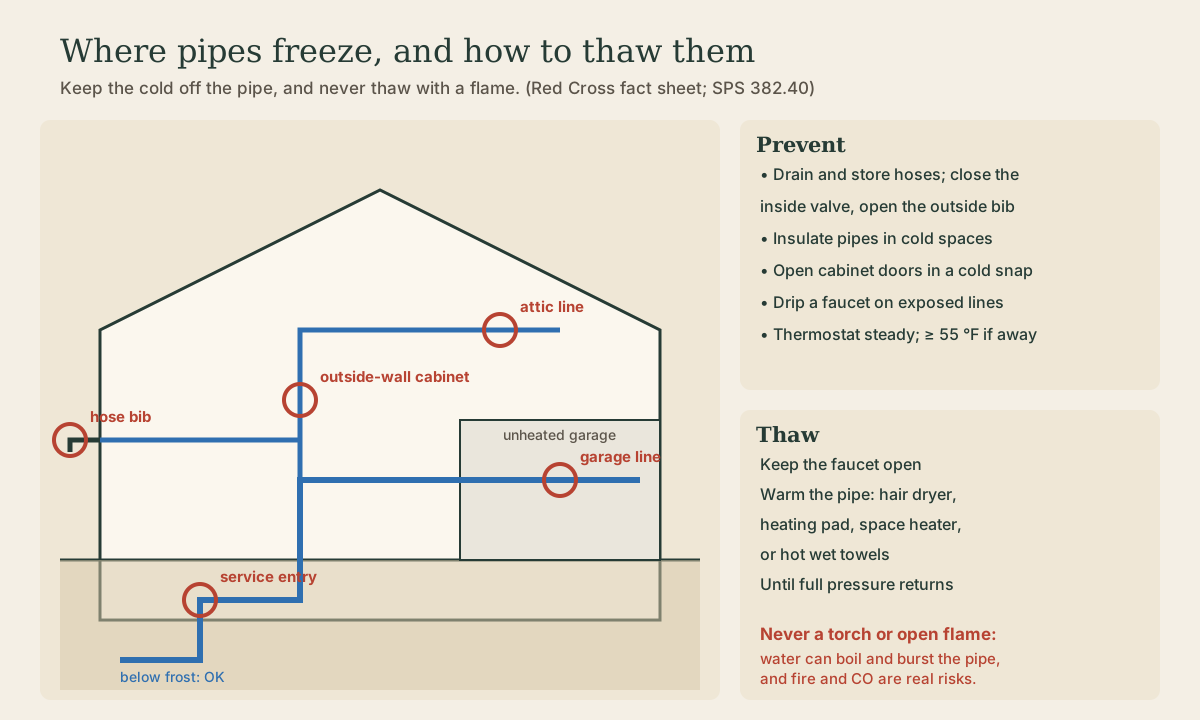
Why freezing breaks pipes (ice expands and the pressure has nowhere to go), the spots that freeze first (hose bibs, garages, crawl spaces, attics, outside-wall cabinets, the service entry), how Wisconsin's code keeps buried lines and wall bibbs safe (below frost depth; frost-proof, self-draining bibbs), the Red Cross prevention list (drain hoses, insulate, open cabinets, drip, keep heat at 55 °F or more), and how to thaw a pipe without a flame.
- 4 min
- 5 steps
- 3 questions
- Lesson 43 of 111
In this lesson
- Why pipes burst
- What the code does
- Before and during the cold
- Thawing a frozen pipe
- What to take from this
Picking up where you left off.
Why pipes burst
Water expands when it freezes, and the pressure it puts on its container can break any pipe, metal or plastic 1. The split often isn’t at the ice itself: the ice plug traps water between it and a closed faucet, and that’s where pressure builds.
The pipes that freeze first, per the Red Cross 1:
- Outdoor hose bibs and sprinkler lines.
- Pipes in unheated spaces: basements, crawl spaces, attics, garages.
- Pipes in kitchen and bath cabinets on outside walls.
- Pipes running along exterior walls with little insulation.
- Where the water service enters through the foundation.
Quick check
Plastic and copper both split; the break is often away from the ice plug, where pressure builds.
What the code does
Wisconsin’s plumbing code builds in freeze protection 2:
- All parts of the water supply must be protected from freezing.
- Water services and private water mains are buried below the predicted frost depth (from the code’s frost-zone map and soil table, next lesson), unless protected some other way.
- Any hose bibb or hydrant through the exterior wall of a heated building must be frost-proof and self-draining: the valve seat sits back inside the warm wall, and when you shut it off, the length of pipe in the cold wall drains out. A hose left connected keeps it from draining, which is how frost-proof bibbs still split.
Before and during the cold
The Red Cross list 1:
- Before winter: drain sprinkler lines; remove, drain, and store hoses; close the inside valve feeding any old-style bib and leave the outside faucet open so trapped water can expand.
- Insulate hot and cold pipes in unheated areas with foam pipe sleeves, or install UL-listed heat cable following its instructions. A hot pipe freezes just as fast once the water in it sits still.
- In a cold snap: keep the garage door closed if there are pipes in it; open cabinet doors under sinks on outside walls; let the cold water drip from faucets on exposed lines, since moving water is above freezing.
- Keep the thermostat the same day and night during severe cold.
- Away from home, leave the heat on at no lower than 55 °F.
Quick check
On a well, shutting off and draining the house is the extra-safe option for long absences.
Thawing a frozen pipe
A faucet that only trickles in cold weather is the sign. Find the likely spot, usually where the pipe runs along an exterior wall or comes in through the foundation, then 1:
- Open the faucet. As the ice softens, flowing water melts the rest.
- Warm the pipe with an electric heating pad, a hair dryer, a space heater kept away from anything flammable, or towels soaked in hot water.
- Keep at it until full pressure returns, and check other faucets for more frozen spots.
Never use a blowtorch, kerosene or propane heater, or any open flame. Water trapped in the pipe can boil and burst it, and flames inside walls start fires and make carbon monoxide 1. If you can’t find or reach the frozen section, or a pipe has split, shut off the main and call a plumber.
Playback is optional. If the player is unavailable, open the video at its source.
Quick check
A torch can boil trapped water and burst the pipe, and starts fires inside walls.
What to take from this
Freezing water expands and splits pipes, starting with hose bibs and lines in garages, crawl spaces, attics, and outside walls. Wisconsin’s code buries services below frost depth and requires frost-proof, self-draining wall bibbs, which only work with the hose off. Insulate cold-space pipes, open cabinets and drip faucets in a cold snap, and keep the heat at 55 °F or more when away. Thaw with the faucet open and gentle heat, never a flame.
Lesson complete
Nice work.
Sources for this lesson
- 1Fact Sheet: Preventing and Thawing Frozen Pipes. American Red Cross (distributed by Outagamie County Public Health, Wisconsin). verifiedWater expands as it freezes and can break any pipe; most at risk are hose bibs, sprinkler lines, and pipes in unheated basements, crawl spaces, attics, garages, cabinets, and against poorly insulated exterior walls; drain and store hoses, close the inside valve to each hose bib and leave the outside bib open; insulate hot and cold pipes in unheated areas, or use UL-listed heat cable per instructions; in cold weather keep garage doors closed, open cabinet doors, let cold water drip from faucets on exposed pipes, keep the thermostat the same day and night, and leave heat at no lower than 55 °F when away. To thaw: keep the faucet open, heat the pipe with an electric heating pad, hair dryer, space heater kept away from flammables, or hot wet towels until full pressure returns; never use a blowtorch, kerosene or propane heater, or other open flame (water can boil and burst the pipe; fire and carbon monoxide); call a plumber if you can't find or reach the frozen spot.
- 2Wis. Admin. Code ch. SPS 382, Design, Construction, Installation, Supervision, Maintenance and Inspection of Plumbing. Wisconsin Legislature. 2026. verifiedRegister August 2026. SPS 382.10: plumbing protects health and the waters of the state; fixtures need adequate water volume and pressure; drains must carry waste efficiently with cleanouts and enough air circulation that trap seals are never siphoned, aspirated, or forced; every dwelling on a sewer or POWTS needs at least one water closet, wash basin, kitchen sink, and tub or shower. SPS 382.30: horizontal branch drains 2 inches or less slope at least 1/4 inch per foot, larger ones 1/8 inch per foot; drainage fixture units, e.g. residential water closet 4, bathroom group 6, residential kitchen sink 2, lavatory 1, residential shower 2, residential clothes washer 4. SPS 382.31: each gravity building sewer served by at least one 3-inch stack to a vent terminal; vent terminals at least 2 inches for frost; trap-to-vent maximum developed lengths (1/4 inch per foot, sanitary tee: 1-1/4 in. 5 ft, 1-1/2 in. 6 ft, 2 in. 8 ft, 3 in. 12 ft, 4 in. 16 ft); vents not within two diameters of the weir; air admittance valves allowed with limits. SPS 382.32: trap seals 2 to 4 inches; trap primers for evaporation; prohibited traps include bell, drum, non-integral S-traps, partition, and moving-part traps. SPS 382.40: minimum flow pressure 8 psig at fixtures, 15 for washdown and siphonic water closets, 20 for one-piece tank toilets and pressure-balance or thermostatic mixing valves, 25 for blowout fixtures; over 80 psig requires a pressure reducing valve and strainer downstream of the meter and upstream of fixtures; sizing accounts for fixture load, minimum supply pressure, elevation, device losses, minimum fixture pressure, and friction.