Radiators: Steam or Hot Water?
How to tell one-pipe steam, two-pipe steam, and hot water apart by looking at the radiator; bleeding air from hot-water radiators; why one-pipe steam valves must be fully open and radiators pitched back toward them; and why old steam systems built for coal need bigger vents now.
- 4 min
- 8 steps
- 2 questions
- Lesson 83 of 111
In this lesson
- Tell them apart
- Bleeding hot-water radiators
- One-pipe steam
- Two-pipe steam
- Coal’s legacy
- The pipes in the basement
- Try it
Picking up where you left off.
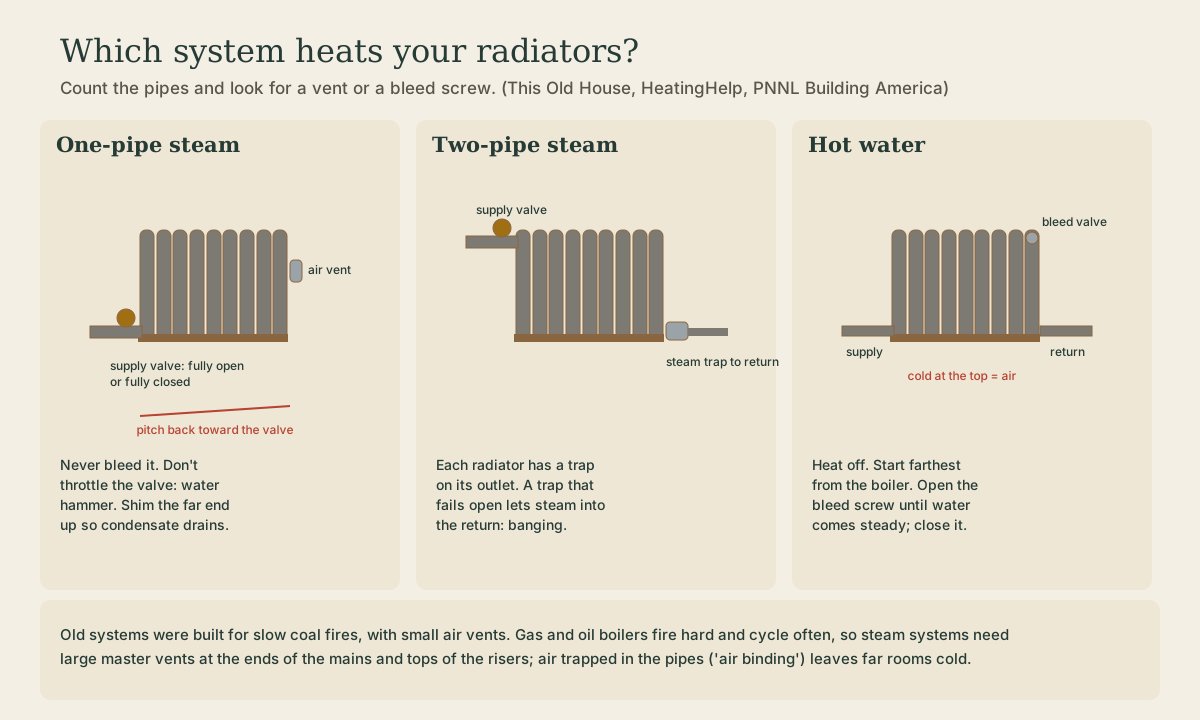
By the late 1800s, steam and low-pressure hot-water radiator systems were common in houses, many first fired with coal; the radiators can usually stay and be served by a new boiler 1. Before fixing anything, find out which kind you have.
Tell them apart
- One-pipe steam: a single pipe enters at one bottom end through a valve, and a small air vent sits partway up the other end. Steam goes in and condensed water drains out through the same pipe.
- Two-pipe steam: a valve at the top of one end and a steam trap at the bottom of the other, leading to a return pipe. Each radiator has its own trap 2.
- Hot water: two pipes, a supply and a return, and a small bleed valve at the top of one end 3.
Quick check
Bleed valves are for hot-water radiators; steam radiators vent air through their air vents.
Bleeding hot-water radiators
Air in a hot-water system rises to the tops of the radiators: the top stays cold while the bottom is warm, heat comes slowly, and the pipes gurgle 3.
- Turn the heat off so the system doesn’t draw in more air.
- Start with the radiator farthest from the boiler, and work back toward it.
- Hold a bowl or rag under the bleed valve and open it counterclockwise with a radiator key or screwdriver.
- Let it hiss until a steady stream of water comes, then close it. The water may be hot.
That’s from This Old House 3. If you bleed often, the system is taking in air or losing water; have the boiler’s fill and expansion tank checked.
One-pipe steam
Never bleed a steam radiator. Instead 2:
- The valve is fully open or fully closed. It’s a service valve; throttling it makes steam and condensate fight in the valve and causes water hammer.
- Pitch the radiator back toward the valve so the condensate drains. Check it with a level, section by section on a big one, and shim the far end with small blocks.
- Keep the air vent working. If the radiator stays cold, the vent may be stuck closed; if it spits water, the radiator may be holding condensate or the steam may be wet.
Quick check
It’s a service valve: fully open or fully closed, nothing in between.
Two-pipe steam
Each radiator’s trap lets condensate out but keeps steam in. A trap that fails open lets steam into the return, where it hammers into the draining water 2. Banging returns mean traps need service.
Coal’s legacy
Steam systems were built for coal fires that came up slowly and burned all day, so they got small vents. Gas and oil boilers fire hard and cycle on and off, and air left in the pipes from the last cycle has to get out fast, or the far rooms stay cold: “air binding.” “Most steam systems have vents that are too small”; the fix is large master vents at the ends of the mains and tops of the risers, with a properly sized boiler so the vents run quietly 4.
The pipes in the basement
Old hot-water and steam pipes may be wrapped or coated with asbestos insulation 5. Leave it undisturbed until it’s tested (module 5, lead and asbestos).
Try it
On a cold morning with the heat running, walk the house and touch the top of every radiator. Note which are cold on top (air, if hot water) or slow to heat (venting, if steam). That list is your to-do order.
Lesson complete
Nice work.
Sources for this lesson
- 1Sharon C. Park. Preservation Brief 24: Heating, Ventilating, and Cooling Historic Buildings. National Park Service, Technical Preservation Services. 1991. verifiedBy the late 1800s steam and low-pressure hot-water radiator systems were common, often fired from coal; hydronic radiators can be kept and served by new boilers and circulating pumps. Recommends reusing radiator systems with new boilers where possible and keeping historic grilles and radiators; cover photo of a coal boiler converted to oil and still in use.
- 2Dan Holohan. What Causes Water Hammer? And How Do You Stop It?. HeatingHelp.com. verifiedA one-pipe steam radiator 'has to pitch back toward its supply valve so the condensate can flow out'; check with a level and shim with small blocks. The one-pipe supply valve is a service valve, 'either fully opened or fully closed'; throttling causes water hammer. In two-pipe steam, each radiator has a steam trap; a trap failed open lets steam into the return and causes hammer. Steam mains pitch 1 in per 20 ft (parallel flow) or 1 in per 10 ft (counterflow).
- 3How to Bleed a Radiator. This Old House. verifiedAir in a hot-water system rises to the tops of radiators: cold tops, slow heating, gurgling. Turn the heat off first; place a bowl or rag under the bleed valve at the top of one end; open it counterclockwise with a radiator key or screwdriver until the hissing air gives way to a steady stream of water, then close it; start with the radiator farthest from the boiler and work back.
- 4Steam System Balancing for Multifamily Existing Buildings. Building America Solution Center, Pacific Northwest National Laboratory (U.S. DOE). verifiedAir left in steam pipes after a cycle must be pushed out before steam can reach radiators; air trapped in mains and risers ('air binding') leaves far rooms underheated. 'Most steam systems have vents that are too small'; install very-high-capacity master vents at the ends of mains and tops of risers. 'Air binding exemplifies coal's legacy': coal fires ran slowly all day, while oil and gas fire hard and cycle repeatedly, so air must vent fast. Oversized or poorly controlled boilers make loud vents and wet steam.
- 5Learn About Asbestos. U.S. Environmental Protection Agency. verifiedWhere asbestos may be found in homes: vermiculite attic and wall insulation; vinyl floor tiles, sheet-flooring backing, and adhesives; roofing and siding shingles; textured paint and patching compounds; asbestos paper, millboard, or cement sheets around wood stoves; hot water and steam pipes coated or wrapped with asbestos; oil and coal furnaces and door gaskets. Exposure occurs when material is disturbed; it increases the risk of lung disease, worse with smoking.