Lead and Asbestos
The two hazards hiding in old-house materials. Lead: how likely paint is to be leaded by the house's age, why dust is the danger, Wisconsin's DHS 163 rule for paid work and the owner exemption, and EPA's lead-safe steps for doing it yourself (contain, N-100 respirator, mist, no flame or heat gun over 1,100 °F, HEPA, wet cleanup, bag the waste). Asbestos: where it hides (vermiculite, floor tile and mastic, textured ceilings, pipe and boiler wrap, cement siding, stove board), and EPA's rule to leave sound material alone and have damaged or in-the-way material sampled and removed by accredited professionals.
- 6 min
- 6 steps
- 3 questions
- Lesson 27 of 111
In this lesson
- Why dust is the problem
- Lead: how likely by age
- Who the rules cover
- Working lead-safe
- Asbestos
- What to take from this
Picking up where you left off.
Why dust is the problem
Lead and asbestos in an old house are mostly harmless while they sit still under paint or inside a wrap. They become dangerous as dust and fibers: lead dust that gets swallowed, especially by young children, and asbestos fibers that get breathed in. Renovation is exactly what turns them into dust. Wisconsin’s health department puts the scale of it bluntly: the amount of lead dust that can poison a child is too small to see 1.
.jpg)
Lead: how likely by age
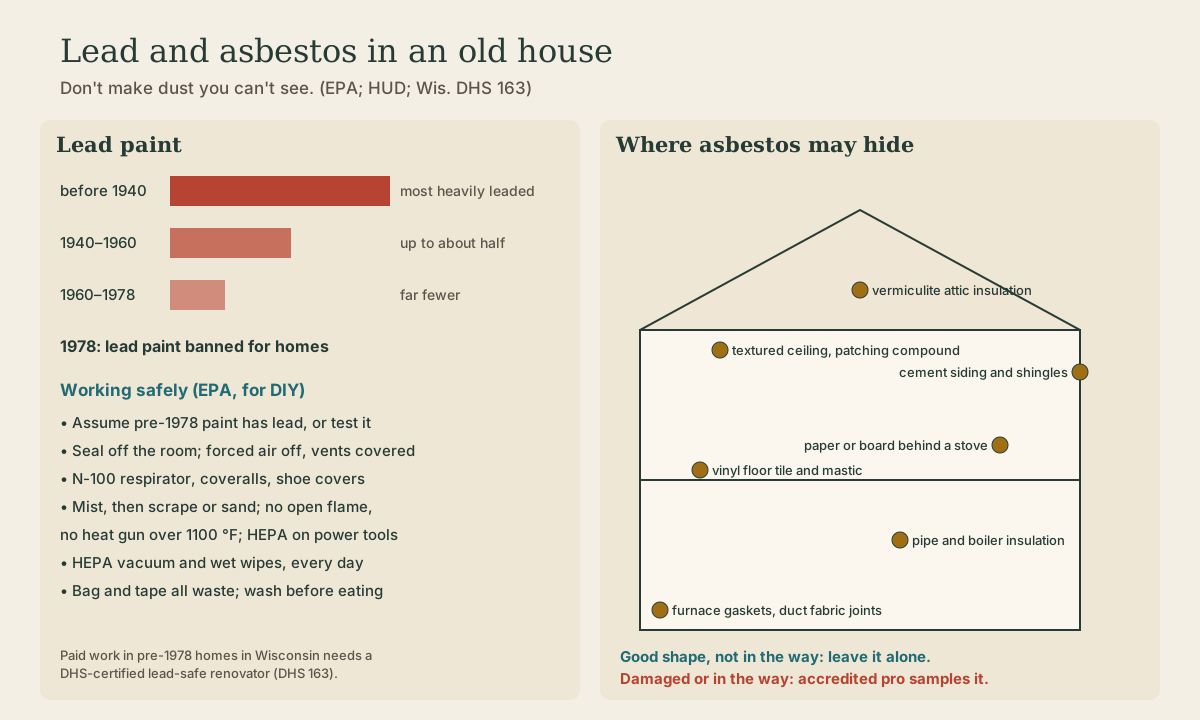
Lead paint was banned for homes in 1978, but it wasn’t removed from houses already painted, and much of it is now old and crumbling 1. HUD’s inspection guide gives the odds by age 2:
- Before 1940: most homes used heavily leaded paint.
- 1940 to 1960: up to about half.
- 1960 to 1978: far fewer.
So in a pre-1940 Wisconsin farmhouse, assume every original painted surface (trim, windows, doors, porch, siding) has lead under the newer coats. EPA’s advice for any pre-1978 house is to test the surfaces you’ll disturb with a certified inspector or risk assessor, or simply assume lead and work accordingly 3. No amount of lead is safe, for adults either 1.
Who the rules cover
Wisconsin runs its own version of EPA’s renovation rule, Wis. Admin. Code ch. DHS 163. It covers paid renovation work in homes and child care centers built before 1978 that disturbs 6 square feet of paint in a room, 20 square feet outside, or any window replacement; such jobs need a DHS-certified lead-safe renovator 1. It doesn’t cover you working on your own home as long as only your immediate family lives there, no child with an elevated blood lead level lives there, and no part is rented 1. Rent out an upstairs apartment, or fix up a house to sell, and it applies 1.
Being exempt doesn’t make the dust any safer. EPA recommends lead-safe practices for every DIY job in a pre-1978 house 3.
Quick check
Assume 1925 paint is heavily leaded and work as if it is.
Working lead-safe
EPA’s DIY steps 3:
- Set up. Clear the room of furniture, rugs, and food. Cover the floor with plastic and seal doors; make a plastic-flap airlock if needed. Turn off forced-air heating and cooling and tape plastic over the vents. Keep everyone else out.
- Protect yourself. A disposable N-100 respirator, coveralls, a hat, shoe covers, eye protection, and gloves. Wash hands and face at every break.
- Minimize dust. Mist surfaces before scraping, sanding, drilling, or cutting. Use wet-dry sandpaper or sanding sponges, chemical strippers per their directions, or a heat gun under 1,100 °F; never an open flame. Use power tools only with HEPA vacuum attachments.
- Clean daily. HEPA vacuum, then wet wipes and a two-bucket mop. Clean tools every day. A regular shop vacuum just blows fine lead dust back out.
- Control waste. Bag everything (chips, plastic sheeting, wipes, filters, coveralls) in heavy bags, tape them shut, and double-bag if needed. Most home renovation waste goes to a licensed landfill as ordinary solid waste; check local rules.
- Clean again at the end until no dust or debris remains.
Playback is optional. If the player is unavailable, open the video at its source.
Quick check
High heat vaporizes lead into fumes.
Asbestos
Asbestos was used for its strength and heat resistance in many building products. EPA lists the places to expect it in a house 4:
- Vermiculite attic and wall insulation (loose, pebbly, gray-brown or gold);
- vinyl floor tiles, the backing of vinyl sheet flooring, and their adhesives;
- textured paint and patching compounds on walls and ceilings;
- roofing and siding shingles of asbestos cement;
- paper, millboard, or cement sheets behind wood stoves;
- pipe and boiler insulation, wraps, and tape;
- furnace door gaskets and old oil or coal furnace insulation.
HUD’s guide adds sealants and putties, ceiling tiles, and the fabric connectors between sections of metal ductwork 2.
You can’t tell asbestos by looking, and EPA’s advice is to treat suspect material as asbestos 4:
- In good condition and not going to be disturbed: leave it alone, and check it now and then for damage. Intact material isn’t likely to release fibers.
- Damaged, or in the way of planned work: have a trained, accredited professional take samples. Don’t sample it yourself; done wrong, sampling can release more fibers than leaving it alone.
- Removal or major repair: by people trained and qualified to handle asbestos. HUD’s guide adds that deteriorated material may be enclosed, encapsulated, or removed, and that the decision belongs to a certified professional 2.
Never sand, saw, drill, scrape, or sweep suspect material 4. The diseases it causes (lung cancer, mesothelioma, asbestosis) show up years after exposure, and smoking makes the lung risk worse 4.
Quick check
Undamaged material that won’t be disturbed isn’t likely to release fibers; self-sampling can be riskier than leaving it.
What to take from this
In a pre-1940 house, assume original paint is heavily leaded, and in any pre-1978 house test or assume. Your own owner-occupied home is outside Wisconsin’s DHS 163, but paid work, rentals, and flips are inside it, and the dust is just as toxic either way. Work lead-safe: contain, N-100, mist, no flame or hot heat gun, HEPA tools and vacuum, wet cleanup, bag the waste. Leave sound asbestos-suspect material alone; have damaged or in-the-way material sampled and removed by accredited professionals.
Lesson complete
Nice work.
Sources for this lesson
- 1Lead-Safe Renovation Rule FAQs. Wisconsin Department of Health Services. verifiedWisconsin's rule (Wis. Admin. Code ch. DHS 163, administered by DHS for EPA) covers paid renovation in homes and child care centers built before 1978 that disturbs 6 sq ft of painted surface in a room, 20 sq ft outside, or any window replacement. It doesn't apply to owners working on their own home if only the owner's immediate family lives there, no child with an elevated blood lead level lives there, and no part is rented. No amount of lead is safe; lead dust that can poison a child is too small to see.
- 2Residential Rehabilitation Inspection Guide. U.S. Department of Housing and Urban Development, Office of Policy Development and Research. 2000. verifiedStep-by-step evaluation of an existing house: start with a walk-through noting maintenance, age, design quality, and layout; 'water is usually a building's biggest enemy'; ground should slope away and most wet basements come from poor site drainage; horizontal or sweeping cracks in block or brick foundation walls come from soil pressure, frost, or backfilling, while many vertical thermal and shrinkage cracks are cosmetic; probe suspect wood, and wood over 20 to 25 percent moisture deserves examination (sound wood splinters long, decayed wood lifts in short pieces); service capacity is the lowest of the service conductor, panel, and main breaker ratings; knob-and-tube wiring should be replaced during rehab but can be acceptable if sound; 20 or 25 A fuses on lighting circuits signal overloads. Lead paint: most pre-1940 homes heavily leaded, up to half of 1940-1960 homes, far fewer 1960-1978. Lists asbestos locations and says leave sound material alone; abatement by qualified contractors.
- 3Lead-Safe Renovations for DIYers. U.S. Environmental Protection Agency. verifiedHomes built before 1978 may have lead-based paint. The RRP Rule generally doesn't apply to owners working on their own home, but EPA recommends lead-safe practices: find out if lead paint is present (or assume it), contain the work area with plastic sheeting, turn off forced air and cover vents, wear an N-100 respirator, coveralls, and shoe covers, mist before sanding or scraping, use a heat gun under 1,100 °F or chemical strippers, use power tools with HEPA vacuum attachments, clean with a HEPA vacuum and wet methods daily, bag waste, and clean again at the end.
- 4Protect Your Family from Exposures to Asbestos; Learn About Asbestos. U.S. Environmental Protection Agency. verifiedYou usually can't tell asbestos by looking; if in doubt, treat it as asbestos and leave it alone. Material in good condition that won't be disturbed should be left alone; damaged material or material in the way of remodeling should be sampled by an accredited professional (self-sampling can be more hazardous than leaving it), and removal or major repair done by trained professionals. Likely places: vermiculite attic insulation, vinyl floor tiles and sheet-flooring backing and adhesives, roofing and siding shingles, textured paint and patching compounds, paper or cement board around wood stoves, pipe insulation, furnace door gaskets. Health effects include lung cancer, mesothelioma, and asbestosis, years after exposure.