Subpanels and Outbuildings
Feeding a garage, shop, or barn: a four-wire feeder (two hots, an insulated neutral, and an equipment ground), a disconnect at the building, a subpanel with the neutral isolated from ground, and a grounding electrode at that building, with the one-branch-circuit exception. Sizing the feeder for voltage drop, and why a sagging feeder neutral causes stray voltage on Wisconsin dairy farms.
- 4 min
- 5 steps
- 3 questions
- Lesson 60 of 111
In this lesson
- The four-wire feeder
- Inside the subpanel
- Sizing the feeder
- Long feeders and farms
- What to take from this
Picking up where you left off.
The four-wire feeder
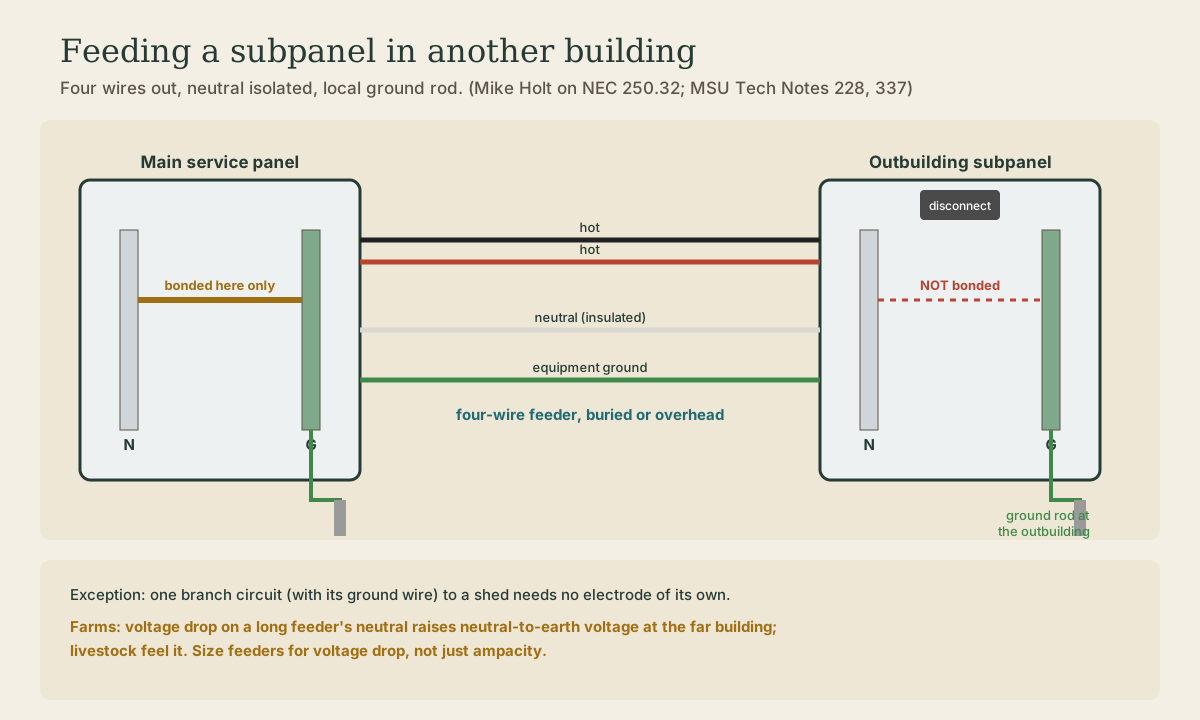
A detached garage, shop, or barn with its own panel is a separate building supplied by a feeder. The modern way to feed it runs four conductors 1:
- two hots (for 120/240 volts),
- an insulated neutral,
- an equipment grounding conductor, the low-impedance path that lets a fault trip the breaker back at the house.
Older installations used the neutral itself as the bonding path to the outbuilding. Mike Holt calls that “a dangerous practice”: any problem with the neutral puts current on every grounded metal part in the building 1.
The feeder’s breaker sits in the main panel; the conductors are sized for the load and, on a long run, for voltage drop.
Quick check
Using the neutral as the bonding path is the old, dangerous method.
Inside the subpanel
At the outbuilding 1:
- A disconnect for the building, often the subpanel’s main breaker.
- The neutral bar is isolated from the enclosure, with its bonding screw left out. The neutral at the separate building is never bonded to the equipment ground or grounding electrode.
- The ground bar is bonded to the enclosure, and all the building’s equipment grounds land there.
- A grounding electrode at the building, such as a ground rod, bonded to the disconnect, to limit lightning and surge voltage.
Neutral and ground meet in exactly one place: the service 2. Join them again at a subpanel and normal neutral current divides onto the grounding wires, conduit, and metal parts.
Exception: a building fed by just one branch circuit that includes an equipment grounding conductor, a shed with one 20-amp circuit for a light and an outlet, doesn’t need its own grounding electrode 1.
Quick check
Neutral and ground join only at the service. Bonding them again puts neutral current on the grounding path.
Sizing the feeder
Size the feeder for the load first, then check voltage drop over the distance: about 3 percent on the branch circuits and 5 percent total is the NEC’s recommendation, which leaves roughly 2 percent for the feeder 3. Long runs to a barn often need wire a size or two bigger than ampacity alone would demand, or a higher-voltage, lower-current feed.
In Wisconsin, a new or added feeder or branch circuit serving a farm needs a permit, and so, since September 1, 2026, does work on a structure without a prior permit 4.
Long feeders and farms
A feeder’s neutral carries the unbalanced current, and over a long run its resistance makes a voltage drop. When the outbuilding’s neutral is also grounded locally, that drop shows up as neutral-to-earth voltage at the building. MSU’s example shows a 3.0-volt drop on a feeder neutral producing 2.25 volts of NEV at the second building, enough to affect livestock, and it can add to NEV coming from the utility side 5.
Cows standing on wet concrete, touching a waterer or stanchion, feel voltages people never notice; reluctance to drink or enter stalls can follow. Equipotential grids in barn floors and properly sized, four-wire feeders help, and finding an actual problem takes trained testing because the source may be on the farm, the utility line, or a neighbor’s system 5 2.
Quick check
Finding the real source needs specialized testing; it can be on the farm, the utility, or a neighbor’s system.
What to take from this
Feed a separate building with four wires: two hots, an insulated neutral, and an equipment ground. At the building, install a disconnect, keep the neutral bar isolated, bond the ground bar to the enclosure, and drive a grounding electrode, unless it’s served by a single branch circuit with a ground wire. Size feeders for voltage drop as well as ampacity; on farms, a drooping feeder neutral can show up as stray voltage that livestock feel.
Lesson complete
Nice work.
Sources for this lesson
- 1Mike Holt. Grounding Separate Buildings and Structures. Mike Holt Enterprises. verifiedSeparate buildings supplied by a feeder need a grounding electrode bonded at the building disconnect to limit lightning and surge voltage; an equipment grounding conductor run with the feeder provides the fault path; the neutral at the separate building must not be bonded to the equipment grounding conductor or grounding electrode; using the neutral as the bonding path is dangerous; a building supplied by a single branch circuit with an equipment grounding conductor doesn't need its own electrode.
- 2Electrical Tech Note 228: Grounding, Bonding, and Equipotential Grids. Michigan State University, Biosystems & Agricultural Engineering. verifiedSystem grounding ties the neutral to earth at the service to limit voltage from lightning, surges, or contact with higher-voltage lines and to stabilize voltage to earth; the equipment grounding conductor (bare or green) carries fault current back so the breaker trips and limits touch voltage; the neutral is the grounded conductor and carries current; the equipment grounding wire and neutral terminate together in the service panel; bonding joins metal parts into one continuous path; current returns to its source, not into the earth for its own sake; electrodes should be under 25 ohms if possible; 0.14 A into a 25-ohm rod gives about 3.5 V neutral-to-earth voltage; GFCI receptacles trip at 5 mA; equipotential grids in livestock and pool areas.
- 3Electrical Tech Note 227: Sizing Conductors to Minimize Voltage Drop. Michigan State University, Biosystems & Agricultural Engineering. verifiedSingle-phase voltage drop is 2 x I x R, with R for the one-way length; excessive drop wastes energy and burns out motors; high-resistance connections, including improper copper-aluminum joints and wet aluminum connections, also cause drop; the NEC recommends no more than 5 percent from source to farthest load, about 2 percent on feeders and 3 percent on branch circuits; Table 227.1 gives resistance per 1,000 ft (copper at 75 C: 14 AWG 3.14, 12 AWG 1.98, 10 AWG 1.24, 8 AWG 0.778 ohms).
- 4Wis. Admin. Code SPS 316.012-.013, Electrical permits and inspections. Wisconsin Legislature. 2026. verifiedRegister September 2026. A permit from the designated inspection agency is required before a project installing a new or added service, feeder, or branch circuit serving a farm, public building, place of employment, campground, manufactured home community, public marina or dock, or RV park, and (effective 9-1-26) vacant land or any structure without a prior SPS 316 or SPS 320 permit; emergency work may begin if an application is filed by the next business day; applications name the master electrician unless exempt under Wis. Stat. 101.862(4); permits expire 12 months after issue if work hasn't begun. Installations are subject to inspection; the owner notifies the agency when ready; wiring stays accessible and unenergized, but may be concealed or energized (other than a service) if not inspected within 2 business days; final inspection when fixtures, outlets, and faceplates are installed and energized; noncompliant work gets orders to correct. New one- and two-family dwellings are inspected under SPS 320.10.
- 5Electrical Tech Note 337: Neutral-to-Earth Voltage. Michigan State University, Biosystems & Agricultural Engineering. verifiedBecause utility and customer systems are grounded at many points, a small current flows in the earth and a small neutral-to-earth voltage (NEV) is normal; in wet conditions it can affect livestock and cause mild shocks around pools; elevated NEV can come from the utility, the customer's system, or a neighbor's, and finding it takes specialized equipment.