The NEC and Wisconsin's Electrical Code
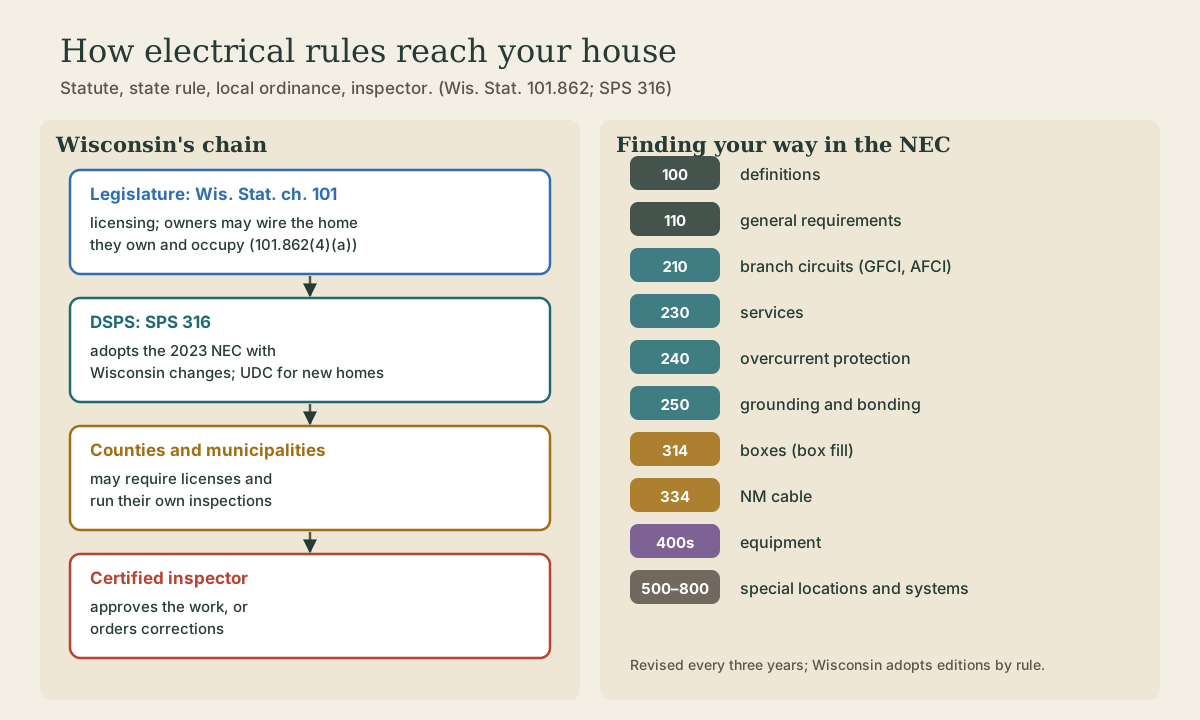
How the rules fit together: the National Electrical Code is a model standard that Wisconsin adopts by rule (SPS 316 adopts the 2023 NEC with state changes), the Uniform Dwelling Code covers new one- and two-family homes, and local ordinances can add licensing and inspection. Who may legally wire a house (owners of homes they occupy, under Wis. Stat. 101.862), and how to find your way around the NEC's articles.
- 3 min
- 5 steps
- 3 questions
- Lesson 58 of 111
In this lesson
- The NEC is a model; Wisconsin adopts it
- Local ordinances
- Who may do the work
- Finding your way in the NEC
- What to take from this
Picking up where you left off.
The NEC is a model; Wisconsin adopts it
The National Electrical Code (NFPA 70) is written by the National Fire Protection Association and revised every three years. By itself it’s a model standard. It becomes law where a government adopts it.
Wisconsin adopts it in SPS 316, the state’s electrical code, written by the Department of Safety and Professional Services. SPS 316.007 incorporates the 2023 NEC, including interim amendments and errata issued before January 1, 2025, subject to Wisconsin’s own modifications 1. Those modifications matter: Wisconsin’s rule on GFCI protection, for example, differs from the national text in several places 1.
New one- and two-family dwellings also fall under Wisconsin’s Uniform Dwelling Code, which governs their construction and inspection, including electrical inspections under SPS 320.10 2.
Quick check
SPS 316.007 adopts NFPA 70, 2023 edition, with changes listed in the chapter.
Local ordinances
Counties and municipalities can adopt ordinances enforcing the state electrical code, run their own inspections with certified inspectors, and, importantly, require licenses that the state wouldn’t 3 2. Check with your town, village, city, or county before starting work.
Who may do the work
Wisconsin generally requires electrical wiring to be done by licensed or registered electricians working under a master electrician. The statute carves out exceptions 3:
- A residential property owner may install, repair, or maintain wiring on premises the owner owns and occupies as a residence, unless a local ordinance requires a license or registration.
- Work on systems of 100 volts or less (doorbells, thermostats, low-voltage lighting) is exempt.
The exemption is from licensing, not from the code. Owner work must still meet SPS 316 and be permitted and inspected where required. It doesn’t cover rental properties or someone else’s house.
Quick check
Wis. Stat. 101.862(4)(a) exempts owner-occupants from licensing, not from the code.
Finding your way in the NEC
The NEC is organized into numbered articles. The ones that come up most in houses:
| Article | Covers |
|---|---|
| 100 | definitions |
| 110 | general requirements: workspace, terminations, listing |
| 210 | branch circuits, including GFCI and AFCI requirements |
| 230 | services |
| 240 | overcurrent protection |
| 250 | grounding and bonding |
| 314 | boxes, including box fill |
| 334 | NM cable |
| 400s | equipment: cords, panels, motors, generators |
| 500–800 | special locations, equipment, conditions, and communications |
Read the Wisconsin modifications alongside: SPS 316’s subchapter IV lists every change to the NEC, article by article 1.
Playback is optional. If the player is unavailable, open the video at its source.
Quick check
210 covers branch circuits (including GFCI and AFCI), 314 boxes, 334 NM cable.
What to take from this
The NEC is a model code revised every three years; Wisconsin adopts the 2023 edition through SPS 316 with state changes, and new one- and two-family homes also fall under the Uniform Dwelling Code. Local ordinances can add licensing and inspection. Owners may wire homes they own and occupy unless a local ordinance says otherwise, but the work must still meet code. In the NEC, 210 is branch circuits, 230 services, 240 overcurrent, 250 grounding, 314 boxes, 334 NM cable.
Lesson complete
Nice work.
Sources for this lesson
- 1Wis. Admin. Code ch. SPS 316, Electrical. Wisconsin Legislature. verifiedSPS 316.007 adopts NFPA 70, the National Electrical Code, 2023 edition, with Wisconsin modifications; SPS 316.210 limits dwelling GFCI requirements under NEC 210.8(A) to 125-volt, single-phase, 15- and 20-ampere receptacles, applies the basement requirement to unfinished areas not intended as habitable rooms, and omits NEC 210.8(A)(7), parts of 210.8(D), 210.8(F), and 210.12(E).
- 2Wis. Admin. Code SPS 316.012-.013, Electrical permits and inspections. Wisconsin Legislature. 2026. verifiedRegister September 2026. A permit from the designated inspection agency is required before a project installing a new or added service, feeder, or branch circuit serving a farm, public building, place of employment, campground, manufactured home community, public marina or dock, or RV park, and (effective 9-1-26) vacant land or any structure without a prior SPS 316 or SPS 320 permit; emergency work may begin if an application is filed by the next business day; applications name the master electrician unless exempt under Wis. Stat. 101.862(4); permits expire 12 months after issue if work hasn't begun. Installations are subject to inspection; the owner notifies the agency when ready; wiring stays accessible and unenergized, but may be concealed or energized (other than a service) if not inspected within 2 business days; final inspection when fixtures, outlets, and faceplates are installed and energized; noncompliant work gets orders to correct. New one- and two-family dwellings are inspected under SPS 320.10.
- 3Wis. Stat. 101.862, Electrician licensing. Wisconsin Legislature. verifiedElectrical wiring generally requires licensed or registered electricians under a master electrician; subsection (4)(a) exempts a residential property owner who installs, repairs, or maintains wiring on premises the owner owns and occupies as a residence, unless a local ordinance requires a license or registration; (4)(d) exempts systems of 100 volts or less.