Where Basement Water Comes From
Why most wet basements are a surface-water problem, not a water-table problem: gutters, downspouts, grade, window wells, and the builder's trench around an old foundation; telling condensation from seepage with a sheet of plastic; why not to seal a damp stone wall from inside; and how to judge a waterproofing salesperson.
- 4 min
- 6 steps
- 2 questions
- Lesson 91 of 111
In this lesson
- Start outside
- The checklist
- Condensation or seepage?
- Don’t seal it in
- Judging a salesperson
- Try it
Picking up where you left off.
Start outside
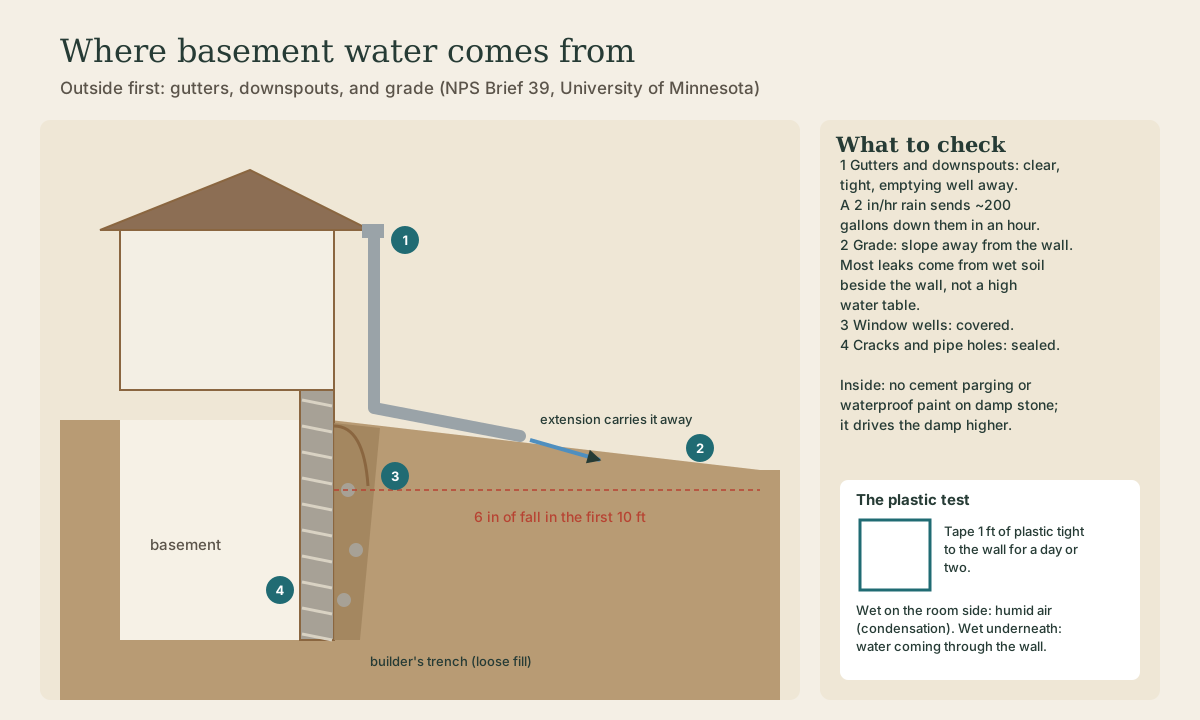
About half of homeowners with basements have some kind of moisture problem, but a wet basement isn’t a law of nature: concrete and stone-and-mortar foundations can be watertight 1. The key fact is where the water comes from. Most foundation leaks aren’t from a high water table; they come from soil soaked right next to the foundation by snowmelt, rain, or watering. So the first rule is drainage 1.
Handling roof and surface runoff is one of the most important things you can do for an old foundation. A heavy rain of 2 inches an hour can send about 200 gallons down a house’s downspouts in a single hour 2. Dump that at the wall and it soaks the soil, wets the footings, and finds every crack 2.
Quick check
That’s why gutters, downspouts, and grade come before any waterproofing system.
The checklist
- Gutters and downspouts. Clear them, fix leaks and loose joints, and make every downspout empty well away from the foundation through an extension pipe or a drain that actually carries water off 2. Watch them in a hard rain.
- Grade. The ground should fall away from the house: try for 6 inches of fall in the first 10 feet 2. Flower beds, settled soil, and patios that tip toward the wall all undo it.
- Window wells. Cover open ones 2 1.
- Pipe holes and cracks. Where water, sewer, and gas lines pass through the foundation, seal the openings; they’re direct paths for ground water 2.
- Sprinklers. Irrigation set too close to the house adds a tremendous amount of water at the foundation 2.
Around an old foundation, builders left a working trench and backfilled it, often loosely or with rubble. That builder’s trench can act like a reservoir holding water against the wall, and a leaking downspout drain can feed it far from where the water shows up inside 2.
Digging out the foundation, dampproofing it, and adding footing drains are for after these steps have been tried 2.
Condensation or seepage?
Not all basement water comes through the wall. Summer humidity condenses on cool walls, floors, and pipes, and clothes drying, showers, and open windows in humid weather add more 1.
To tell which you have, tape a square of plastic, about a foot on a side, tight to the wall or floor on all four edges and leave it for a day or two. A taped plastic sheet is a standard way to show moisture coming through concrete 3. If the room side of the plastic is wet, the water came from humid air: that’s condensation, and the cure is drying the air (lesson 3) 4. If it’s wet underneath, water is coming through the masonry, and the cure is outside.
Don’t seal it in
It’s tempting to paint a damp stone wall with waterproofing or plaster it with cement. Don’t: a waterproof coating such as cement parging or vinyl on the inside of a damp wall just raises the pressure and drives capillary moisture higher up the wall, along with its damage 2. Old stone foundations need to dry to the inside; lesson 2 covers repointing them with mortar that lets them.
Quick check
NPS Brief 39 warns against cement parging or vinyl coverings on damp walls.
Judging a salesperson
Basement waterproofing draws exaggerated claims. Be wary of anyone who 1:
- says you have a water-table or soil problem without independent soil borings;
- claims one system fixes any moisture problem in any foundation;
- offers a discount for signing now;
- warns your foundation will collapse soon without their system;
- doesn’t mention condensation, grading, or your gutters and downspouts.
Try it
Next hard rain, put on a coat and walk around the house. Watch where each downspout empties, where water pools, and which way it runs. Then go to the basement and see where it’s wet. Most of the time the two maps line up.
Lesson complete
Nice work.
Sources for this lesson
- 1William J. Angell. Basement Moisture Problems (Housing Fact Sheet No. 41). University of Minnesota Agricultural Extension Service. 1982. verifiedAbout half of homeowners with basements have some moisture problem, yet concrete and stone-and-mortar foundations can be watertight. Modes: hydrostatic pressure, capillary draw, vapor pressure, and condensation from activities like clothes drying or opening windows in humid weather. Most foundation leaks come not from a high water table but from saturated ground next to the foundation from snowmelt, rain, or watering, so the first rule is drainage: surface contours, downspouts and gutters, window well covers, below-grade deflectors. Fine clay and silt soils can wick water far above the water table; gravel almost none. Soil borings are the only accurate way to judge soil or water-table problems. Beware a salesperson who claims a water-table problem without borings, says one system fixes everything, pushes a discount for signing now, warns of imminent collapse, or ignores condensation, grading, and gutters. Band-aid remedies: surface drainage, crack repair, interior compounds, a dehumidifier.
- 2Sharon C. Park. Preservation Brief 39: Holding the Line: Controlling Unwanted Moisture in Historic Buildings. National Park Service, Heritage Preservation Services. 1996. verifiedUncontrolled moisture is the most prevalent cause of deterioration in older buildings. Five sources: above-grade exterior moisture, below-grade ground moisture, leaking plumbing and equipment, interior moisture, and construction water. Diagnosis may take up to four seasons; fix obvious defects like clogged gutters and broken pipes at once. Handling surface runoff is one of the most important measures: a 2 in per hour rain can produce 200 gallons from downspouts in an hour for a house. Saturated soil wets footings and enters basements through cracks; builder's trenches with loose or rubble backfill can hold water against walls; leaking downspout drains and unsealed pipe penetrations feed basements; irrigation near foundations. The ground stays drier by sloping grade away, carrying downspout water well away, ground gutters where there are none, and reducing splash-back; excavation, dampproofing, and footing drains only after those. Try for 6 in of fall in the first 10 ft around the foundation; cover window wells; extension pipes for downspouts. Don't seal damp walls inside with waterproof coatings such as cement parging or vinyl: it drives capillary moisture higher up the wall. Rising damp usually comes from high water tables. Check dehumidifiers and sump pumps; battery back-up for sumps in storms; water alarms.
- 3ASTM D4263: Standard Test Method for Indicating Moisture in Concrete by the Plastic Sheet Method. ASTM International. verifiedA plastic sheet taped to concrete indicates capillary moisture coming through it; used before coating concrete.
- 4A Brief Guide to Mold, Moisture and Your Home. U.S. Environmental Protection Agency. verifiedKeep indoor humidity below 60 percent, ideally 30 to 50 percent; a $10-50 humidity meter measures it. Condensation on windows, walls, or pipes signals high humidity: dry it and reduce the source. Vent dryers and stoves outdoors, use dehumidifiers and air conditioners, insulate cold water pipes, and make sure the ground slopes away from the foundation.