Mortise Locks and Skeleton Keys
How the mortise locks in an old house work, why one skeleton key opens so many of them, and how they differ from older rim locks; lubricating a sticky lock the right way, taking one apart, finding the broken spring, and buying a reproduction when a lock is beyond saving.
- 4 min
- 6 steps
- 2 questions
- Lesson 89 of 111
In this lesson
- How it works
- Why one key opens them all
- A sticky lock
- Opening it up
- When to replace
- Try it
Picking up where you left off.
How it works
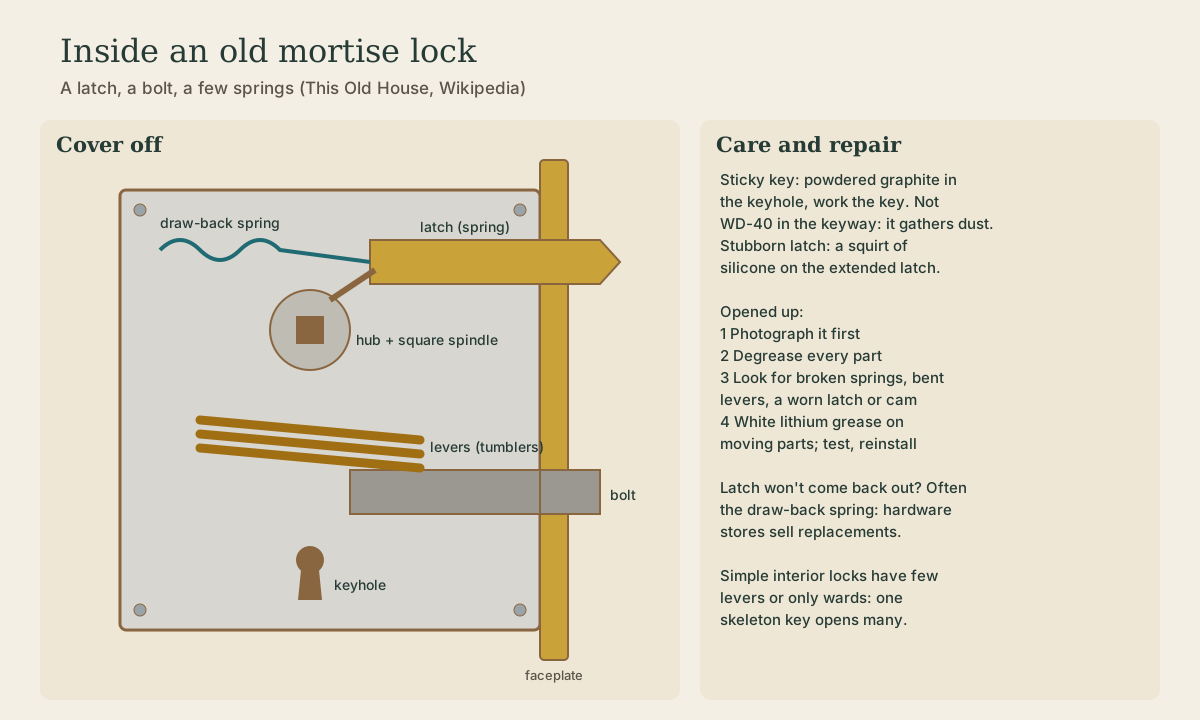
A mortise lock sits in a pocket cut into the edge of the door. Its steel box holds two things 1:
- The latch, a beveled bolt that a spring pushes out. When either knob turns the square spindle running through the door, a hub pulls the latch in; the draw-back spring pushes it back out when you let go.
- The bolt, square-ended, thrown by the key (or by a thumb turn on some doors).
Most old door locks with big keys are lever locks: a stack of spring-loaded levers blocks the bolt until the key’s bit lifts each one to the right height. Lever locks developed through the 1800s, and many had modest security and large keys; Yale’s small-keyed pin-tumbler cylinder, from the late 1800s, became the most popular lock for doors 2.
Why one key opens them all
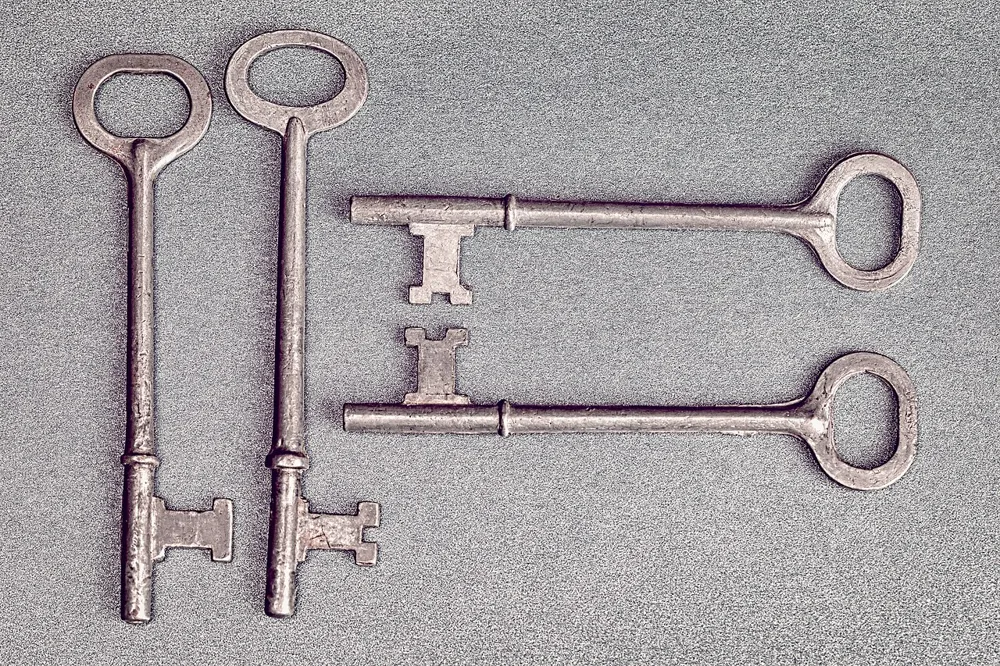
A skeleton key is a key cut down to its essentials, so it slips past the wards of many locks 3. Interior locks in old houses often have only a few levers, or just wards, and in a master-keyed lever system every lock has the same lever heights, so a key with its warded part cut away opens them all 3. That’s why the key from one bedroom door so often opens the rest. Interior skeleton-key locks are sold for privacy, not security 4.
.jpg)
Rim locks are older: the whole mechanism sits in a box screwed to the face of the door instead of inside it. Unlike mortise locks, they could be taken along when the owner moved house 5.
A sticky lock
- Key hard to turn: puff powdered graphite into the keyhole and turn the key a few times to spread it; repeat every couple of years. Don’t spray WD-40 into the keyway; it collects dust 1.
- A stubborn latch is the one place a squirt of silicone or WD-40 is fine: on the extended latch itself 1.
- A cylinder lock (on a front door) that turns rough: degrease the keyway with electrical contact cleaner, then graphite or Teflon lubricant, at the start of summer and winter. If it seizes completely, call a locksmith 1.
Quick check
Oily sprays collect dust in the keyway; graphite stays dry.
Opening it up
- Take it out: remove the knob set screw and slide off both knobs and the spindle; on a front door, also the cylinder set screw and thumb turn. Unscrew the faceplate and pull the box out of the door 1.
- Photograph it before you lift the cover, then unscrew the cover carefully; small parts and springs fall out 1.
- Look for broken or weak springs, bent or corroded levers, loose parts, and a rounded latch or worn cam 1. A knob that turns but leaves the latch pulled in usually means a broken draw-back spring; many hardware stores sell replacements 1.
- Clean every part with degreaser, put white lithium grease on moving parts and pivots, reassemble from your photo, and test it before it goes back in the door 1.
Exact replacement parts are best; a locksmith who knows antique hardware can find them or suggest substitutes 1. Fill stripped screw holes in the door edge before reinstalling.
Playback is optional. If the player is unavailable, open the video at its source.
Quick check
The draw-back spring pushes the latch back out after the knob is released; replacements are easy to find.
When to replace
Reproduction mortise locks are made for old doors. House of Antique Hardware’s early-1900s-style set, for example, has a 2 1/4-inch backset (door edge to knob center), a lock case 4 by 3 by 5/8 inches, and two skeleton keys, and fits doors 1 3/8 to 1 3/4 inches thick, for about $444 in polished brass. Measure your door’s backset, faceplate, and pocket before buying; some cutting may be needed 4.
Try it
Pick the stiffest interior lock in the house. Puff graphite into the keyhole, work the key ten times, and try it again. If it’s still stiff, or the latch sticks, that’s the one to take apart first; it’s the easiest way to learn what’s inside the rest.
Lesson complete
Nice work.
Sources for this lesson
- 1Fixing a Mortise Lockset. This Old House. verifiedMortise locksets set into a pocket in the door's edge. Parts: cylinder, deadbolt, faceplate, spring latch, knobs, lockbox; inside, the draw-back spring returns the latch, the hub retracts it when the spindle turns, and the spindle runs through the door to both knobs; replacement draw-back springs at many hardware stores. Sticking key: degrease with electrical contact cleaner, then graphite or Teflon lubricant, twice a year; or puff powdered graphite into the keyhole every couple of years; avoid WD-40 in the keyway, which collects dust, though a squirt on a stubborn extended latch is fine. Removal: cylinder set screw, thumb turn, knob set screw and knobs, faceplate, lockbox. Photograph before opening the cover; look for broken springs, bent levers, loose parts, worn latch or cam; degrease, white lithium grease on moving parts, test before reinstalling. A locksmith who knows antique hardware can find parts. A seized cylinder is a job for a locksmith.
- 2Lever tumbler lock. Wikipedia. verifiedA set of spring-loaded levers blocks the bolt until the key's bit lifts each to the right height. Lever locks developed through the 19th century; many were of modest security with large keys; Yale's pin-tumbler cylinder, late 19th century, became the most popular door mechanism. Robert Barron's 1778 double-acting lever is the principle of modern lever locks.
- 3Skeleton key. Wikipedia. verifiedA key cut away to its essentials so it passes the wards of many warded locks; in lever locks with three or five levers, a master system can give every lock the same lever heights and different wards, so a key with the warded part removed opens all of them.
- 4New York Mortise Lock Set With Round Brass Knobs. House of Antique Hardware. verifiedReproduction early-1900s interior mortise lock set with two skeleton keys: knobs turn a latch, the key locks from either side. Backset 2 1/4 in; lock case 4 x 3 x 5/8 in; face plate 6 x 7/8 in; strike 4 x 7/8 in; doors 1 3/8 to 1 3/4 in thick. About $444 in polished brass. Measure the existing backset, face plate, and mortise pocket before buying; some cutout modification may be needed.
- 5Lock (rim lock signed Johannes Wilkes, Birmingham, about 1680). Victoria and Albert Museum. verifiedA rim lock has its mechanism entirely enclosed in a case mounted on the door. Unlike later mortise locks built into doors, rim locks could be taken along when the owner moved house.