Weatherstripping an Old Door
What weatherstripping does and doesn't do for an old house, which types actually stop air, spring bronze for the rabbet of an old door and how to nail and spring it, kerf-in gaskets, and sealing the bottom.
- 3 min
- 6 steps
- 2 questions
- Lesson 90 of 111
In this lesson
- What it does
- What works
- Spring bronze
- Kerf-in gaskets
- The bottom of the door
- Try it
Picking up where you left off.
What works
Buy weatherstripping by type, not brand 2. In a test equal to a 50 mph wind 2:
- Closed-cell foam and strips with a rigid gasket sealed well.
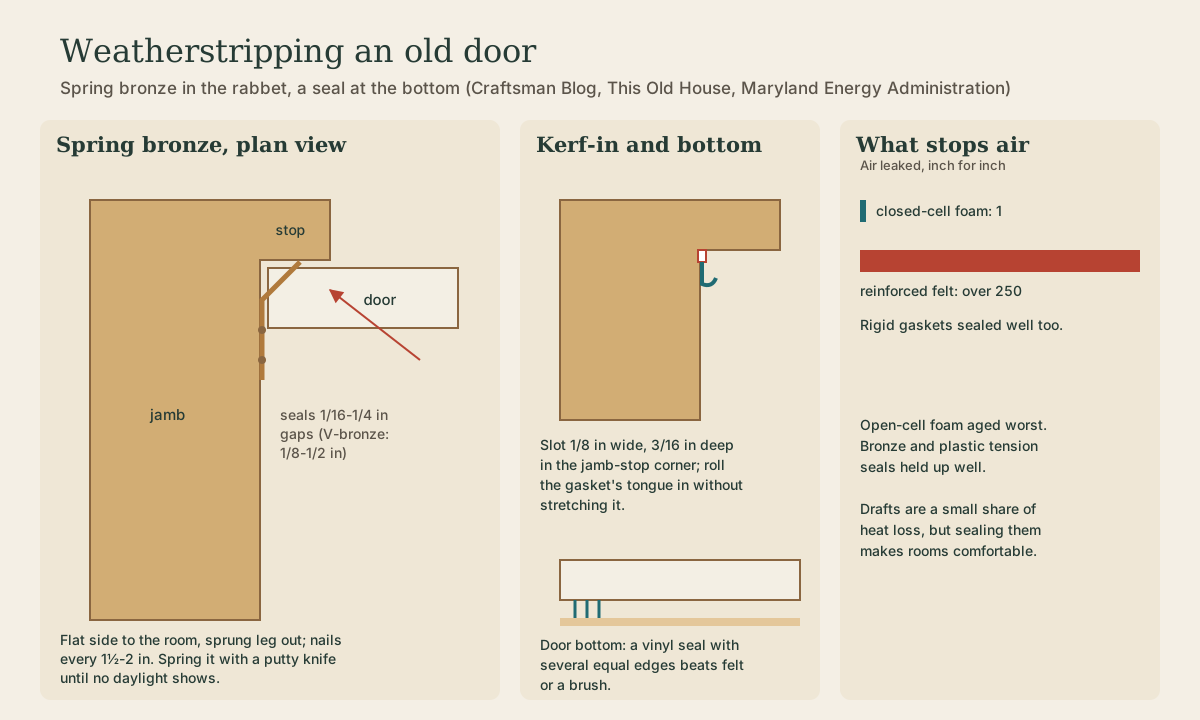
- Reinforced felt and open-cell foam did much worse. Inch for inch, reinforced felt let through more than 250 times as much air as closed-cell foam.
- Open-cell foam aged worst, going dry and powdery. Bronze and plastic tension seals, felts, and silicone gaskets held up.
Felt is cheap but lasts a year or two 3.
Quick check
Closed-cell foam and rigid gaskets sealed best; open-cell foam aged worst.
Spring bronze
Spring bronze is the old-house standard: a springy bronze strip nailed into the rabbet the door closes against, so the closing door compresses it 4. It seals gaps of about 1/16 to 1/4 inch; above 1/4 inch, V-bronze (a doubled strip) handles 1/8 to 1/2 inch 5. Kilian Hardware sells a 17-foot kit, enough for one door, with nails, for about $93 4.
Installing it on a door 5:
- Cut it to length with tin snips for the head and each side of the rabbet, clear of hinges and the strike.
- Orient it: flat side toward the room, sprung leg facing out, so the door flattens it as it closes.
- Nail from the top down, keeping it straight so it doesn’t buckle, with 3/4-inch coppered nails every 1 1/2 to 2 inches. Don’t nail too close to the stop or it can’t lie flat. Butt the pieces at the corners and set any proud nails.
- Spring it: close the door and look for daylight. Where you see some, open the door and bend the leg out a little more with a wide putty knife; repeat until no light shows.
It’s a lot of nailing into hard old-growth wood, but it’s the easiest metal weatherstrip for a homeowner, needs no special tools, and lasts for decades 5 4.
Playback is optional. If the player is unavailable, open the video at its source.
Quick check
The flat side is nailed to the jamb toward the room; the sprung leg faces out.
Kerf-in gaskets
Another option, less visible, is a kerf-in gasket: a grooving tool cuts a slot 1/8 inch wide and 3/16 inch deep in the corner where jamb meets stop, and a spline roller pushes the gasket’s barbed tongue into it. Work from one end without stretching the strip, or it shrinks back and leaves gaps 3. Score along old weatherstripping with a utility knife before pulling it off, so it doesn’t take paint and wood with it 3.
The bottom of the door
Under the door, a vinyl door seal with several sealing edges of equal length works better than felt or a brush 2. If the gap under an old door is big and uneven, fix the door’s fit first (lesson 1).
Try it
On a cold, windy day, close each outside door and hold a lit incense stick slowly around its edges. Mark every spot where the smoke streams sideways. Those marks, not the whole door, are where the weatherstrip has to work hardest.
Lesson complete
Nice work.
Sources for this lesson
- 1A Do-It-Yourself Guide to Sealing and Insulating with ENERGY STAR. ENERGY STAR (U.S. EPA). 2016. verifiedThe most significant leaks hide in the attic and basement; warm air rises like a chimney and pulls cold air in below. Common leaks: behind kneewalls, attic hatch, wiring holes, plumbing vents, open soffits, recessed lights, flue and duct chases, basement rim joists, windows and doors. Call a contractor for wet insulation, moldy rafters, dryer vents into the attic, ice-dam history, little ventilation, knob-and-tube wiring (pre-1930, a fire hazard in contact with insulation). Tools: caulk for gaps of 1/4 inch or less, spray foam for 1/4 to 3 inches, aluminum flashing and high-temperature caulk for flues. Plug big holes first: open stud cavities behind dropped soffits and kneewalls with folded batts stuffed in plastic bags, cover soffits with foil or rigid foam sealed with caulk or adhesive. Vermiculite may contain asbestos; don't disturb it until lab-tested. Codes usually require 1 inch clearance from metal flues and 2 inches from masonry chimneys to combustibles including insulation; seal with flashing in high-temp caulk and build a metal dam. Dirty insulation marks air leaks. Weatherstrip and insulate the attic hatch. Check combustion appliances for carbon monoxide after tightening. Old recessed lights need air space; replace with IC-AT fixtures. Basement: seal the sill plate to foundation, top and bottom of the rim joist, and all penetrations; then insulate rim cavities with rigid foam foamed in place or batts without compression. Never cover soffit vents; use rafter vents (baffles) to insulate out to the eaves.
- 2Weatherstripping. Maryland Energy Administration. verifiedDrafts around doors and windows contribute little to overall heat loss, but weatherstripping makes a house much more comfortable. Buy by type, not brand. In an air-leakage test equal to a 50 mph wind, closed-cell foam with rubber tapes and rigid-gasket strips worked well; reinforced felt and open-cell foam much less; inch for inch reinforced felt leaked over 250 times as much air as closed-cell foam. Open-cell foam aged worst; bronze and plastic tension seals, felts, and silicone gaskets held up. Tension seal: self-stick vinyl V strip or springy bronze strip nailed and formed in place, best between a door and its jamb or in a double-hung window's track. Tubular rubber or vinyl and reinforced silicone gaskets for door jambs. Vinyl door seals with several equal sealing edges beat felt and brush seals under a door.
- 3The Essential Guide to Weatherstripping. This Old House. verifiedV strip (tension seal), felt (cheap, a year or two), foam tape, tubular gaskets. Kerf-in weatherstripping in door jambs: a grooving tool cuts a slot 1/8 in wide and 3/16 in deep in the corner of jamb and stop, and a spline roller drives the barbed tongue in; Tom Silva starts at one end and works along without stretching the strip, which would shrink back and leave gaps. Score old weatherstripping with a utility knife before pulling it.
- 41-1/4" Spring Bronze Weatherstrip Kit. Kilian Hardware. verifiedOld-fashioned spring bronze for doors and windows, said to last up to 100 years; nails to the jamb and the closing door compresses it. 17 ft roll with a 6 in lock strip and 7/8 in copper-plated nails, $92.99; also 1 1/8, 1 3/8, and 1 3/4 in widths and 100 ft rolls.
- 5Scott Sidler. How to Install Spring Bronze Weatherstripping. The Craftsman Blog. verifiedSpring bronze seals gaps of about 1/16 to 1/4 in; poor above 1/4 in, where V-bronze (cushion bronze, a doubled strip, 1/8 to 1/2 in) works. Nail every 1 1/2 to 2 in with coppered or solid bronze nails (bronze near the coast). Tools: tin snips, hammer, 3/4 in 17-gauge coppered nails, nail set. Cut to fit in the rabbet the door closes against, clear of hinges and latch; flat side toward the interior, sprung side out so the door compresses it; nail from the top down keeping it straight, not too close to the jamb; butt joints at corners; set proud nails. Spring it with a wide putty knife until no daylight shows with the door closed. Stainless staples are a fallback in beat-up jambs.