Smoke and Carbon Monoxide Alarms
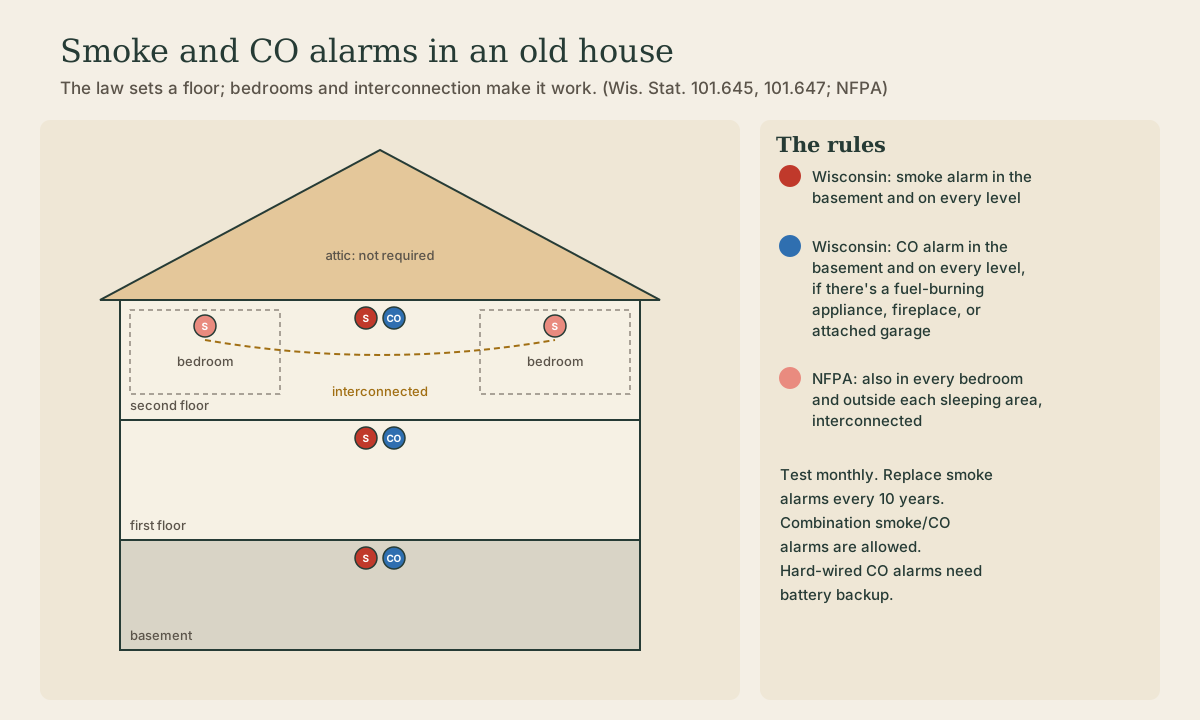
The one code upgrade every old house owes right now, whatever you remodel: Wisconsin law requires a smoke alarm in the basement and on every floor, and a carbon monoxide alarm on every floor and in the basement if the house has a fuel-burning appliance, a fireplace, or an attached garage. NFPA's advice goes further: an alarm in every bedroom and outside each sleeping area, interconnected so they all sound together, tested monthly and replaced every ten years.
- 4 min
- 5 steps
- 3 questions
- Lesson 80 of 111
In this lesson
- What Wisconsin requires
- What NFPA recommends
- In an old house
- Try it
Picking up where you left off.
Most code upgrades wait until you touch something. Smoke and carbon monoxide alarms don’t: Wisconsin requires them in every house, whatever year it was built.
What Wisconsin requires
Smoke alarms. “The owner of a dwelling shall install a functional smoke detector in the basement of the dwelling and on each floor level except the attic or storage area” 1. Alarms must carry a UL or similar listing mark and be installed according to the manufacturer’s directions 1.
Carbon monoxide alarms. The owner must install a functional CO alarm in the basement and on each floor level, except the attic, garage, or storage area. This applies to any dwelling that has a fuel-burning appliance, a fireplace, or an attached garage; a house with none of those is exempt 2. A gas or oil furnace, boiler, water heater, or range counts, so nearly every old house needs them. CO alarms must be UL-listed and may be combined with smoke alarms; a hard-wired CO alarm needs a battery backup 2. Hard-wired CO alarms are required only in houses whose original building permit was issued on or after February 1, 2011 2, so in a 1905 house battery or plug-in alarms meet the law.
Quick check
It applies to every dwelling, regardless of age.
Quick check
Then one goes in the basement and on each floor level.
What NFPA recommends
The law is a minimum. NFPA’s guidance is to install smoke alarms in every sleeping room, outside each separate sleeping area, on every level, and in the basement, and to use interconnected alarms “so that when one smoke alarm sounds, they all sound” 3. Test them monthly and replace them every 10 years 3.
Why it’s worth going past the minimum: working smoke alarms cut the risk of dying in a home fire roughly in half, and about three of every five home fire deaths happen in homes with no smoke alarms or none that work 3.
Quick check
In a tall old house with closed bedroom doors, a basement alarm alone may not wake anyone upstairs.
In an old house
Interconnection without rewiring. Hard-wired interconnected alarms need a cable between them, which means fishing wire through plaster. Wireless interconnected alarms, which link to each other by radio, give you the “all sound together” benefit without opening walls.
Tall, divided houses. Old houses often have closed stairways, back stairs, and bedrooms off long halls. A house with two bedroom wings has two “separate sleeping areas,” and NFPA’s advice puts an alarm outside each one 3.
Don’t disable them. Wisconsin law prohibits tampering with, disconnecting, or pulling the batteries from an installed CO alarm except for inspection, maintenance, or replacement 2. If a smoke alarm near the kitchen goes off every time you cook, move it, don’t silence it for good.
Try it
Draw a quick floor plan of each level, including the basement. Mark every existing alarm and its date code (printed on the back). Mark where the law requires one and where NFPA recommends one. Replace anything more than ten years old, and fill the gaps, choosing combination or interconnected units where you can.
Lesson complete
Nice work.
Sources for this lesson
- 1Wis. Stat. 101.645, Smoke detectors. Wisconsin Legislature. verifiedThe owner of a dwelling shall install a functional smoke detector in the basement and on each floor level except the attic or storage area of each dwelling unit; the occupant maintains it. Detectors must bear a UL or similar listing mark and be installed per the manufacturer's directions. A safety statute; violation is negligence per se (Johnson v. Blackburn, 1998).
- 2Wis. Stat. 101.647, Carbon monoxide detectors. Wisconsin Legislature. verifiedThe owner of a dwelling shall install a functional CO detector in the basement and on each floor level except the attic, garage, or storage area of each dwelling unit; does not apply to a dwelling with no attached garage, no fireplace, and no fuel-burning appliance. CO detectors must bear a UL listing mark and may be combined with smoke detectors; hard-wired detectors need battery backup. Dwellings with building permits issued on or after February 1, 2011 must have hard-wired CO detectors. No one may tamper with, disconnect, or remove batteries from an installed CO detector except for inspection, maintenance, or replacement.
- 3Smoke Alarms: Stats and Safety Tips. National Fire Protection Association. verifiedWorking smoke alarms cut the risk of dying in a home fire by about 60 percent (also 'in half'); roughly three of five fire deaths happen in homes with no smoke alarms or no working ones; 38 percent of home fire deaths occur where no smoke alarms are present. Install alarms in every sleeping room, outside each separate sleeping area, on every level, and in the basement; interconnected alarms are best so all sound together; test monthly; replace every 10 years.