Knob-and-Tube Wiring
If your house was wired before the 1940s, there may still be knob-and-tube in the walls and attic: pairs of single wires strung on porcelain knobs and threaded through porcelain tubes. It isn't automatically dangerous, and well-installed runs can outlast later wiring. The real hazards are brittle insulation, a century of amateur splices and oversized fuses, no ground, and above all building insulation piled on top of it. How to find it, judge it, and decide whether to keep it, retire it, or replace it before you insulate.
- 4 min
- 7 steps
- 2 questions
- Lesson 63 of 111
In this lesson
- What it is
- Where it goes wrong
- Insulation is the big one
- Keep, retire, or replace?
- Finding it
- Try it
Picking up where you left off.
Houses wired from about 1880 into the 1940s were usually wired with knob-and-tube 1. In a house from 1905, the original wiring may be long gone, or it may still be feeding a ceiling light upstairs, quietly hidden behind plaster and under the attic floorboards. Before you insulate, remodel, or buy insurance, find out.
What it is
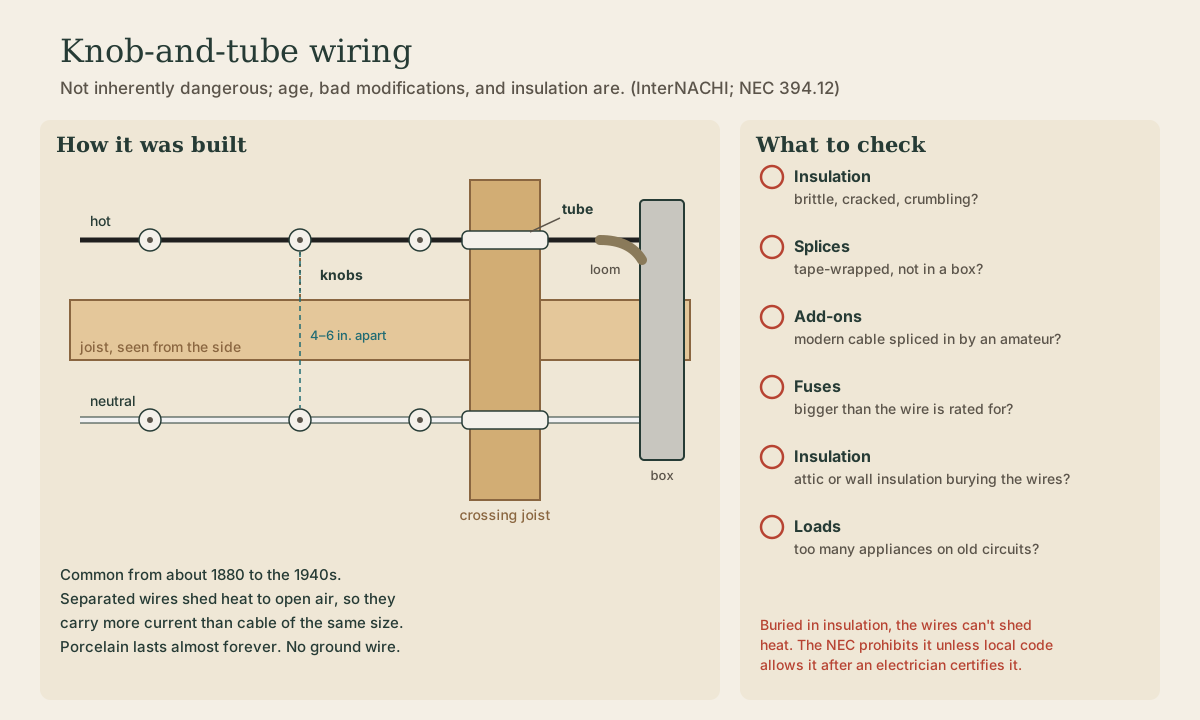
Knob-and-tube uses single insulated copper wires rather than cables. The hot and neutral run separately, usually 4 to 6 inches apart, held off the framing by nailed-on porcelain knobs. Where they pass through a joist or stud, they go through porcelain tubes in drilled holes. Where they enter a box or a wall, they’re sleeved in flexible cloth or rubber tubing called loom 1.
InterNACHI, the home inspectors’ association, makes a point that surprises people: it is not inherently dangerous. The separated wires shed heat into the air, so they can carry more current than a modern cable of the same gauge. They sit away from the wood, so they’re less likely to be pierced by a nail. The porcelain lasts almost forever, and the original work was often more careful than later cable jobs, because it took skill 1.
Quick check
No code requires removing all of it, but it has no ground and can’t be extended, and many insurers balk.
Where it goes wrong
The problems are mostly about age and what people have done to it since 1:
- The insulation on the wire. Early wire was insulated with varnished cloth and fiber that gets brittle. Bending old wire can crack the insulation right off. It isn’t rated for damp locations.
- No ground. There’s no equipment grounding conductor, so it can’t properly serve three-prong outlets.
- A century of modifications. Old systems are notorious for amateur work: modern cable spliced in without a box, splices wrapped in masking tape, and circuits overloaded as appliances multiplied.
- Oversized fuses. When old circuits kept blowing fuses, people put in bigger fuses so they’d stop. The wire then overheats before the fuse blows.
Insulation is the big one
Knob-and-tube depends on air around the wires to stay cool. Bury it in blown, rolled, or foamed insulation and the heat builds up 1. The National Electrical Code therefore prohibits concealed knob-and-tube in hollow walls, ceilings, and attics insulated with material that envelops the wires 1. Wisconsin’s electrical code adopts the 2023 NEC 2.
Some places make an exception if a licensed electrician inspects the wiring and certifies it’s in good condition, properly fused, and free of bad splices; Berkeley, California, for example, requires a filed certification, noncombustible insulation, and warning signs at the attic hatch 3. Absent that kind of local rule, the practical sequence for an old house is: deal with the knob-and-tube first, then insulate.
Quick check
That’s why the NEC bars it from insulated hollow spaces unless a local code allows it after an electrician’s certification.
Keep, retire, or replace?
No code requires ripping out all existing knob-and-tube, and rules differ from place to place, but it’s not allowed in new work 1. Your options:
- Keep it where it’s intact, unburied, properly fused, and lightly loaded, after a qualified electrician has evaluated it 1. Don’t extend it.
- Disconnect and abandon it circuit by circuit as you run new cable, leaving the dead wires in place where removing them would wreck plaster. Make sure each abandoned run is truly disconnected at both ends.
- Replace it wherever wiring is brittle or cracked 1, wherever you plan to insulate, and wherever you need grounded outlets.
Insurance can force the issue: many insurers won’t cover houses with knob-and-tube, or want an electrician’s report first 1.
In Wisconsin, you’re allowed to do your own wiring in a home you own and live in, unless a local ordinance requires a licensed electrician 4. That’s permission, not a reason to skip the permit or the inspection.
Finding it
Look in the unfinished spaces first: the attic floor and the basement ceiling, where you can see white porcelain knobs and tubes and pairs of single wires. Old push-button switches and a fuse box may be clues too. At the panel, trace which circuits feed which rooms. Before touching anything, turn off the circuit and confirm it’s dead with a tester at the wires you’ll handle.
Playback is optional. If the player is unavailable, open the video at its source.
Try it
Go up into the attic with a flashlight (stay on the joists) and look along the tops of the walls and around ceiling-light locations. Any porcelain? Any wires disappearing under insulation? Make a sketch of what you find and which rooms it serves; it’s the first page of your rewiring plan.
Lesson complete
Nice work.
Sources for this lesson
- 1Knob-and-Tube Wiring. International Association of Certified Home Inspectors (InterNACHI). verifiedCommon in North America from about 1880 to the 1940s; obsolete but not inherently dangerous; hazards come from age, improper modifications, and insulation enveloping the wires. No ground wire. No code requires its complete removal; treatment varies by jurisdiction; not allowed in new construction. Insulated copper conductors run through porcelain tubes in drilled framing and are supported on nailed porcelain knobs; loom (flexible cloth or rubber sleeving) where wires enter devices or walls. Higher ampacity than same-gauge cable because hot and neutral are separated, usually 4 to 6 inches, and shed heat to free air; less likely to be nailed through; porcelain lasts almost indefinitely; original installs often superior to Romex. Problems: unsafe modifications, sagging, no ground, deteriorating varnish-and-fiber insulation, not rated for moisture, cracking when bent, amateur splices with modern wire, tape-wrapped splices, oversized fuses installed to stop nuisance blowing. 2008 NEC: not in hollow spaces insulated by loose, rolled, or foamed-in insulation that envelops the conductors; some codes (California) allow it with electrician certification. Many insurers refuse or require evaluation. Advice: have it evaluated by a qualified electrician; avoid overloading; replace brittle or cracked wiring.
- 2Wis. Admin. Code ch. SPS 316, Electrical. Wisconsin Legislature. verifiedSPS 316.007 adopts NFPA 70, the National Electrical Code, 2023 edition, with Wisconsin modifications; SPS 316.210 limits dwelling GFCI requirements under NEC 210.8(A) to 125-volt, single-phase, 15- and 20-ampere receptacles, applies the basement requirement to unfinished areas not intended as habitable rooms, and omits NEC 210.8(A)(7), parts of 210.8(D), 210.8(F), and 210.12(E).
- 3Knob-and-Tube Wiring Safety Report (Form 146). City of Berkeley, Building and Safety. 2026. verifiedAttics with knob-and-tube wiring may not be insulated without a licensed electrical contractor's certification that the wiring is in good condition, with proper overcurrent protection and no improper connections or splices; warning signs posted at attic accesses; insulation must be noncombustible. Quotes CEC 394.12(5): concealed knob-and-tube shall not be used in hollow spaces of walls, ceilings, and attics insulated by loose, rolled, or foamed-in-place insulation that envelops the conductors, with the certification exception.
- 4Wis. Stat. 101.862, Electrician licensing. Wisconsin Legislature. verifiedElectrical wiring generally requires licensed or registered electricians under a master electrician; subsection (4)(a) exempts a residential property owner who installs, repairs, or maintains wiring on premises the owner owns and occupies as a residence, unless a local ordinance requires a license or registration; (4)(d) exempts systems of 100 volts or less.