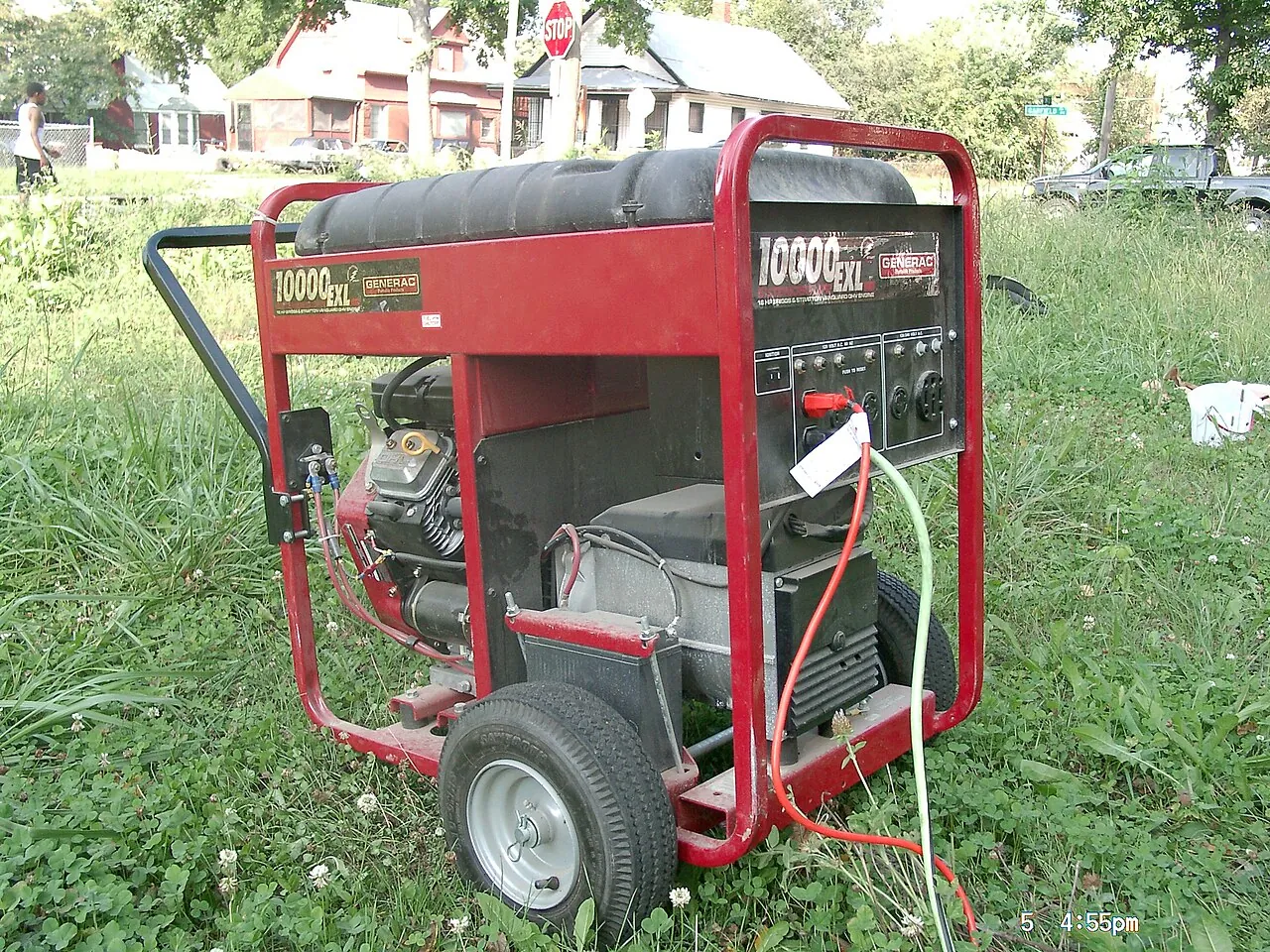
Generators and Transfer Switches
Backup power done safely: a transfer switch so the house takes power from the utility or the generator, never both, because backfeeding the utility lines can kill a line worker. Portable generators through a cord, inlet, and essential-circuits panel versus standby generators ahead of the main; bonded versus floating neutrals; GFCI on generator outlets; and carbon monoxide: outdoors only, 20 feet from openings, CO alarms inside.
- 4 min
- 5 steps
- 3 questions
- Lesson 61 of 111
In this lesson
- Why a transfer switch
- Two common setups
- Bonded or floating neutral
- Carbon monoxide
- What to take from this
Picking up where you left off.
Why a transfer switch
When the power goes out, it’s tempting to run a cord from a generator into a dryer outlet. Don’t. Connected that way, the generator energizes not just the house but the service conductors and the utility transformer, which steps the voltage back up onto the distribution line, where a line worker expects dead wire. And the “suicide cord’s” exposed male prongs are live.

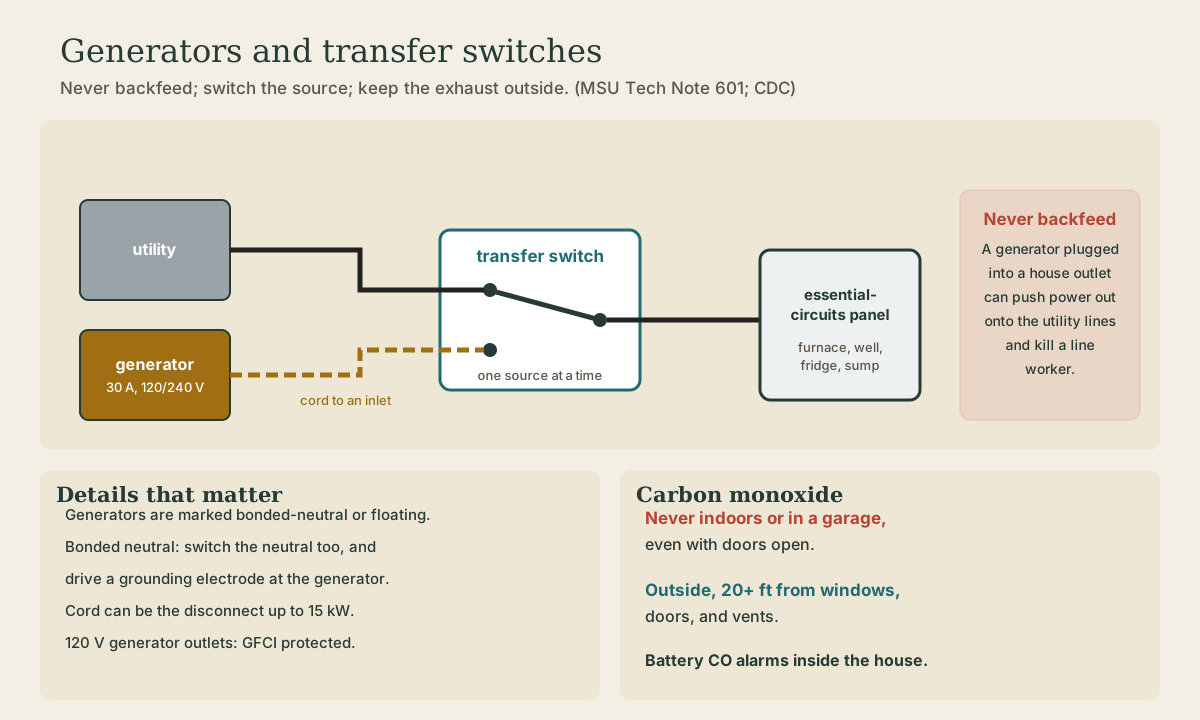
A transfer switch makes it impossible: the house panel connects to the utility or the generator, never both 1.
Quick check
A transfer switch guarantees the house is connected to only one source at a time.
Two common setups
Portable generator, essential circuits. Most portable generators have 120-volt, 15- or 20-amp outlets and a 30-amp, 120/240-volt outlet. A cord from that outlet plugs into an inlet on the house, which feeds a transfer switch and a small panel of essential circuits (furnace, well pump, refrigerator, sump pump, a few lights) moved there from the main panel. Flip the transfer switch to generator during an outage, back to utility when power returns. For generators up to 15 kW, the cord connection can serve as the generator’s disconnect 1.
Standby generator, whole house. A permanently installed generator connects ahead of the service panel through a transfer switch rated to serve as the building’s disconnect, often switching automatically 1.
Bonded or floating neutral
Generators intended for standby use must be marked to show whether the output neutral is bonded to the generator frame 1. It matters because neutral and ground should be bonded in exactly one place in any system:
- Bonded-neutral generator feeding a house: the transfer switch must switch the neutral, and a grounding electrode is required at the generator, because the generator becomes a separate system with its own bond 1.
- Floating-neutral generator: the neutral isn’t bonded at the generator, and the system relies on the house’s bond at the service 1.
- Used stand-alone to run tools or lights on cords, a generator needs a bonded neutral; with a floating neutral, a ground fault in a tool has no complete path to trip anything 1.
The generator’s 120-volt receptacles must be GFCI protected, and if the 30-amp outlet supplies loads directly it must be GFCI protected too, with that protection able to be deactivated when it feeds a building system 1.
Quick check
A floating-neutral generator instead relies on the house’s neutral-ground bond.
Carbon monoxide
Generators kill more people with exhaust than with electricity. The CDC’s rules 2:
- Never run a generator inside a home or garage, even with doors and windows open.
- Run it outside, more than 20 feet from any windows, doors, and vents.
- Use battery-powered or battery-backup CO alarms in the house.
In a Wisconsin ice storm that means a level spot in the yard, a cord long and heavy enough for the load, and a plan for refueling only after the engine cools.
Playback is optional. If the player is unavailable, open the video at its source.
Quick check
Carbon monoxide is odorless and builds up fast; add battery CO alarms inside.
What to take from this
Never backfeed a house through an outlet; use a transfer switch so the panel connects to one source at a time. Portable generators feed an inlet, transfer switch, and essential-circuits panel through their 30-amp, 120/240-volt outlet; standby units connect ahead of the main through a switch rated as the building disconnect. A bonded-neutral generator needs a neutral-switching transfer switch and its own grounding electrode. Run generators outdoors, more than 20 feet from openings, with CO alarms inside.
Lesson complete
Nice work.
Sources for this lesson
- 1Electrical Tech Note 601: Grounding Standby Generators. Michigan State University, Biosystems & Agricultural Engineering. verifiedRules in NEC Articles 445 and 702; portable generator 15/20 A 120 V outlets require GFCI protection; a 30 A 120/240 V outlet often feeds an essential-circuits panel through a cord, inlet, and transfer switch, and the cord may serve as the disconnect for generators up to 15 kW; whole-building standby generators connect ahead of the service panel through a transfer switch rated as the building disconnect; generators for standby must be marked whether the neutral is bonded to the frame; with a bonded-neutral generator the transfer switch must switch the neutral and a grounding electrode is required at the generator; a stand-alone generator powering tools needs a bonded neutral.
- 2About Carbon Monoxide Poisoning. Centers for Disease Control and Prevention. verifiedNever use a generator inside a home or garage, even with doors and windows open; use generators only outside, more than 20 feet from windows, doors, and vents; use a battery-powered or battery-backup CO detector.