Solar PV Basics
How a grid-tied solar system works: panels make DC, an inverter turns it into grid-matched AC, the house uses what it can, and the surplus flows out through the meter for net-metering credit on your utility's terms. Why grid-tied systems go dark in an outage unless they have batteries (anti-islanding protects line crews), rapid shutdown for firefighters, and what to check first: roof age, shade, interconnection terms, and a PVWatts estimate.
- 4 min
- 5 steps
- 3 questions
- Lesson 62 of 111
In this lesson
- How it works
- In an outage
- Firefighter safety
- Before you buy
- What to take from this
Picking up where you left off.
How it works
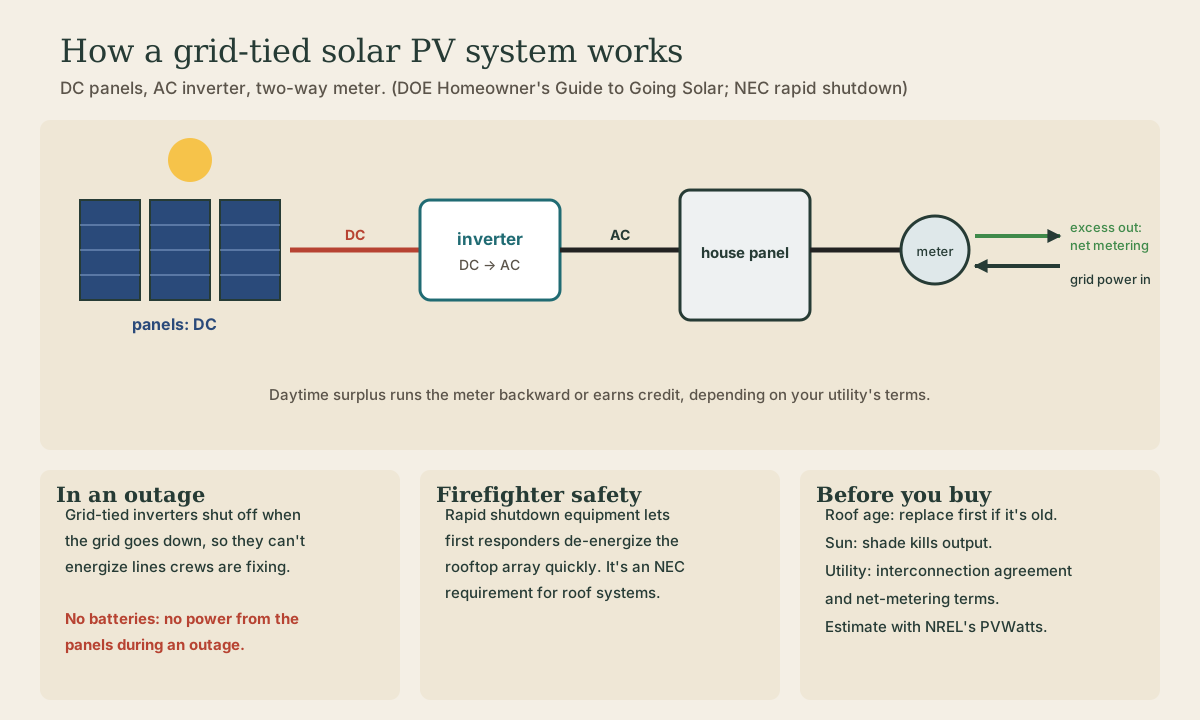
Solar cells absorb photons from sunlight, which sets up an electric field across the cell’s layers and drives current 1. That current is direct current (DC). Household circuits and the grid run on 60-hertz alternating current 2, so every grid-tied system has an inverter that converts DC to AC synchronized with the grid.

From the inverter, power feeds the house panel. Whatever the house is using right then, it uses; any surplus flows out through the meter to the grid. At night or under clouds, the house draws from the grid as usual.
Net metering is the arrangement in which the utility compensates you for power you export 1. How much credit you get, and whether there’s a size limit, depends on your utility’s policy; DOE recommends asking your utility about availability, system size limits, rates, and how bill credits work before you buy 1.
Quick check
Household circuits and the grid run on 60-hertz AC; panels make DC.
In an outage
A grid-tied system without batteries goes dark when the grid does. Grid-tie inverters are required to have anti-islanding protection: when they sense the grid is down, they shut off, so the panels can’t push power onto lines utility crews expect to be dead 3. It’s the same reason generators need transfer switches.
To keep power during outages, a system needs batteries and equipment that can disconnect the house from the grid and run it as an island 3 1. Storage also lets you use daytime solar after dark 1.
Quick check
Battery-based systems can disconnect from the grid and keep supplying the house.
Firefighter safety
Rooftop arrays keep producing DC whenever light hits them, even with the main breaker off. The NEC’s rapid shutdown requirement provides a way for first responders to quickly de-energize the conductors on the roof. Expect it on any new rooftop system.
Before you buy
DOE’s checklist 1:
- Roof age. Panels last decades; if the roof will need replacing soon, do that first, because the panels will have to come off for it.
- Sun. Shade from trees or chimneys cuts output sharply; a south-facing, unshaded roof or a ground mount does best.
- Utility terms. Interconnection approval and net-metering terms come from your utility.
- Estimate production with NREL’s free PVWatts calculator and compare it with installers’ figures.
- Use certified installers. DOE points to NABCEP certification.
In Wisconsin, a ground-mounted array on a farm or a new structure brings in the permit rules from the Safety and Code module.
Playback is optional. If the player is unavailable, open the video at its source.
Quick check
Also check shade, your utility’s net-metering terms, and a PVWatts production estimate.
What to take from this
Panels make DC; an inverter converts it to grid-matched AC; the house uses what it can, and the surplus flows out through the meter for net-metering credit on your utility’s terms. Without batteries, a grid-tied system shuts off in an outage to protect line crews. Rapid shutdown lets firefighters de-energize roof arrays. Before buying, check roof age, shade, utility terms, and a PVWatts estimate, and use certified installers.
Lesson complete
Nice work.
Sources for this lesson
- 1Homeowner's Guide to Going Solar. U.S. Department of Energy, Solar Energy Technologies Office. verifiedPV cells absorb photons and create current; net metering compensates owners for power exported to the grid, with terms set by each utility; use certified (NABCEP) professionals; consider roof age before installing; storage lets owners use solar energy later or in outages; estimate production with NREL's PVWatts and compare with installer quotes.
- 2Electrical Tech Note 205: Alternating Current. Michigan State University, Biosystems & Agricultural Engineering. verifiedAC is made by spinning a magnetic field inside coils; US power is 60 Hz (a two-pole generator at 3,600 rpm); voltage traces a sine wave; the effective (rms) value is the peak divided by 1.414, so a 170 V peak is 120 V rms.
- 3Why do grid-tie solar systems shut down during power outages?. Northern Arizona Wind & Sun. verifiedGrid-tie inverters are required to have anti-islanding protection that shuts them off when the grid goes down, so power can't flow back onto lines utility workers expect to be dead; battery-based systems can disconnect from the grid and keep supplying the house.