Lighting
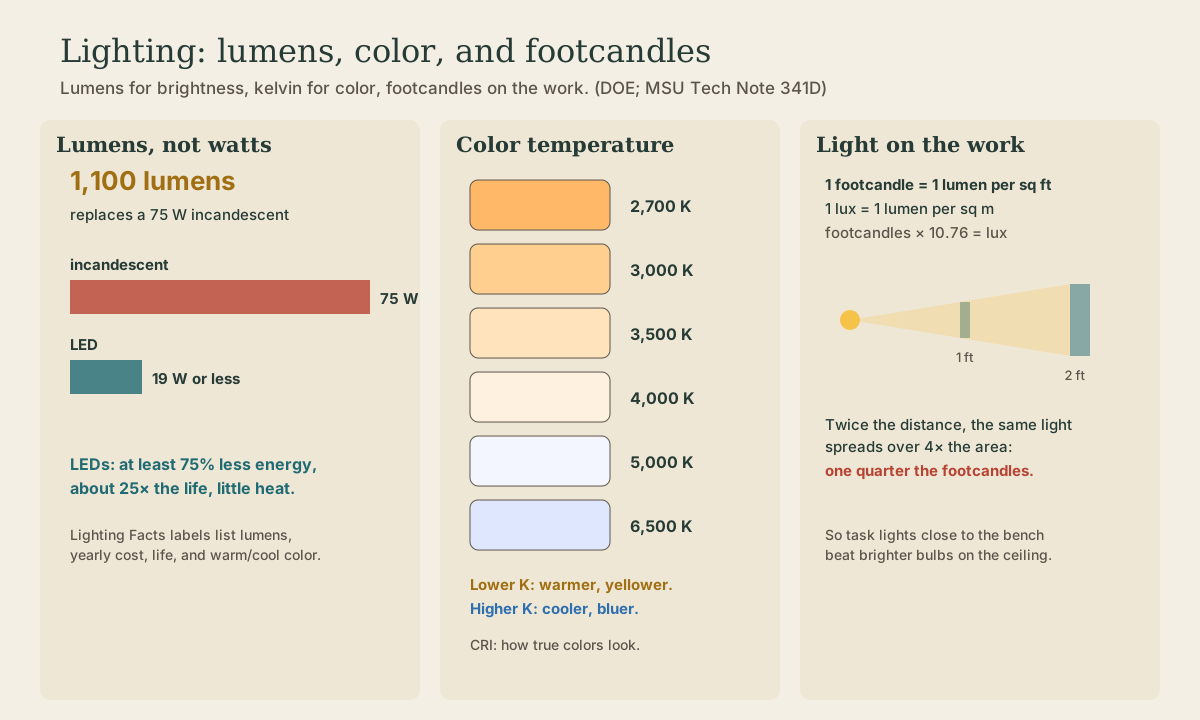
Choosing and placing light. Buy by lumens, not watts: a 1,100-lumen LED replaces a 75-watt incandescent and uses at least 75 percent less energy. Color temperature in kelvin (2,700 K warm, 4,000 K and up cool), color rendering, efficacy, and footcandles: light falls with the square of distance, so put task lights close to the work.
- 4 min
- 5 steps
- 3 questions
- Lesson 56 of 111
In this lesson
- Buy by lumens
- Color temperature and rendering
- Light on the work
- On the circuit
- What to take from this
Picking up where you left off.
Buy by lumens
A watt measures how much power a bulb draws; a lumen measures how much light it puts out. When incandescent bulbs were the only choice, wattage stood in for brightness. With LEDs, it doesn’t: look for lumens 1. A 1,100-lumen LED or CFL replaces a 75-watt incandescent 1.
LEDs use at least 75 percent less energy than incandescent bulbs, give off almost no heat, are dimmable, and last about 25 times longer 1. Much of an incandescent bulb’s output is infrared heat rather than light 2.
The number that compares light sources is efficacy, lumens per watt. Compare whole fixtures, not just bulbs, because the housing, lens, and reflector waste or deliver light too 2. Bulb packages carry a Lighting Facts label with brightness, yearly energy cost, life, and color appearance 1.
Quick check
Lumens measure light; watts measure power drawn. The LED will draw far less.
Color temperature and rendering
White light comes in shades, described by color temperature in kelvin (K). The lower the K-value, the warmer and yellower the light; the higher, the cooler and bluer 1. Lamps range from a soft yellowish 2,700 K to bright white 2:
- 2,700–3,000 K: warm, like incandescent. Living rooms and bedrooms.
- 3,500–4,000 K: neutral. Kitchens, baths.
- 5,000 K and up: cool daylight. Shops and garages where you want to see detail.
Color rendering index (CRI) is separate: it describes how faithfully a light shows colors. Under low-CRI light, two slightly different colors can look the same 2. For a finishing bench or anywhere you match stain, paint, or thread, look for high CRI.
Quick check
Lower K is warmer and yellower; higher K is cooler and bluer.
Light on the work
Light falling on a surface is illuminance. One footcandle is one lumen spread over a square foot; one lux is one lumen per square meter; multiply footcandles by 10.76 to get lux 2.
From a small source, light spreads out as it travels: at twice the distance, the same light covers four times the area, so you get a quarter of the footcandles 2. That’s the practical lesson for a shop or kitchen: a modest light close to the work beats a much brighter one on a high ceiling. Under-cabinet strips, a light over the bench vise, and a lamp over the sewing machine all do more with fewer watts.
Quick check
Light from a small source falls with the square of distance.
On the circuit
Lighting circuits are usually 15 amps on 14 AWG. LED loads are small, so one circuit can carry a lot of lights; plan circuits so a tripped breaker doesn’t leave a whole floor dark. Use dimmers marked compatible with LEDs, and fixtures rated for damp or wet locations in baths, porches, and outdoors.
Playback is optional. If the player is unavailable, open the video at its source.
What to take from this
Choose bulbs by lumens: 1,100 lumens replaces a 75-watt incandescent, with at least 75 percent less energy and about 25 times the life for LEDs. Lower kelvin is warmer (2,700 K), higher is cooler (5,000 K and up); high CRI shows colors truly. One footcandle is a lumen per square foot, and light falls with the square of distance, so put task lights close to the work.
Lesson complete
Nice work.
Sources for this lesson
- 1Guide to Energy-Efficient Lighting. U.S. Department of Energy. verifiedLEDs use at least 75 percent less energy than incandescent bulbs, emit virtually no heat, last 25 times longer, and are dimmable; choose bulbs by lumens: a 1,100-lumen CFL or LED replaces a 75-watt incandescent; higher K-values are cooler and bluer, lower are warmer and yellower; Lighting Facts labels list brightness, energy cost, life, and appearance.
- 2Electrical Tech Note 341D: Lamps and Lighting Design. Michigan State University, Biosystems & Agricultural Engineering. verifiedVisible light spans about 380 to 760 nm; color temperature runs from soft yellowish 2,700 K to bright white; incandescent output is largely infrared heat while LEDs give warm to bluish-white light with long life and little heat; color rendering index describes how well a source shows colors; efficacy is lumens per watt; one footcandle is one lumen per square foot, one lux one lumen per square meter, footcandles times 10.76 equals lux; light from a point source at twice the distance covers four times the area.