Permits and Inspections
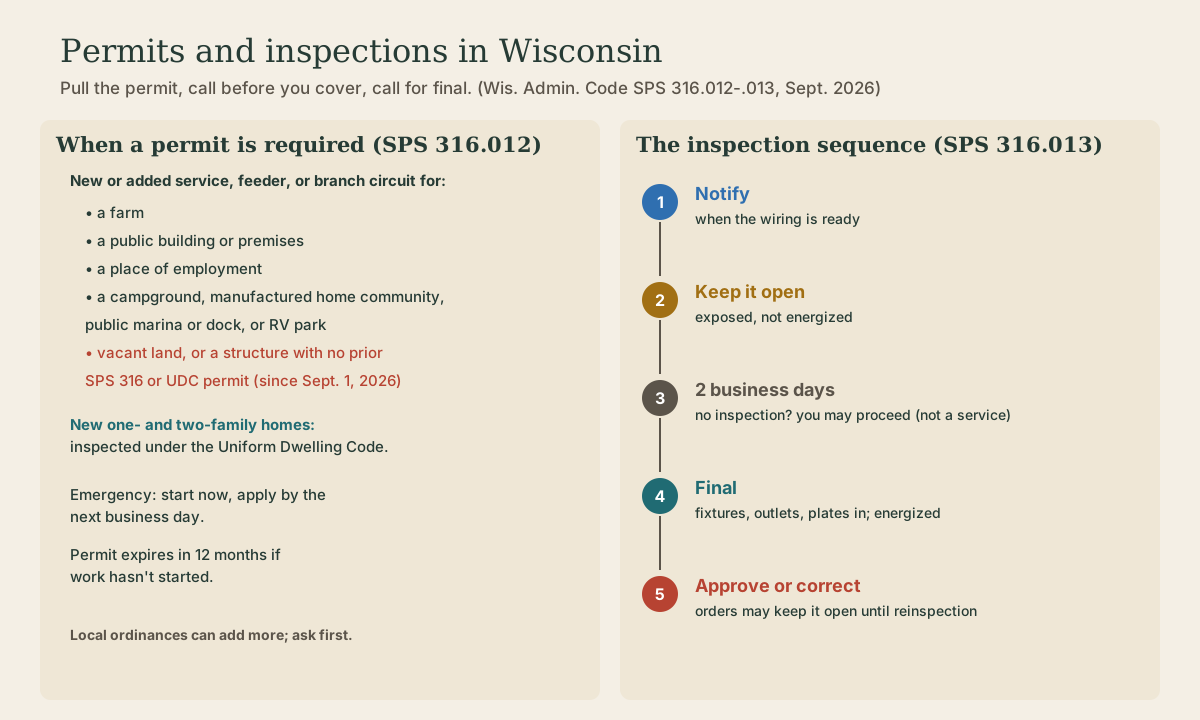
When Wisconsin requires an electrical permit (new or added services, feeders, and branch circuits at farms, public buildings, places of employment, and, since September 1, 2026, vacant land or any structure without a prior permit), how inspections work under SPS 316.013 (notify when ready, keep it open and unenergized, the 2-business-day rule, final inspection), and how to prepare so the inspector signs off the first time.
- 4 min
- 5 steps
- 3 questions
- Lesson 59 of 111
In this lesson
- When a permit is required
- How inspections work
- Passing the first time
- Why bother
- What to take from this
Picking up where you left off.
When a permit is required
SPS 316.012 requires that the owner, or the owner’s agent, hold a permit from the designated inspection agency before starting a project that installs a new or added electrical service, feeder, or branch circuit serving 1:
- a farm,
- a public building, structure, or premises,
- a place of employment,
- a campground, manufactured home community, public marina, pier, dock, or wharf, or an RV park,
- and, under a rule effective September 1, 2026, vacant land or any structure that doesn’t already have a permit under SPS 316 or the Uniform Dwelling Code, unless specifically exempted.
New one- and two-family homes are permitted and inspected under the Uniform Dwelling Code 1. Local ordinances can require permits for other work, such as remodeling an existing house; ask your municipality or county.
Details worth knowing 1:
- In an emergency (a storm-damaged service, say), work may start without a permit as long as the application is filed by the next business day.
- The application names the person responsible and the master electrician, unless the installer is exempt under Wis. Stat. 101.862(4), such as an owner wiring the home they occupy 2.
- A permit expires after 12 months if work hasn’t started.
Quick check
The application names the responsible master electrician unless the work is exempt under Wis. Stat. 101.862(4).
How inspections work
SPS 316.013 lays out the sequence 1:
- Notify the inspection agency when the wiring is ready for inspection.
- Keep it accessible and exposed, and don’t energize it.
- If the inspection hasn’t happened within 2 business days of notification, the wiring may be concealed or energized, except a service, unless you and the agency agreed otherwise.
- Call for the final inspection when all fixtures, outlets, and faceplates are in place and the installation is energized.
- The inspector approves compliant work, or issues orders to correct, which can require the wiring to stay open and unenergized until reinspection.
All inspections are done by inspectors certified by the state 1.
Quick check
Services always wait for inspection.
Quick check
Rough-in is checked open; final is checked finished and working.
Passing the first time
What inspectors check at rough-in is mostly what this course covers:
- correct wire size for each breaker, with cable labeled by its jacket,
- cables stapled and protected, clamped at boxes, with 6 inches of free conductor,
- boxes large enough for their fill,
- grounds spliced and continuous through every box,
- GFCI and AFCI protection where required,
- a properly grounded and bonded service, with neutrals and grounds together only at the service.
Have the permit posted, the panel labeled, and the work accessible. Ask questions before you cover anything: an inspector would rather explain something on the phone than fail it on site.
Why bother
A permit and inspection are a second set of trained eyes on wiring that will sit inside your walls for decades. They also matter later: insurers and buyers ask about unpermitted work after a fire or during a sale.
What to take from this
SPS 316 requires a permit before new or added services, feeders, or branch circuits at farms, public buildings, workplaces, and similar places, and, since September 1, 2026, on vacant land or structures without a prior permit; new homes go through the Uniform Dwelling Code, and local ordinances may cover remodels. Emergencies can start first if you apply by the next business day. Notify when ready, keep it open and unenergized, proceed after 2 business days if no one comes (never for a service), and call for final when everything is installed and energized.
Lesson complete
Nice work.
Sources for this lesson
- 1Wis. Admin. Code SPS 316.012-.013, Electrical permits and inspections. Wisconsin Legislature. 2026. verifiedRegister September 2026. A permit from the designated inspection agency is required before a project installing a new or added service, feeder, or branch circuit serving a farm, public building, place of employment, campground, manufactured home community, public marina or dock, or RV park, and (effective 9-1-26) vacant land or any structure without a prior SPS 316 or SPS 320 permit; emergency work may begin if an application is filed by the next business day; applications name the master electrician unless exempt under Wis. Stat. 101.862(4); permits expire 12 months after issue if work hasn't begun. Installations are subject to inspection; the owner notifies the agency when ready; wiring stays accessible and unenergized, but may be concealed or energized (other than a service) if not inspected within 2 business days; final inspection when fixtures, outlets, and faceplates are installed and energized; noncompliant work gets orders to correct. New one- and two-family dwellings are inspected under SPS 320.10.
- 2Wis. Stat. 101.862, Electrician licensing. Wisconsin Legislature. verifiedElectrical wiring generally requires licensed or registered electricians under a master electrician; subsection (4)(a) exempts a residential property owner who installs, repairs, or maintains wiring on premises the owner owns and occupies as a residence, unless a local ordinance requires a license or registration; (4)(d) exempts systems of 100 volts or less.