Shutoffs and Valves
Where Wisconsin's code puts the control valves in a house: the curb stop at the property line, the building control valve within 3 feet of where the service enters (or of the pressure tank on a well), a valve at the water heater and any treatment device, and stops at each toilet, appliance, and outdoor hose bibb, all accessible from inside. Ball, gate, and stop valves; frost-proof bibbs and vacuum breakers; expansion tanks on closed systems; and water hammer arrestors for quick-closing valves.
- 5 min
- 6 steps
- 3 questions
- Lesson 35 of 111
In this lesson
- Find it first
- The valves a house needs
- Kinds of valves
- Outdoors
- Expansion and hammer
- What to take from this
Picking up where you left off.
Find it first
The time to find the main shutoff is before a pipe bursts. Walk the house, find every valve below, open and close each one, and tag the main.
The valves a house needs
Wisconsin’s plumbing code sets where control valves go in a one- or two-family house 1:
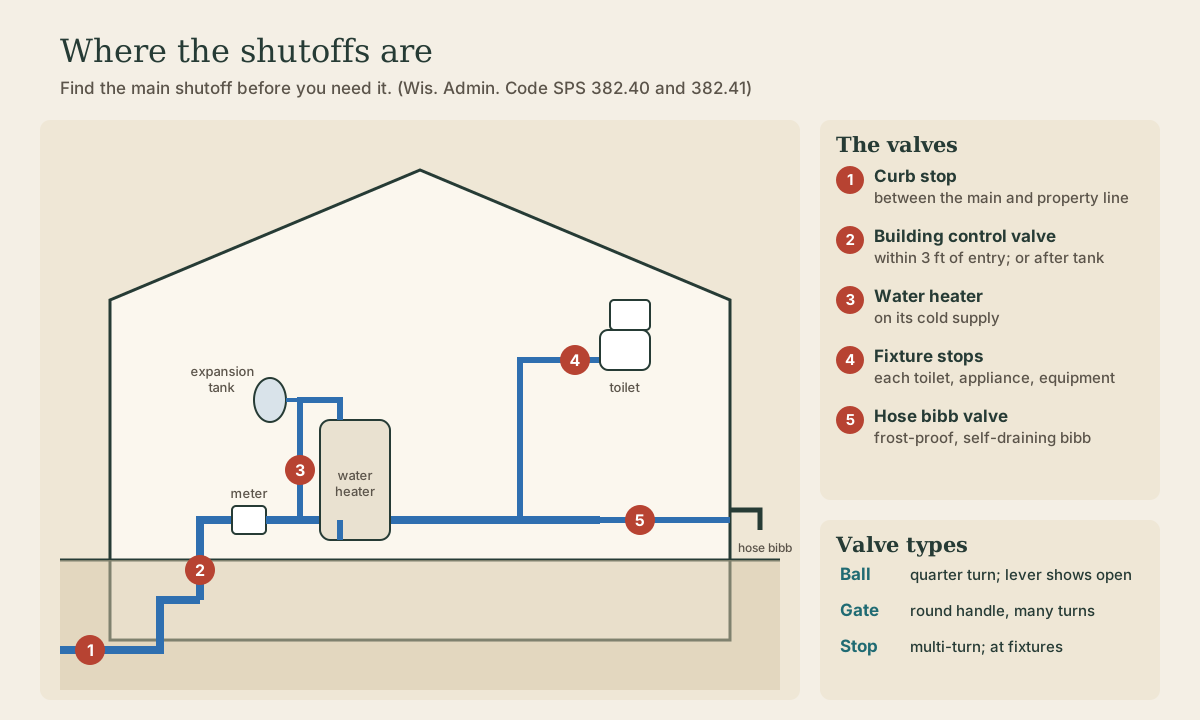
- Curb stop. On city water, a valve in the service line between the water main and the property line. The homeowner’s side starts after it.
- Building control valve. Inside the house, within 3 feet of where the water service first enters, and upstream of the meter if there is one. On a well with an indoor pressure tank, it’s within 3 feet downstream of the pressure tank. This is the main shutoff. If there’s a meter, a second valve goes within 3 feet downstream of it, so the meter can be changed without draining the house.
- Water heater and treatment devices. A valve in the supply to each water heater and each water softener or treatment device.
- Toilets, appliances, and equipment. A stop at each toilet and at each appliance and piece of equipment.
- Outdoor hose bibbs. A valve for each exterior hose bibb.
All control valves and fixture stops must be accessible, and the valves for fixtures and appliances in a dwelling unit must be reachable from inside that unit 1. A valve behind drywall doesn’t count.
Quick check
On a well with an indoor pressure tank, it’s within 3 feet downstream of the tank.
Kinds of valves
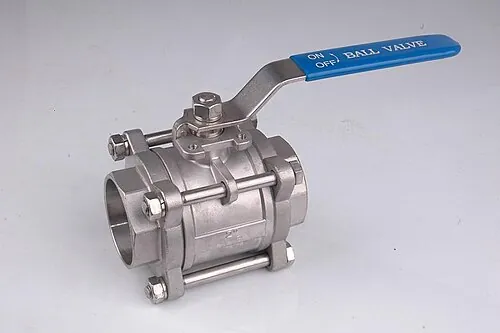
- Ball valve. A ball with a hole through it turns a quarter turn. The lever shows at a glance whether it’s open (in line with the pipe) or closed (across it), and open, it doesn’t restrict flow.
- Gate valve. A round handle that takes many turns to raise or lower a gate. Common on older mains.
- Stop valve (globe pattern). Multi-turn, with a washer that closes on a seat; the typical small valve under sinks and toilets.

Old multi-turn valves left untouched for years can be hard to close or may not seal, which is one more reason to exercise them before an emergency.
Outdoors
A hose bibb or wall hydrant through the wall of a heated building must be frost-proof and self-draining: the valve seat sits deep inside the warm wall, and the part in the cold wall drains when it’s shut off 1. Disconnect hoses in fall so the bibb can drain.
Any outlet with hose threads counts as a high-hazard cross connection in Wisconsin, because a hose can lie in a bucket of chemicals or a puddle and siphon back into the drinking water; it needs a listed backflow preventer such as a vacuum breaker, one that doesn’t stop the bibb from draining 1.
Quick check
Wisconsin also treats any hose-thread outlet as a high-hazard cross connection that needs backflow protection.
Expansion and hammer
Water expands when heated. In an open system, the extra volume pushes back into the city main. Once a check valve, backflow preventer, or other one-way device makes the system closed, that expansion raises the pressure in the house every time the heater runs. Wisconsin requires any storage water heater on a closed system to have an expansion tank or similar device 1.
When a valve slams shut, the moving column of water stops all at once and the pressure spikes, which you hear as water hammer; spikes can reach 300 to 400 psi in rigid pipe 2. Wisconsin requires water hammer arrestors at fixtures and appliances with quick-closing solenoid valves (washing machines, dishwashers) on 3/8-inch or larger inlets, installed in the fixture supply and kept accessible 1.
Playback is optional. If the player is unavailable, open the video at its source.
Quick check
Wisconsin requires an expansion tank or similar device on storage water heaters in closed systems.
What to take from this
Know the five shutoffs: the curb stop, the building control valve within 3 feet of where the service enters (or after the pressure tank on a well), the water heater valve, stops at each toilet and appliance, and a valve for each hose bibb, all accessible from inside. Ball valves show open or closed at a glance; exercise the old multi-turn ones. Outdoor bibbs must be frost-proof, self-draining, and protected from backflow; closed systems need an expansion tank at the heater; quick-closing valves need hammer arrestors.
Lesson complete
Nice work.
Sources for this lesson
- 1Wis. Admin. Code ch. SPS 382, Design, Construction, Installation, Supervision, Maintenance and Inspection of Plumbing. Wisconsin Legislature. 2026. verifiedRegister August 2026. SPS 382.10: plumbing protects health and the waters of the state; fixtures need adequate water volume and pressure; drains must carry waste efficiently with cleanouts and enough air circulation that trap seals are never siphoned, aspirated, or forced; every dwelling on a sewer or POWTS needs at least one water closet, wash basin, kitchen sink, and tub or shower. SPS 382.30: horizontal branch drains 2 inches or less slope at least 1/4 inch per foot, larger ones 1/8 inch per foot; drainage fixture units, e.g. residential water closet 4, bathroom group 6, residential kitchen sink 2, lavatory 1, residential shower 2, residential clothes washer 4. SPS 382.31: each gravity building sewer served by at least one 3-inch stack to a vent terminal; vent terminals at least 2 inches for frost; trap-to-vent maximum developed lengths (1/4 inch per foot, sanitary tee: 1-1/4 in. 5 ft, 1-1/2 in. 6 ft, 2 in. 8 ft, 3 in. 12 ft, 4 in. 16 ft); vents not within two diameters of the weir; air admittance valves allowed with limits. SPS 382.32: trap seals 2 to 4 inches; trap primers for evaporation; prohibited traps include bell, drum, non-integral S-traps, partition, and moving-part traps. SPS 382.40: minimum flow pressure 8 psig at fixtures, 15 for washdown and siphonic water closets, 20 for one-piece tank toilets and pressure-balance or thermostatic mixing valves, 25 for blowout fixtures; over 80 psig requires a pressure reducing valve and strainer downstream of the meter and upstream of fixtures; sizing accounts for fixture load, minimum supply pressure, elevation, device losses, minimum fixture pressure, and friction.
- 2Design Guide: Residential PEX Water Supply Plumbing Systems. Plastics Pipe Institute, Plastic Pipe and Fittings Association, and PATH (prepared by NAHB Research Center). 2006. verifiedPEX is crosslinked polyethylene made by peroxide (PEX-A), silane (PEX-B), or radiation (PEX-C) methods; joining by cold expansion fittings with PEX reinforcing rings (ASTM F1960), metal insert fittings with copper crimp rings checked by go/no-go gauge (ASTM F1807), or stainless steel clamp rings; PEX is about 180 times less rigid than copper, which reduces water hammer; water-filled PEX can freeze and expand without splitting where it can expand evenly (walls, ceilings), not necessarily in slabs; keep PEX out of sunlight, sleeve exposed runs; the guide cites the model code ban on PEX within the first 18 inches of a water heater; leave 1/8 inch of slack per foot; support horizontal runs every 32 inches and vertical runs at each floor; home-run and remote manifold layouts.