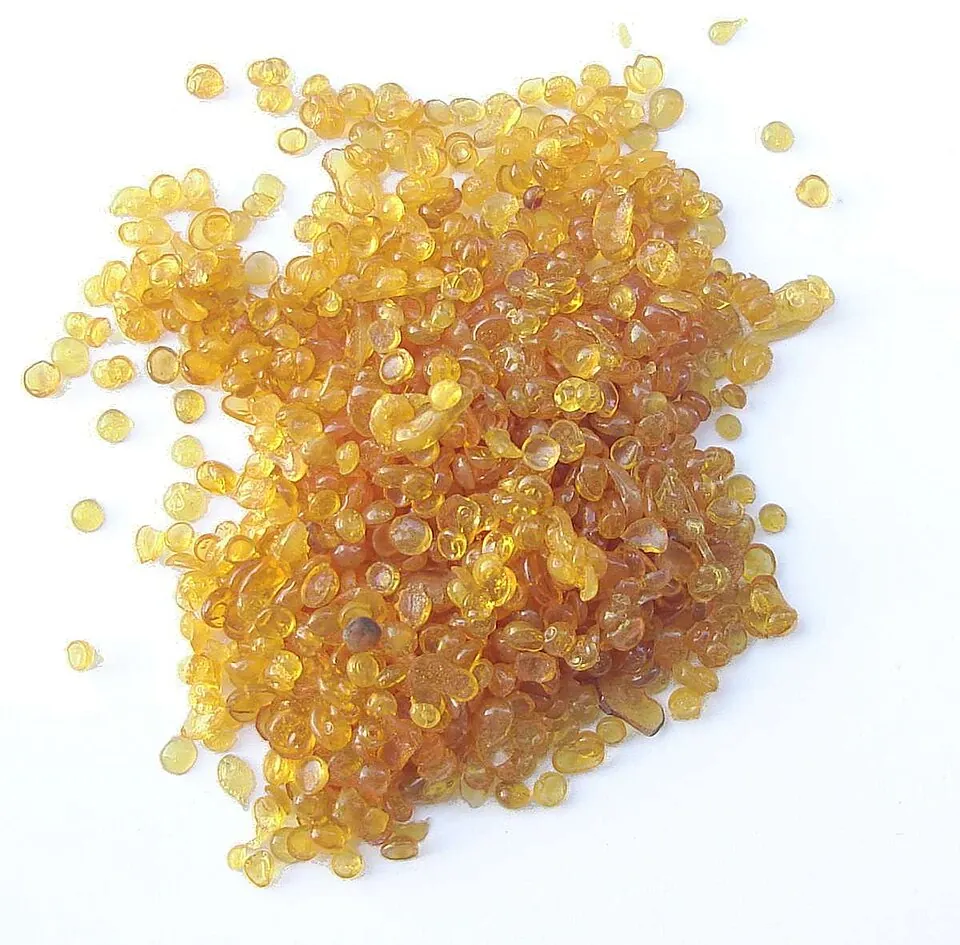
Hide Glue
The glue of nearly all pre-industrial furniture: what hide glue is, gram strength, mixing and keeping it at about 140 °F, the rubbed joint, liquid hide glue, and why reversibility and zero creep matter for furniture meant to be repaired.
- 4 min
- 7 steps
- 3 questions
- Lesson 55 of 160
In this lesson
- What it is
- Mixing and heating
- The rubbed joint
- Hot, liquid, and modern glues
- Why use it now
- Try it
- What to take from this
Picking up where you left off.
What it is
Hide glue is made from collagen, the protein in animal hides and connective tissue, much like gelatin 1. It was the cabinetmaker’s glue for centuries: drawer blocks, veneer, case joints, chair joints. Synthetic glues have mostly replaced it, but violin makers, restorers, and period furniture makers still use it 1.

It’s sold as dry granules or flakes graded by gram strength, a measure of gel firmness. Cabinet and instrument makers use roughly 120 to 200 gram strength; higher numbers gel faster and grab harder 1. 192 gram is a common all-round choice. Avoid glue with no stated strength 1.
Mixing and heating
- Soak: cover granules with cool water, roughly equal parts by weight (a little more water for a slower glue), and let them swell for an hour or more.
- Heat: warm in a glue pot or a jar in a water bath to about 140 °F (60 °C). Hotter weakens the glue 1; never boil it.
- Consistency: it should run off the brush in a thin, unbroken stream, like warm syrup. Add water as it evaporates.
- Keep it: mixed glue keeps a few days refrigerated; it goes sour and weak when it spoils.
As it cools below about 120 °F (50 °C) it gels quickly, often in a minute or less 1. Work in a warm room, warm the parts if the shop is cold, and have everything dry-fitted and ready before you brush.
Playback is optional. If the player is unavailable, open the video at its source.
Quick check
Below about 120 °F (50 °C) it gels, often within a minute.
The rubbed joint
The fast gel makes possible the oldest edge-gluing method. Joint two boards so they meet perfectly, brush glue on both edges, set one on the other, and rub it back and forth a few times. As the glue gels, the board suddenly grabs and won’t slide. Align it and leave it standing. No clamps. It works for short, well-jointed boards: glue blocks, small panels, and drawer bottoms.
Quick check
The quick gel that makes hide glue fussy is what makes the rubbed joint possible.
Hot, liquid, and modern glues
- Liquid hide glue has an additive (often urea) that keeps it liquid at room temperature, giving a long open time for complicated assemblies. It’s slower to set and more sensitive to humidity; use it fresh.
- PVA (yellow glue) is stronger in some tests, water-resistant in its exterior grades, and easier, but it creeps under constant load and can’t be reversed or re-glued over.
- Hide glue doesn’t creep: joints stay put under load 1. It dries hard and fails cleanly, which helps when parts must come apart 1.
- Weakness: moisture. Hide glue softens in damp conditions; don’t use it outdoors or in a bathroom.
Why use it now
- Reversible: heat and moisture (a steam iron, hot water, a heated knife) release the joint for repair 1.
- Bonds to old glue: new hide glue sticks to old hide glue, so a loose joint can be re-glued without scraping it to bare wood 1. PVA won’t bond to old glue of any kind.
- Clean finishing: squeeze-out scrapes off, and it doesn’t block stains the way PVA can.
- Hammer veneering: hot glue lets you lay veneer with a veneer hammer and no press.
Quick check
The next repair doesn’t require destroying the joint.
Try it
Mix 2 oz of 192-gram glue, keep it at 140 °F in a jar in a pan of water on a hot plate, and glue up a rubbed edge joint between two short pine boards. The next day, break a test joint and look at the fibers torn from the wood.
What to take from this
Hide glue is collagen, graded by gram strength (120-200 for woodwork), used at about 140 °F, and gels below about 120 °F within a minute. That speed allows the clampless rubbed joint. It doesn’t creep, releases with heat and moisture, and bonds to old glue, which is why furniture meant to last and be repaired is glued with it; keep it away from damp.
Lesson complete
Nice work.
Sources for this lesson
- 1Animal glue: hide glue. Wikipedia. verifiedCollagen glue applied near 60 °C (140 °F); hotter weakens it; gels below about 50 °C with an open time of a minute or less; 120-200 gram strength for cabinet and instrument work; reversible with heat and moisture, sticks to old glue, does not creep.
Previous: Carved Oak: Strapwork, Lunettes, and the Carved Box