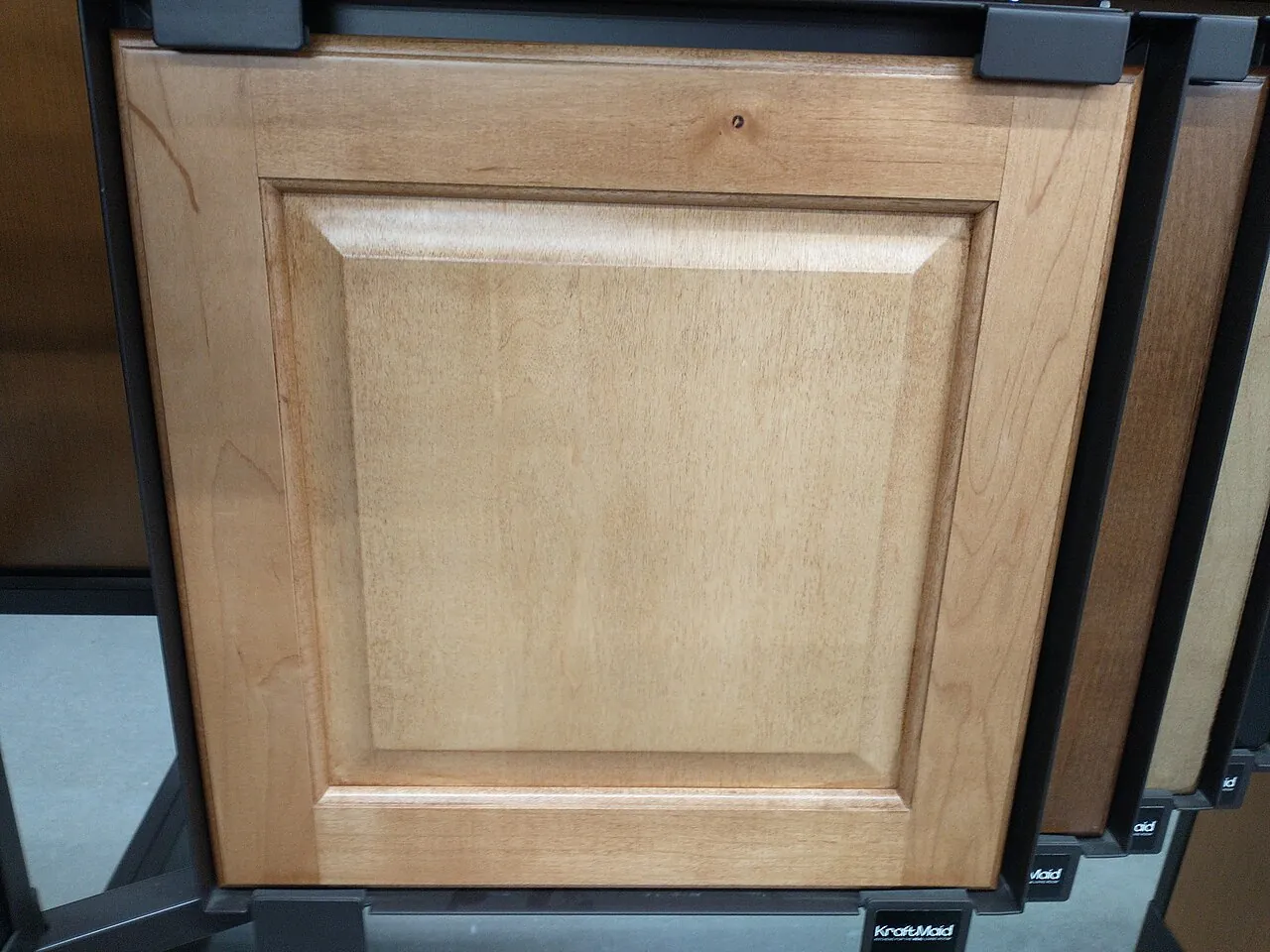
Frame and Panel
How furniture makers solved wood movement: a stable mortise-and-tenon frame holding a solid panel that floats in a groove. Sizing the panel, raising it, finishing it before assembly, and gluing only the frame.
- 4 min
- 6 steps
- 3 questions
- Lesson 41 of 160
In this lesson
- The problem it solves
- Build the frame
- Size the panel
- Raise the panel
- Assemble
- What to take from this
Picking up where you left off.
The problem it solves
Solid wood shrinks and swells across its grain as humidity changes, while barely changing length (see the Wood Drying course). A 16-inch-wide flatsawn oak panel can change width by a meaningful fraction of an inch between a Wisconsin August and February 1. Nail or glue that panel solidly into a frame, and it cracks when it shrinks or bursts the frame when it swells.

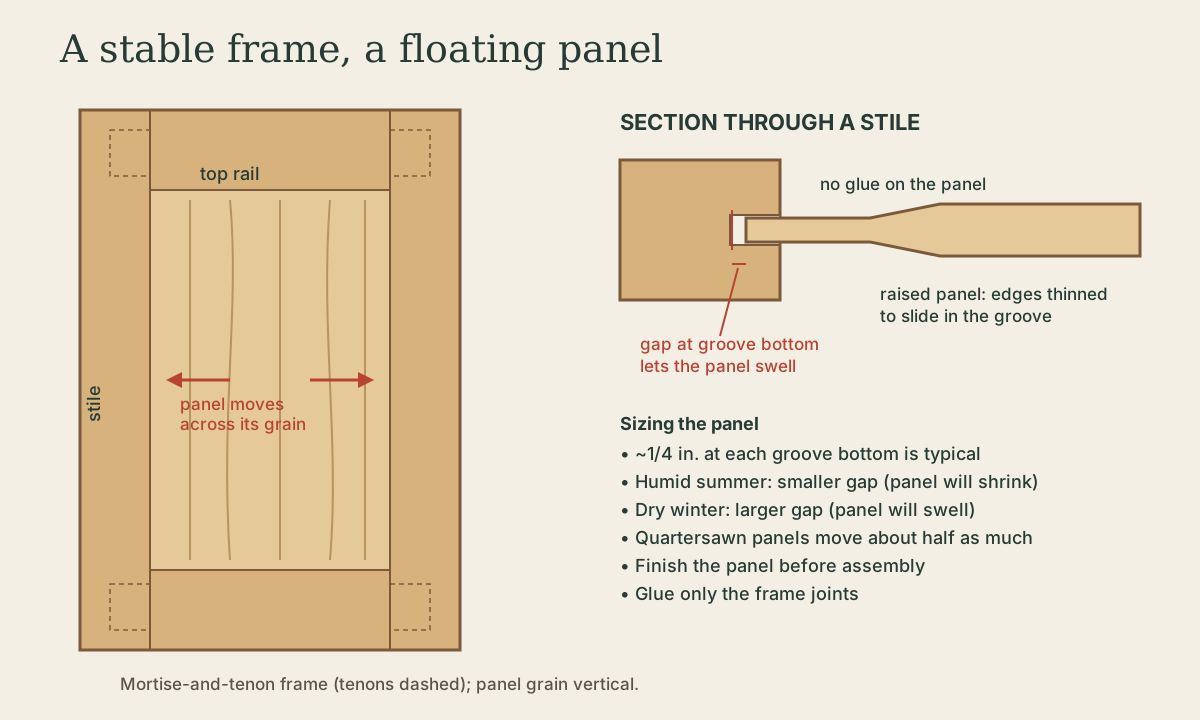
Frame-and-panel construction solves it 2:
- A frame of narrow stiles (vertical) and rails (horizontal), joined with mortise and tenon. Narrow parts move very little.
- A panel that sits in a groove around the inside of the frame and floats: it isn’t glued, so it can move freely.
It’s how doors, chest sides, wainscoting, and cabinet sides have been made for centuries.
Quick check
The narrow frame members barely move; the panel moves inside the groove where nobody sees it.
Build the frame
- Mill stiles and rails; stiles run full height, rails fit between them.
- Groove the inside edges of all frame parts, about 1/4 inch wide and 3/8 to 1/2 inch deep, usually centered.
- Cut mortises in the stiles and tenons on the rails. The groove cuts into the tenon area, so the tenon’s shoulder on the groove side is offset, or the tenon has a haunch that fills the groove at the end of the stile.
- Dry-fit and check that the frame is flat and square (equal diagonals).
Size the panel
The panel’s width must allow for movement. A typical setup leaves about 1/4 inch of space at the bottom of each side groove 2, adjusted for the season and panel width:
- Built in humid summer, the panel is near its widest: leave a small gap; it will shrink.
- Built in dry winter, it’s near its narrowest: leave more room for it to swell.
- Quartersawn panels move about half as much and need less allowance.
- The panel’s length (along the grain) barely changes; fit it close.
Small rubber spacer balls in the groove center the panel and keep it from rattling while still letting it move 2.
Quick check
In humid summer the panel is swollen; leave a small gap and expect it to shrink. In dry winter, leave more room for swelling.
Raise the panel
A panel thicker than the groove gets its edges thinned to fit:
- Flat panel: plywood or thin solid wood the groove’s thickness.
- Raised panel: a thick panel whose edges are beveled or stepped down (a “field” in the center) to fit the groove. By hand, a panel-raising plane or a fore plane works the bevel across the end grain first, then along the grain; by machine, a router bit or tilted table saw blade.
The panel’s tongue should slide into the groove snugly but freely.
Assemble
- Finish or stain the panel first, including its edges. When it shrinks in winter, a band of raw wood would otherwise appear at the frame.
- Glue only the frame joints. Keep glue out of the grooves; a little squeeze-out can lock the panel.
- Optionally, pin or glue the panel at the center of each end so it stays centered and moves equally both ways.
- Clamp, check square and flat, and let cure.
Quick check
Pre-finishing (or at least staining) the panel avoids a pale line appearing at the frame edge each dry season.
What to take from this
Frame-and-panel construction lets a wide solid panel move across its grain inside a groove in a stable mortise-and-tenon frame. Groove the frame, haunch the tenons, and size the panel for the season: small gaps in humid weather, larger in dry. Raise thick panels at the edges, finish the panel before assembly, and glue only the frame.
Lesson complete
Nice work.
Sources for this lesson
- 1Samuel V. Glass, Samuel L. Zelinka. Moisture Relations and Physical Properties of Wood (Wood Handbook, Chapter 4). USDA Forest Service, Forest Products Laboratory, FPL-GTR-282. 2021. verifiedFree and bound water, fiber saturation (~30%), EMC table (Table 4-2), green moisture by species (Table 4-1), shrinkage by species (Table 4-3), and the shrinkage equation.
- 2Frame and panel. Wikipedia. verifiedThe panel floats unglued in grooves in the rails and stiles so seasonal movement doesn't distort the frame; about 1/4 inch of space at the groove bottom is typical.