Wrought Nails, Cut Nails, and Clinching
Nails in furniture and buildings before wire: hand-wrought nails and the penny system, the shift to machine-cut nails from 1790 to 1830, why early cut nails couldn't be clinched, wire nails taking over in the 1890s, and how to use cut nails and clinch nails in your own work.
- 4 min
- 7 steps
- 3 questions
- Lesson 56 of 160
In this lesson
- Hand-wrought nails
- Cut nails
- Wire nails
- Dating with nails
- Using cut nails in furniture
- Try it
- What to take from this
Picking up where you left off.
Hand-wrought nails
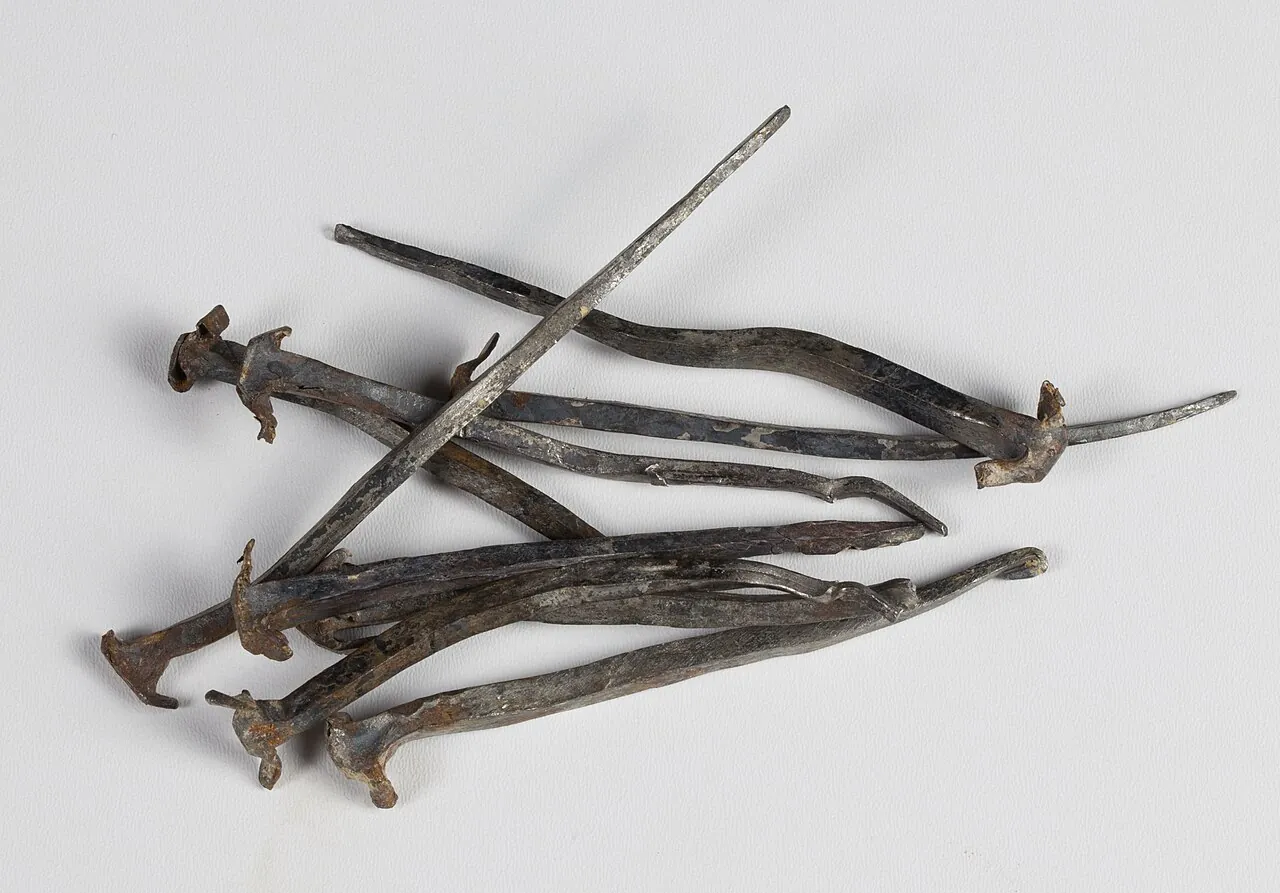
Before 1790, nails were forged one at a time by a smith or nailer: a square rod drawn to a point and headed in a nail header, often with the faceted “rose head” of four or so hammer blows. Wrought nails were used throughout the 17th and 18th centuries and into the 19th 1.

- The penny system: in medieval England nails were sold by their price per hundred, for example 8d (eight pence) per hundred. That naming was established by the 15th century; sizes later standardized by length but kept the names 1.
- Scarcity: nails were an important colonial import. A 1645 Virginia statute prohibited settlers from burning down old buildings to recover their nails 1.
- Clinching: wrought iron’s fibers run along the nail, so the point can be bent over without breaking.
Quick check
The system was established by the 15th century; sizes later standardized by length.
Cut nails
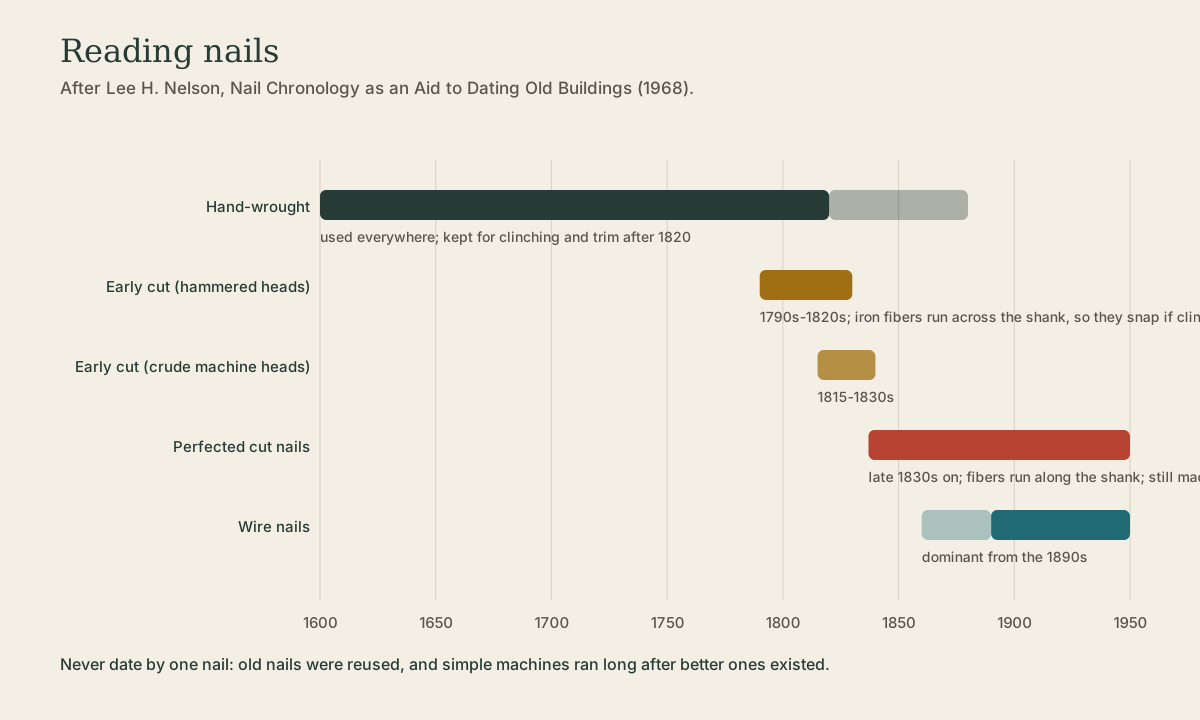
After the Revolution, nail factories in New England, New York, New Jersey, and Pennsylvania began shearing nails from iron plate, first by hand power, then water and steam 1. Lee Nelson’s chronology for the National Park Service outlines the phases 1:
| Type | Approximate dates |
|---|---|
| Cut, hand-hammered heads | 1790s-1820s |
| Cut, crude machine heads | 1815-1830s |
| Perfected cut nails, machine heads | late 1830s to present |
Until the 1830s, the iron fibers in most cut nails ran across the shank, so they couldn’t be clinched; smiths kept making wrought nails for clinching and trim 1. Many buildings of 1790-1830 used both: the Old Town Hall in Wilmington, Delaware (1798-1800) has machine-cut flooring brads and lath nails, but wrought nails in all the finish woodwork 1. Cut nails made after about 1830 look almost the same as those made today 1.
Quick check
After about 1830, cut nails had fibers running along the shank.
Wire nails
Wire nails were in builders’ vocabulary by the 1880s but didn’t become dominant until the 1890s, and many builders preferred cut nails well into the 20th century because they hold better 1.
Quick check
Many builders preferred cut nails, which hold better, well into the 20th century.
Dating with nails
Nelson’s rules 1:
- Identify the nail type precisely.
- Know when that type reached your area and when better ones replaced it.
- Compare with dated buildings nearby.
- Several types in one building may mean a transition period or later alterations.
- Never date a building from a single nail.
Using cut nails in furniture
Cut nails are still made and suit period work: six-board chests, boxes, drawer bottoms, backboards, and mouldings.
- Orient the nail with the grain: a cut nail is a wedge. Drive it with its taper running along the grain, the head’s long side parallel to the grain, so it cuts the fibers instead of splitting them apart.
- Pilot holes near ends and in hardwood, slightly smaller than the nail.
- Clinching: drive the nail through both pieces, then bend the protruding point back into the wood, ideally curling the tip so it buries itself across the grain. Use wrought-style or soft clinch nails. Clinched nails hold battens on doors and lids and can’t pull out.
Playback is optional. If the player is unavailable, open the video at its source.
Try it
Collect nails from an old building or barn you’re allowed into, sort them into wrought, cut, and wire, and compare heads, shanks, and points. Then nail a small box together with modern cut nails oriented with the grain, and clinch a batten across a board.
What to take from this
Wrought nails ran through the 18th century, sold by the penny-per-hundred system. Cut nails took over between 1790 and 1830; early ones couldn’t be clinched, so wrought nails stayed in use for clinching and trim. Perfected cut nails date from the late 1830s, and wire nails dominated from the 1890s. Date only from many nails, and use cut nails oriented with the grain.
Lesson complete
Nice work.
Sources for this lesson
- 1Lee H. Nelson. Nail Chronology as an Aid to Dating Old Buildings (Technical Leaflet 48). American Association for State and Local History. 1968. verifiedWrought, cut, and wire nails. Cut-nail phases 1790s-1830s; perfected cut nails late 1830s on; early cut nails have crosswise fibers and could not be clinched, so wrought nails were kept for clinching; wire nails dominant in the 1890s; never date by a single nail.