Finishing Safety: Oily Rags and Fumes
The real hazards of finishing: drying-oil rags that ignite on their own, flammable solvent vapors, and fumes that need ventilation or an organic-vapor respirator. Simple habits that prevent fires and headaches.
- 4 min
- 6 steps
- 3 questions
- Lesson 45 of 160
In this lesson
- Oily rags
- Fire
- Fumes
- Food safety
- A finishing-room checklist
- What to take from this
Picking up where you left off.
Oily rags
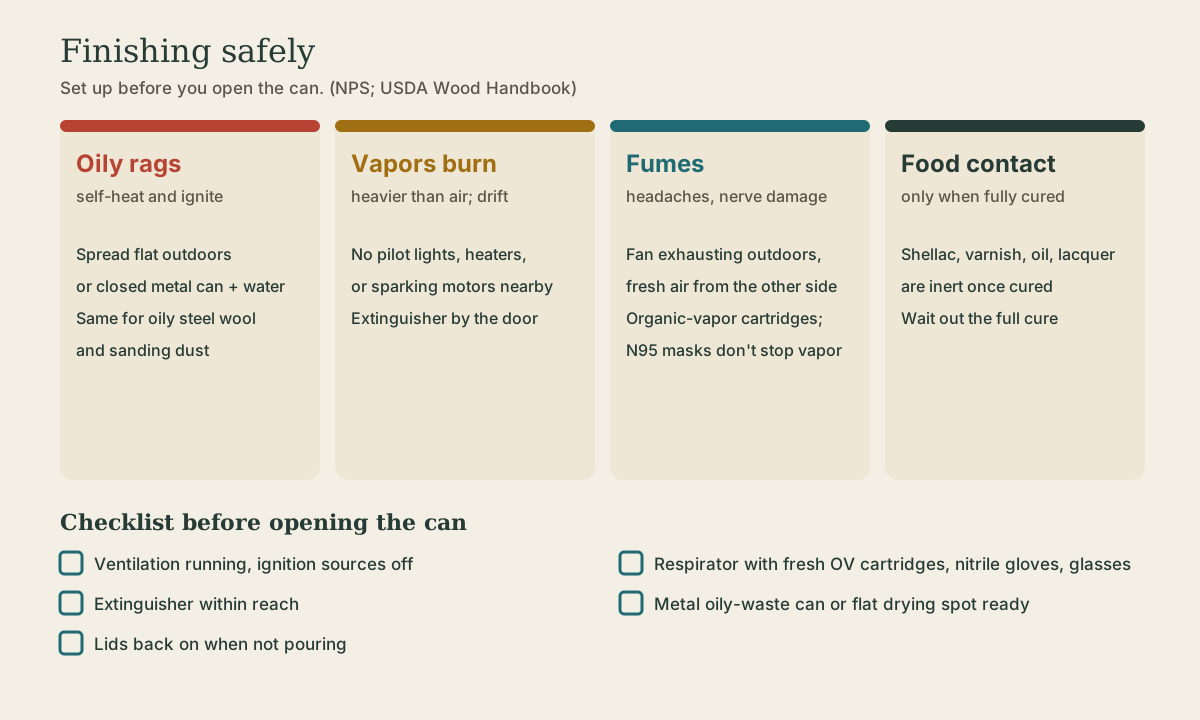
The finishing hazard that surprises people is spontaneous combustion. Drying oils - linseed, tung, oil-based stains, Danish oil, oil-based varnishes - cure by reacting with oxygen, and that reaction gives off heat. On a surface the heat dissipates. In a crumpled pile of rags, it builds up until the rags ignite on their own, sometimes hours later. A National Park Service crew learned this when a linseed-oil rag caught fire 1; the Wood Handbook’s finishing chapter carries the same warning 2.
Rules:
- Never leave oily rags crumpled in a pile, a trash can, a pocket, or a corner.
- Spread them flat in a single layer outdoors or on concrete, away from buildings, until stiff and fully cured 1, or
- Put them in an approved closed metal oily-waste can, ideally covered with water, and dispose of them according to local rules 1.
- Treat oily steel wool, sawdust from oil-finish sanding, and paper towels the same way.
Quick check
Curing drying oils give off heat; piled rags trap it until they ignite. Nondrying mineral oil and water-based finishes don’t.
Fire
Many finishes and thinners are flammable: mineral spirits, naphtha, lacquer thinner, denatured alcohol, and solvent-based finishes. Their vapors:
- Are often heavier than air and can drift along the floor.
- Ignite at a pilot light, a furnace or water heater, a space heater, a cigarette, or sparks from a motor or switch.
So:
- Finish away from open flames and heaters; turn off pilot lights in the space if needed.
- Store solvents in their original sealed containers or approved safety cans, away from heat.
- Keep a fire extinguisher (ABC or a type rated for flammable liquids) by the door.
- Don’t spray solvent finishes without an exhaust fan rated for flammable vapors.
Quick check
Vapor can pool low and ignite at an open flame or a motor’s spark. Ventilate and remove ignition sources.
Fumes
Solvent vapors cause headaches, dizziness, and nausea, and long-term exposure to some solvents damages the nervous system and organs.
- Ventilate: open windows and run a fan exhausting to the outside, with fresh air coming in from the other side.
- Respirator: a half-mask with organic-vapor (OV) cartridges for solvent finishes. Dust masks (N95) don’t stop vapors. Replace cartridges on schedule or when you smell the finish through them.
- Gloves: nitrile gloves protect skin from solvents and stains.
- Water-based finishes are far lower in solvent but still deserve ventilation, especially when sprayed.
Quick check
Particulate masks stop dust, not vapors. Organic-vapor cartridges absorb solvent vapors; ventilation still comes first.
Food safety
Every fully cured common finish - shellac, varnish, oil, lacquer - is generally considered safe for food contact once completely cured; the solvents are gone and the film is inert. The risk is uncured finish. Let finishes cure fully (often weeks for oil-based varnish) before using items with food. Mineral oil and beeswax are used on cutting boards because they’re simple to reapply.
A finishing-room checklist
- Ventilation running, ignition sources off.
- Respirator with fresh OV cartridges, gloves, eye protection.
- Extinguisher within reach.
- Metal oily-waste can or a flat-drying spot ready before you open the can.
- Lids back on containers when not pouring.
What to take from this
Drying-oil rags can ignite by themselves: spread them flat outdoors or seal them in a metal can with water. Solvent vapors are flammable and can drift to pilot lights and sparks, so finish away from heaters and keep an extinguisher nearby. Ventilate, and wear an organic-vapor respirator and nitrile gloves for solvent finishes. Let finishes cure fully before food contact.
Lesson complete
Nice work.
Sources for this lesson
- 1Fire Prevention 52: Spontaneous Combustion - Fact or Fiction?. National Park Service. verifiedAn NPS crew's linseed-oil rag ignited; spread rags in a single layer on concrete to dry, or use an approved container.
- 2Finishing Wood (Wood Handbook, Chapter 16). USDA Forest Service, Forest Products Laboratory, FPL-GTR-282. 2021. verifiedWeathering and UV damage to lignin, sunburned wood and the tape test, paint versus penetrating finishes, drying and nondrying oils, food-contact finishes, and the spontaneous-combustion warning for oily rags.