The Layers of an Upholstered Seat
Every upholstered seat is a stack: a frame, a support (webbing, springs, or a board), stuffing that shapes and cushions, an inner cover, and a show cover. Learn to read the layers before taking anything apart.
- 4 min
- 4 steps
- 3 questions
- Lesson 146 of 160
In this lesson
- The stack
- Why layers
- Reading an old seat
- What to take from this
Picking up where you left off.
The stack
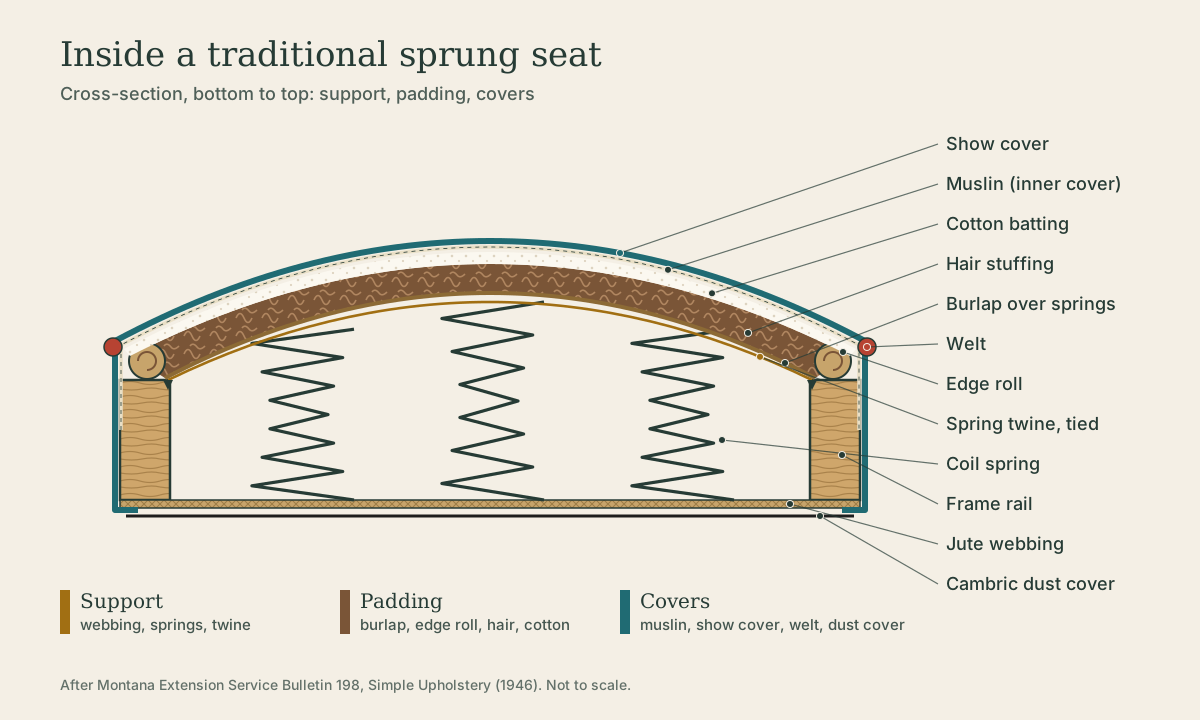
Every upholstered seat - a dining chair, a footstool, a sofa - is a stack of layers, each with a job. From the bottom up, a traditional sprung seat has 1:
- Frame: the wooden structure, usually hardwood, with rails thick enough to hold many tacks.
- Support: webbing stretched across the bottom of the frame, carrying coil springs sewn to it. In unsprung seats, webbing alone or a solid board.
- Spring tying: twine tied across the tops of the springs in eight directions, holding them upright and together.
- Burlap (hessian) over the springs, tacked to the rails.
- Edge roll: a firm roll of stuffing wrapped in burlap at the rail edge, giving the seat a crisp, durable edge.
- Stuffing (first layer): curled horsehair, coir, or moss, sewn down so it can’t shift.
- Batting (second layer): cotton wadding, smoothing the hair and keeping it from working through.
- Muslin: an inner cover pulled tight to shape the seat.
- Show cover: the visible fabric or leather, with welting (piping) or gimp at the edges.
- Dust cover: black cambric tacked underneath.
Traditional upholstery builds all this by hand with springs, lashings, hair, grasses, coir, hessians, scrims, bridle ties, and stitching 2. Modern upholstery keeps the same idea with different materials: sinuous (zigzag) springs or elastic webbing instead of coil springs, polyurethane foam instead of hair, Dacron batting, and staples instead of tacks 2.
Quick check
Burlap covers the springs and gives the stuffing something to sit on; the stuffing, cotton, muslin, and show cover follow.
Why layers
Each layer solves one problem:
- Webbing and springs give resilience and carry weight to the frame.
- Tying keeps springs vertical and working together, so one doesn’t push through.
- Burlap and stuffing turn a bed of springs into a smooth, shaped surface.
- Batting stops coarse fibers from poking through.
- Muslin holds the shape so the show cover doesn’t have to.
- The show cover takes wear and gives the look.
Because each layer is separate, each can be repaired or replaced without discarding the rest: re-cover just the show fabric, retie a spring, re-web a seat from underneath 1.
Museum conservators describe upholstered furniture the same way: a composite of frame, supports, fillings, and covers whose materials age differently and affect each other 3.
Reading an old seat
Before stripping a chair, read it from the outside:
- Press the seat: springs bounce; foam compresses smoothly; a board doesn’t give.
- Look underneath: remove the dust cover. Jute webbing and coil springs mean traditional work; metal zigzags or rubber straps mean modern.
- Lumps or a spring poking up: often broken spring twine, not a broken spring. The 1946 Montana bulletin notes this fault is “erroneously called a broken spring”; it’s fixed by retying 1.
- Sagging from underneath: worn or loose webbing, which can be renewed from below without disturbing the top 1.
- Edge: a firm, crisp front edge means an edge roll or stitched edge.
Photograph every layer as you strip it. The old work is the best instruction for the new.
Quick check
The bulletin notes the fault is ‘erroneously called a broken spring’; the twine has failed and the spring pops up.
What to take from this
An upholstered seat is a stack: frame, webbing and springs, tying, burlap, edge roll, hair stuffing, cotton, muslin, show cover, and dust cover. Modern seats swap in zigzag springs or elastic webbing, foam, and staples. Each layer does one job and can be repaired on its own, and many “broken springs” are just broken twine.
Practice
Pulling the muslin tight gives a smooth, tailored shape; the show cover goes on over it with less strain.
Lesson complete
Nice work.
Sources for this lesson
- 1Margaret Huston Tuller. Simple Upholstery Methods (Bulletin 198, revised). Montana Extension Service, Montana State College. 1946. verifiedA sprung footstool step by step - webbing stretcher, 3-, 8-, and 12-ounce tacks, 3 1/2-inch webbing interlaced, springs sewn at intersections, 8-way tying with clove hitches, burlap, edge roll, hair and cotton padding, muslin, cover, welt, cambric; plus retying 'broken springs' and renewing webbing.
- 2Upholstery. Wikipedia. verifiedTraditional upholstery builds up springs, lashings, animal hair, coir, hessian, scrim, bridle ties, and stitching by hand; modern work uses polyurethane foam, serpentine springs, staples, and machine sewing.
- 3Conserve O Gram 7/4 — Upholstered Furniture: Agents of Deterioration. U.S. National Park Service. 1993. verifiedGovernment conservation guide describing the composite build of upholstered furniture, historic fillings, coil springs, show covers, and interactions among materials.