The Joiner's Tool Chest
The traditional floor chest for hand tools: why a chest beats a wall rack, what a working kit of fewer than 50 tools looks like, and how the chest is built: a dovetailed carcase, top and bottom skirts, a sealed lid, and sliding tills.
- 4 min
- 6 steps
- 3 questions
- Lesson 59 of 160
In this lesson
- Why a chest
- A working kit
- Building the chest
- Inside the chest
- Try it
- What to take from this
Picking up where you left off.
Why a chest
Before shops had walls of pegboard, a joiner’s tools lived in a chest. It protected them from rust, dust, and damage, moved with the worker from job to job, and kept a fixed place for everything. Probate inventories from 17th-century Plymouth list the tools a carpenter owned, item by item and with their value 1: a kit small enough to pack.
Christopher Schwarz’s The Anarchist’s Tool Chest argues that you can build almost anything with fewer than 50 good tools, and that building a chest and filling it with the right ones is the best way to start 2. Whether or not you take on the philosophy, the chest is a good test of casework: big dovetails, a lid that seals, and drawers or tills that slide.
Quick check
Schwarz pairs a short, high-quality kit with a chest to keep it.
A working kit
A reasonable kit by job, close to what Moxon describes and the inventories list:
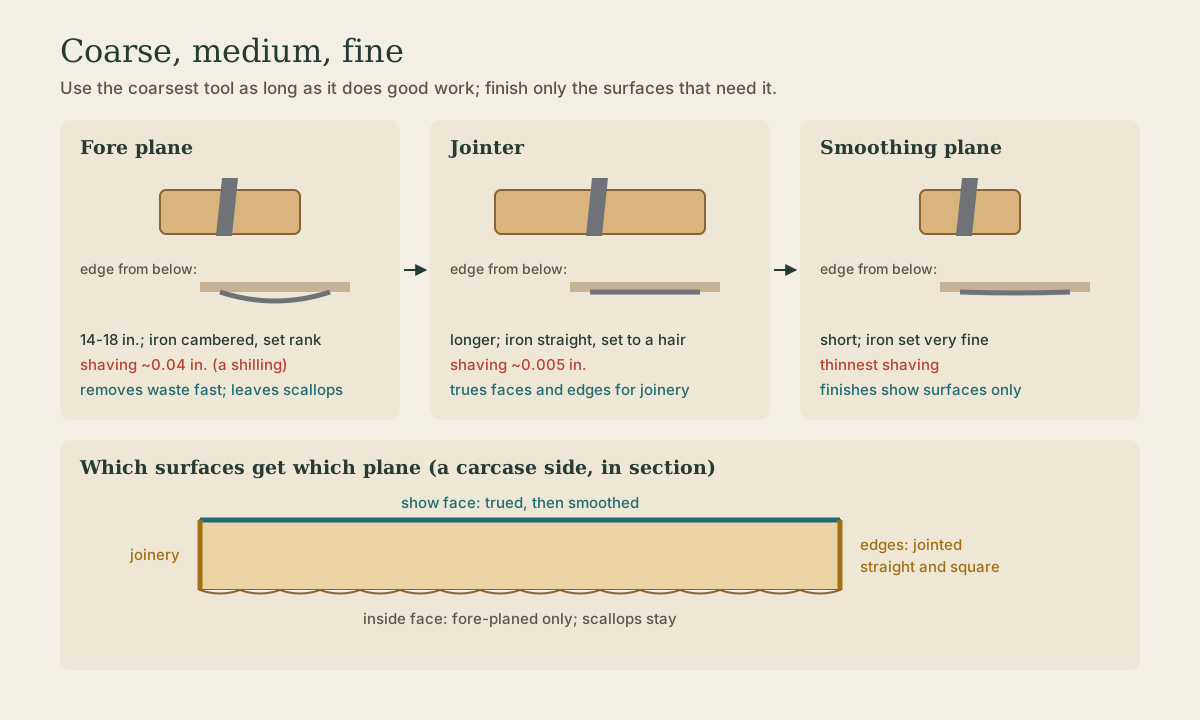
- Planes: fore (or jack), jointer, smoothing plane, block plane, rabbet plane, plow, router plane, and a few moulding planes or hollows and rounds.
- Saws: rip and crosscut handsaws, a dovetail saw, a carcase or tenon saw, a coping or bow saw.
- Chisels: a set of bench chisels, a mortise chisel or two, a few gouges.
- Boring: brace and bits, gimlets, an awl.
- Layout: square, bevel, marking gauge and mortise gauge, dividers, a marking knife, straightedge, rule, winding sticks.
- Other: mallet, hammer, holdfasts, sharpening stones, spokeshave, drawknife, rasp, scraper, pincers, nail sets.
Building the chest
The traditional floor chest is a big dovetailed box:
- Carcase: four wide boards, through-dovetailed at the corners, usually softwood like pine. Big tails, few pins.
- Bottom: boards nailed on, grain running across the chest, often tongue-and-groove, so they can move.
- Bottom skirt (plinth): a dovetailed or nailed band around the base, protecting the corners and lifting the chest on its edges.
- Top skirt: a band around the top of the carcase that the lid’s rim closes over, sealing out dust.
- Lid: a frame-and-panel or a solid panel with battens, its rim wrapping the top skirt. A lid stay keeps it from flopping back.
- Handles: rope or iron handles at the ends for two people.
- Finish: paint on the outside, a strong color historically, and bare wood inside.
Size it to your tools: long enough inside for your longest handsaw, deep enough for planes standing in the well, and no taller than you can reach the bottom of comfortably.
Quick check
The top skirt, wrapping the lid, also seals it against the carcase.
Inside the chest
- The well holds the big tools: planes on their sides or standing, saws in a rack along the front or in the lid.
- Sliding tills: two or three shallow trays that slide front to back on runners, holding chisels, layout tools, and small parts. Slide them back to reach the well.
- Racks: a chisel rack or a saw till along a wall.
Playback is optional. If the player is unavailable, open the video at its source.
Quick check
Slide the tills back to reach the bottom.
Try it
Lay out your tools on the floor, group them, and measure the longest saw and the tallest plane. Draw a chest around them with a well and two tills. Build it from 3/4-in. pine with through-dovetailed corners, nailed bottom, skirts, and a sealed lid, and paint the outside.
What to take from this
A tool chest protects a hand-tool kit and keeps it portable; Schwarz argues fewer than 50 good tools build almost anything. Build the chest as a through-dovetailed pine carcase with a nailed bottom, bottom and top skirts, a lid that closes over the top skirt to seal out dust, and sliding tills over a well for the big tools. Size it to your longest saw.
Lesson complete
Nice work.
Sources for this lesson
- 1Peter Follansbee. Joiner's Work. Lost Art Press. 2019. verifiedNew England oak joinery from about 1620-1630 to the late 17th century, when joiners' riven oak work gave way to cabinetmakers' sawn maple, pine, and later mahogany; frame-and-panel, carving, carved boxes, joined chests; 1633 Plymouth probate inventories of tools.
- 2Christopher Schwarz. The Anarchist's Tool Chest. Lost Art Press. 2011. verifiedArgues a kit of fewer than 50 good hand tools can build almost anything; explains how to choose each tool, new or antique, and how to build a chest to hold them. Free PDF from the publisher.