How Milk Paint Works
Milk's protein, casein, becomes a strong, water-resistant glue when an alkali like lime opens it up; with chalk, clay, and earth pigments, that glue makes a flat, breathing paint.
- 4 min
- 6 steps
- 3 questions
- Lesson 97 of 160
In this lesson
- An old binder
- Casein plus lime
- What goes in a milk paint
- How it behaves
- Safety
- What to take from this
Picking up where you left off.
An old binder
Every paint is pigment plus something that glues it to the surface. In milk paint, the glue is casein, the main protein in milk. Casein glue is old: woodworkers used it for laminating and joinery for centuries, and casein paints have been used since antiquity. In America, the National Park Service lists casein, “also called milk paint,” among historic paints, made with slaked lime, pigment, and milk, often with oil added to make a strong emulsion, and used on exterior surfaces as well as inside 1.
The popular story of colonial “buttermilk and brick-dust” barn paint is mostly later legend; milk paint’s heyday in American houses came in the 1800s. But it was common, cheap, and made from materials any farm had.
Casein plus lime
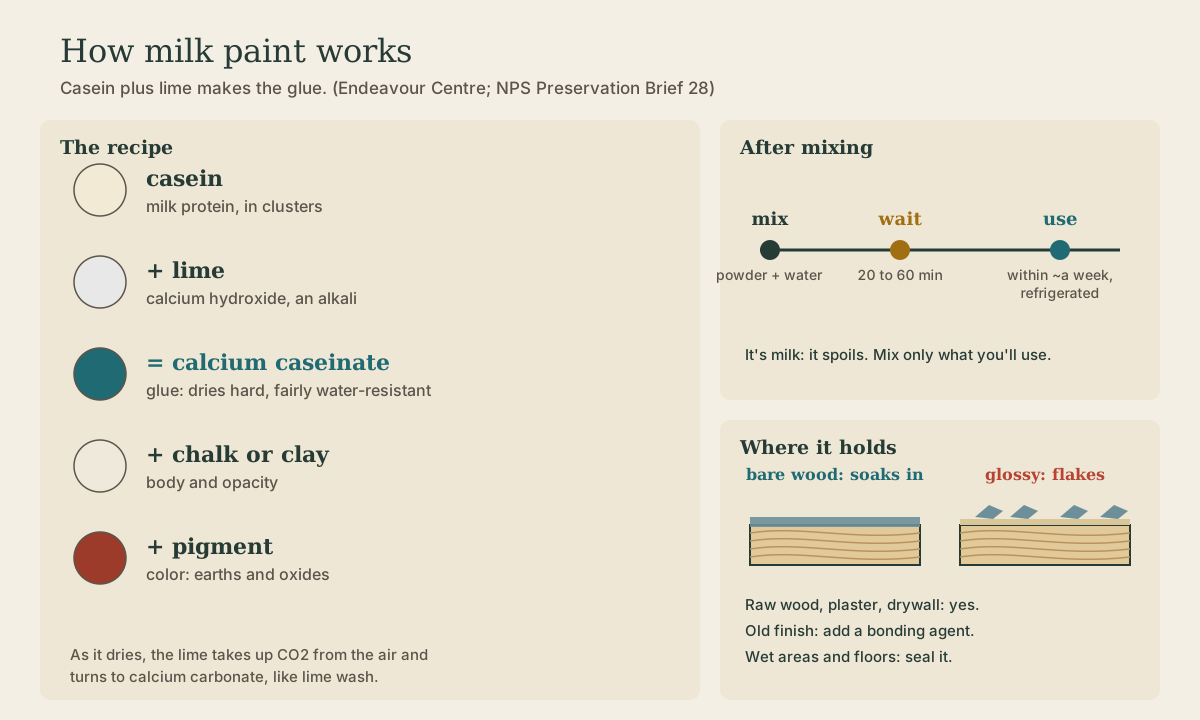
Casein in milk is suspended in tiny clusters and doesn’t dissolve well on its own. Add an alkali, and the casein molecule opens up and becomes soluble, behaving like glue. With lime (calcium hydroxide) as the alkali, the casein forms calcium caseinate, a binder that dries hard and becomes quite water-resistant 2. Borax can also open casein, giving a softer, more water-sensitive glue that’s useful in some recipes.
Lime does double duty. It’s the activator, and as it dries it reacts with carbon dioxide in the air to form calcium carbonate, the same way lime wash does, adding to the hardness.
Quick check
Casein doesn’t dissolve well on its own. Lime (or borax) opens it up, and with lime it forms calcium caseinate, the binder.
What goes in a milk paint
The Endeavour Centre’s materials encyclopedia lists the typical components 2:
- Casein, from skim milk, curds, or casein powder (skim milk powder can stand in).
- Lime or borax as the activator.
- Clay and/or calcium carbonate (chalk, whiting) as fillers that give body and opacity.
- Pigment for color.
- Sometimes fibers or other additives.
Commercial milk paint is sold as a powder of casein, lime, chalk, and pigment that you mix with water.
How it behaves
- The reaction takes time. After mixing with water, it needs about 20 to 60 minutes for the casein and lime to react before it’s ready to use.
- Short pot life. Mixed paint lasts about a week refrigerated, less at room temperature; it’s milk, after all.
- Bonds best to bare, porous surfaces. It’s thin and grips by soaking in: raw wood, plaster, and drywall. Over previously finished or glossy surfaces it needs a bonding additive, and without one it flakes, which is the source of the deliberately “chippy” antique look.
- Flat and breathable. It dries to a dead-flat, slightly chalky finish that lets water vapor through.
- Durable indoors, decent outdoors. The Endeavour Centre puts indoor life at fifteen to fifty years in dry areas, and outdoors it stays fairly colorfast for about ten years before fading gradually 2.
- Not for wet areas or floors unless sealed. Unsealed milk paint marks with water and wear.
Playback is optional. If the player is unavailable, open the video at its source.
Quick check
It grips by soaking into bare, porous surfaces.
Safety
The lime makes milk paint mildly caustic to skin and eyes: wear gloves and eye protection when mixing. Dry powder contains fine mineral dust, including silica in some products, so wear a dust mask while mixing powder 2. Once cured, the paint is inert.
What to take from this
Milk paint’s binder is casein, which lime turns into calcium caseinate glue; chalk, clay, and earth pigments give it body and color. Let it react 20 to 60 minutes after mixing, use it within days, put it on bare porous surfaces (or add a bonding agent), and expect a flat, breathing, durable finish. Protect skin, eyes, and lungs from the lime and dust while mixing.
Practice
Milk paint is thin and grabs by soaking into porous surfaces. Over existing finishes it needs a bonding additive, or it flakes, which is the source of the ‘chippy’ look.
Lesson complete
Nice work.
Sources for this lesson
- 1Preservation Brief 28: Painting Historic Interiors. National Park Service, Technical Preservation Services. verifiedHistoric paint types - linseed oil paint with driers, whitewash, distemper, casein (milk) paint - and how linseed oil paint keeps cross-linking for decades. Cited at: Types of Historic Paints.
- 2Milk Paint (Encyclopedia of Sustainable Building Materials). The Endeavour Centre. verifiedCasein plus lime or borax forms calcium caseinate; 20 to 60 minutes to react; about a week's pot life refrigerated; oil or wax topcoats; lime is caustic.