Gathering Poles and Saplings
Choosing and cutting rustic stock: which Wisconsin woods to use for frames, bends, and decoration, cutting in winter so bark stays on or in spring so it peels, peeling with a drawknife, seasoning sticks for months, using willow green, diamond willow, and getting stock without wrecking a woodlot.
- 5 min
- 7 steps
- 3 questions
- Lesson 82 of 160
In this lesson
- What to cut
- Winter for bark, spring for peeling
- Peeling
- Seasoning
- Getting stock
- Try it
- What to take from this
Picking up where you left off.
What to cut
Rustic furniture uses three kinds of stock, and each wants different wood.
| Job | What it needs | Good Wisconsin choices |
|---|---|---|
| Frames: legs, rails, posts | Straight, strong, slow to rot | Hickory, white oak, ironwood, white cedar, yellow birch |
| Bends: arms, hoops, back arches | Long, pliable shoots | Willow, red osier dogwood, young hickory |
| Decoration: twig work, bark panels | Contrasting bark, sheets of bark | Dogwood, birch, alder, cedar; birch bark from felled trees |
The Adirondack makers prized yellow birch for frames, white cedar for its light weight and rot resistance, and white birch bark for panels 1. The 1907 manual Rustic Carpentry used hazel, cherry, yew, birch, larch, fir, and the prunings of many shrubs 2. Willow is the easiest bending stock: it bends easily, holds its bend, and usually keeps its bark as it dries 3.
Diamond willow is a special case. Some shrub willows, including Bebb’s willow (Salix bebbiana), common in wet meadows, swamps, and lakeshores across Minnesota and Wisconsin, grow diamond-shaped scars on the trunk that show red and white when the stem is peeled and carved. It’s made into canes, lamp posts, and furniture 4.
Winter for bark, spring for peeling
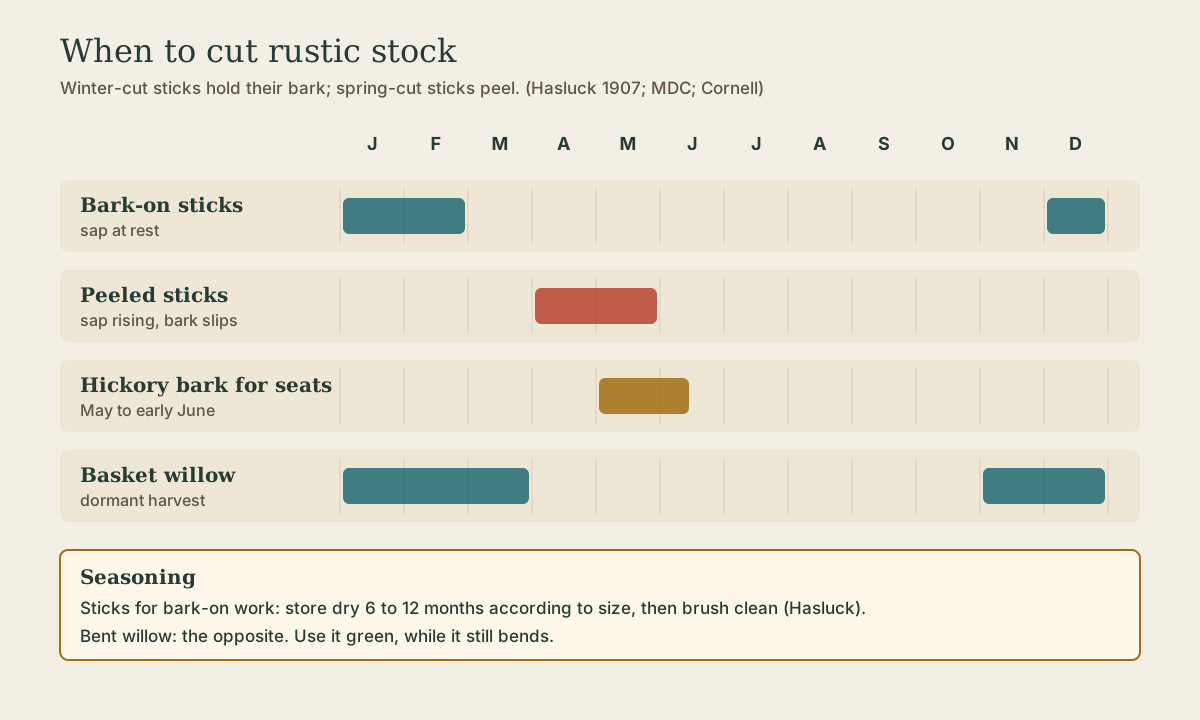
The cutting season decides whether the bark stays on. Rustic Carpentry is direct about it 2:
- For bark-on work, cut in mid-winter, when the sap is at rest. Sticks cut in summer lose their bark.
- For peeled work, cut in spring, when the sap is rising, and the bark comes off easily.
The reason is the cambium, the thin growing layer between bark and wood. In spring it’s soft and wet, and the bark slips off. In winter it’s dormant and the bark is locked on. Hickory inner bark for seats is peeled in that spring window, May to early June 5. Basket willow, by contrast, is cut dormant, November through March 6.
Quick check
Spring-cut sticks peel easily, which is what you want only for peeled work.
Peeling
Spring-cut poles can often be peeled by hand or with a dull blade once a cut is started. Later in the year use a drawknife: bevel down, pulled toward you in long strokes along the grain, the pole held in a shaving horse or on sawhorses. For a mottled, half-rustic surface, take off only the outer bark and leave patches of inner bark, the treatment the Park Service liked on cedar.
Playback is optional. If the player is unavailable, open the video at its source.
Seasoning
Rustic Carpentry stored sticks for six to twelve months, according to size, then brushed them clean before use 2. Dry sticks shrink less after assembly, hold nails better, and grow less mold under the bark. Stack them off the ground, out of sun and rain, with air around them.
Bent willow is the exception. It loses its flexibility as it dries, so cut it and build soon after 3. Keep cut willow shaded and the butt ends in water if you can’t use it the same week.
The usual compromise for chairs: season the straight frame stock, cut the bending stock fresh, and make the joints so that drying pulls them tighter (see Round Tenons and Shrink Fits).
Quick check
Bent willow is the exception: it’s built green, while it still bends.
Quick check
Cut it, keep it shaded, and bend it within days or a few weeks.
Getting stock
- Ask first. On private land, ask the owner; on public land, check the rules before cutting anything. Many places allow no cutting at all.
- Cut where it helps. Saplings crowding a fence line, willow along a ditch, ironwood in an overstocked woodlot, and storm-damaged trees are good sources.
- Willow coppices. Cut willow and dogwood regrow from the stump, often several shoots for each one cut.
- Cut more than you need. Sort it into frame, bend, and twig piles the same day, and label species and cutting date.
Try it
This winter, cut a bundle of straight 1- to 1-1/2-in. poles for frame stock (hickory, ironwood, or white oak) and tag each with the date. Next May, cut a few more of the same species and try to peel both. Write down how the bark behaved.
What to take from this
Use strong, straight hardwoods or cedar for frames, willow and dogwood for bends, and contrasting barks for decoration; Bebb’s willow gives diamond willow. Cut in mid-winter when the bark must stay on, and in spring when you want it to peel. Peel with a drawknife along the grain. Season frame sticks six to twelve months, but bend willow green. Get permission, and cut where thinning helps.
Lesson complete
Nice work.
Sources for this lesson
- 1Niki Kourofsky. The Roots of Rustic Style. Adirondack Life. 2022. verifiedGuides' utilitarian stick furniture before the 1870s; William West Durant's Camp Pine Knot (begun 1877) on Raquette Lake, inspired by guide Alvah Dunning's bark shanty; mosaic twig work, bark exteriors, sapling railings; Uncas and Sagamore moved toward peeled-pole construction; yellow birch, white birch bark, white cedar, spruce bark; modern makers.
- 2Paul N. Hasluck. Rustic Carpentry. Cassell and Company (Project Gutenberg edition). 1907. verifiedPublic-domain workshop manual. Cut sticks in mid-winter when the sap is at rest so the bark stays on; cut in spring when the sap is rising for peeled work; store six to twelve months according to size; bore for nails with a bradawl to avoid splits; hazel, cherry, yew, birch, larch, fir, and prunings; V-notched mitres, mortise and tenon, nails, dowels, screws; two or three coats of hard outside varnish.
- 3Jonathan Benson. Rustic Chair. Popular Woodworking. 2023. verifiedChild's chair of willow and Osage-orange saplings about 1 in. thick; use cut stock right away; willow bends easily, holds its bend, and keeps its bark; pre-bend the thick end; galvanized nails in pre-drilled holes; seat 12 in. high, 15 by 15 in.; seat frame sloped 5 to 10 degrees; seat and back sticks about 3/4 in. apart.
- 4Dan Shaw, Jennifer Moeller. BWSR Featured Plant: Bebb's Willow (Salix bebbiana). Minnesota Board of Water and Soil Resources. 2018. verifiedShrub willow to about 20 ft in wet meadows, swamps, lakeshores, and fens across Minnesota; red-brown older twigs, leathery oval toothed leaves; a type of diamond willow, with diamond patterns visible when carved; used for canes, lamp posts, and furniture; often mistaken for pussy willow.
- 5A.J. Hendershott. Beauty From Bark. Missouri Conservationist (Missouri Department of Conservation). 2026. verifiedHickory inner bark slips in May or early June; trees 6-12 in. diameter; drawknife off outer bark, score, peel, coil, dry; soak overnight and shave to 1/8-1/4 in.; 3/4 in. strips for seats; 120-180 ft per seat.
- 6Marilee Williams. Willow, A New Old Crop. Cornell Small Farms Program. 2013. verifiedBasketry willows with long, pliant shoots and little pith; harvest in dormancy, November through March; bundle by variety and dry upright with good air flow; soak about a day per foot.