Restoring a Sagging Sprung Seat
Diagnosing and fixing the common failures of an old sprung chair - sagging webbing, broken spring twine, a popped-out spring, worn covers - with the least disturbance, from re-webbing underneath to retying and re-covering.
- 4 min
- 4 steps
- 3 questions
- Lesson 160 of 160
In this lesson
- Diagnose
- Repairs
- When to strip completely
- What to take from this
Picking up where you left off.
Diagnose
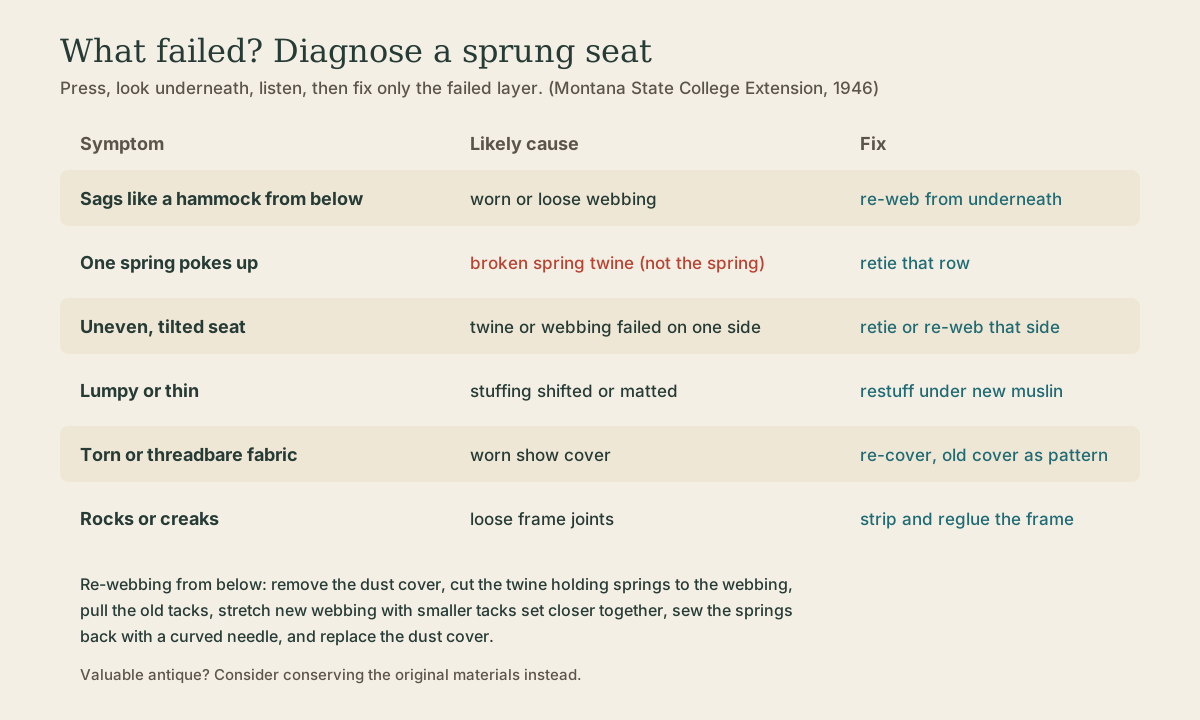
Before taking anything apart, find out which layer failed. The Montana bulletin’s reconditioning advice pairs symptoms with fixes 1:
| Symptom | Likely cause |
|---|---|
| Seat sags, hammock-like, from below | Worn or loose webbing |
| One spring pokes up through the seat | Broken spring twine (often mistaken for a “broken spring”) |
| Uneven, tilted seat | Twine or webbing failure on one side |
| Lumpy or thin seat | Stuffing shifted, matted, or worn |
| Torn or threadbare fabric | Show cover worn |
| Seat rocks or creaks | Loose frame joints |
Press, look underneath (remove the dust cover), and listen before deciding 1. For a valuable antique, consider whether original materials should be conserved rather than replaced 2.
Quick check
The bulletin notes this is ‘erroneously called a broken spring’ - it’s broken twine.
Repairs
Re-web from underneath 1:
- Turn the piece upside down and remove the dust cover.
- Cut the twine holding the springs to the webbing and remove the old webbing tacks.
- Stretch new webbing in the usual way, using smaller tacks set closer together than on a new frame, since old holes weaken the rails.
- Sew the springs back to the new webbing from below with a curved needle.
- Replace the dust cover.
Retie springs 1:
- Remove the cover, muslin, and padding above the problem area.
- Untie the broken twine.
- Retie the affected row (and any damaged diagonals) with new spring twine (see Coil Springs).
- Put the padding, muslin, and cover back.
Metal spring supports: some seats use metal strips instead of webbing. They’re harder to repair: a broken strip must be welded or replaced, which means removing the spring assembly and reupholstering the seat 1.
Spring units in cushions: old cushions with “broken” springs can be opened and given new pockets, or a new spring unit 1.
Re-cover only 1:
- Remove the old cover carefully, keeping each piece.
- Use it as a pattern, adding 1/2 to 1 inch on all edges for pulling and seams.
- If springs or stuffing were changed, the shape may differ; then lay the new fabric on the chair itself and cut each piece to fit.
- Fit with centers and opposites (see Fitting the Show Cover).
Frame first: if the chair rocks or creaks, reglue loose joints before re-covering, or the new upholstery will fail too (see Stripping and Frame Repair).
Quick check
Webbing can be renewed without disturbing the upper upholstery.
Quick check
If the stuffing or springs are changed, the shape may change; then cut each piece on the chair itself.
When to strip completely
Strip to the frame and rebuild when several layers have failed at once, the stuffing is matted or contaminated, or the frame needs major repair 1. Then follow the full traditional sequence: webbing, springs, tying, burlap, edge, stuffing, cotton, muslin, cover.
What to take from this
Diagnose the failed layer first: sagging from below is webbing, a spring poking up is broken twine, lumps are stuffing, threadbare fabric is the cover, and rocking is the frame. Re-web from underneath with smaller, closer tacks; retie a row after lifting the layers above; re-cover using the old cover as a pattern plus 1/2 to 1 inch; fix the frame before anything else; and strip completely only when several layers have failed.
Lesson complete
Nice work.
Sources for this lesson
- 1Margaret Huston Tuller. Simple Upholstery Methods (Bulletin 198, revised). Montana Extension Service, Montana State College. 1946. verifiedA sprung footstool step by step - webbing stretcher, 3-, 8-, and 12-ounce tacks, 3 1/2-inch webbing interlaced, springs sewn at intersections, 8-way tying with clove hitches, burlap, edge roll, hair and cotton padding, muslin, cover, welt, cambric; plus retying 'broken springs' and renewing webbing.
- 2Conserve O Gram 7/4 — Upholstered Furniture: Agents of Deterioration. U.S. National Park Service. 1993. verifiedGovernment conservation guide describing the composite build of upholstered furniture, historic fillings, coil springs, show covers, and interactions among materials.