Table Saw Safety and Kickback
The table saw causes more serious shop injuries than any other tool. How kickback happens, what the riving knife and guard prevent, where hands and body go, and which cuts never to make freehand.
- 5 min
- 7 steps
- 3 questions
- Lesson 33 of 160
In this lesson
- Why the table saw deserves respect
- How kickback happens
- The safety equipment
- Where hands and body go
- Cuts to never make
- A hand-tool alternative
- What to take from this
Picking up where you left off.
Why the table saw deserves respect
In a hand-tool shop, the table saw is optional: panel saws rip and crosscut everything a saw can. But most shops end up with one because it rips long boards fast and accurately. It’s also the most dangerous tool most woodworkers own. The Consumer Product Safety Commission estimated 33,400 emergency-department-treated table saw injuries in 2015, about 92% from contact with the blade, including about 4,700 amputations - more than 12 a day 1.
Most of those injuries come from two events: a hand drifting into the blade, and kickback pulling a hand toward it.
Quick check
CPSC estimated 33,400 ED-treated injuries in 2015, about 92% from blade contact - more than 12 amputations a day.
How kickback happens
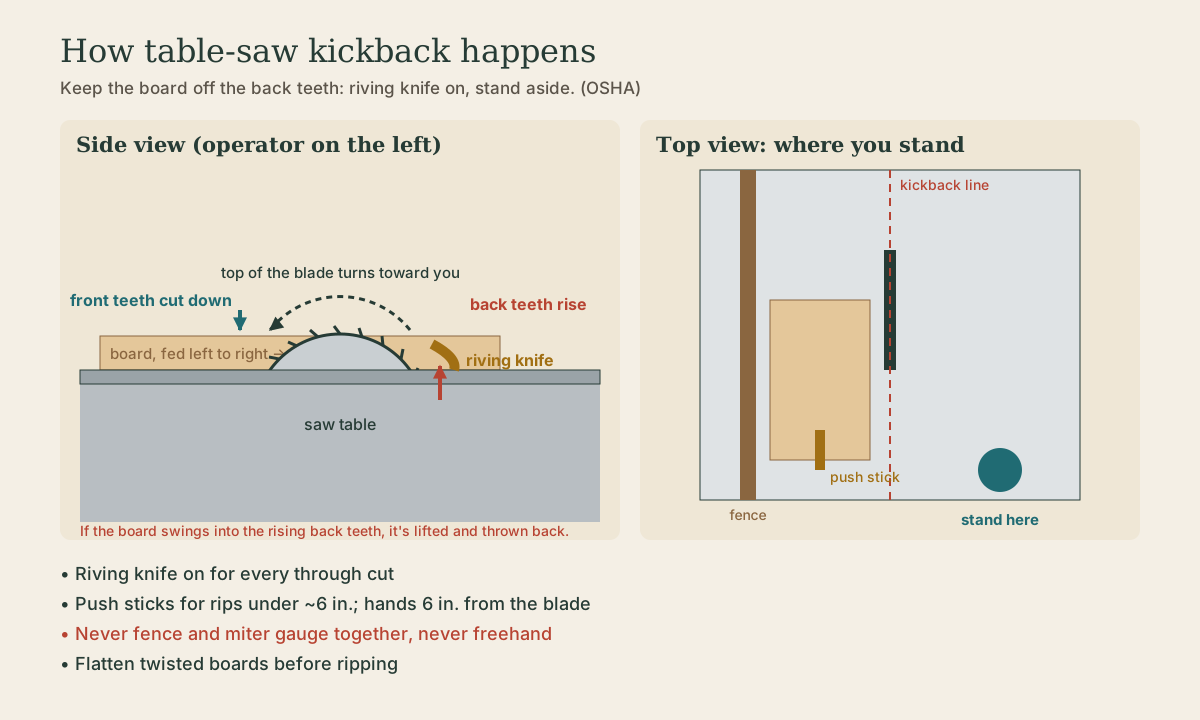
Kickback is the saw seizing the stock and hurling it back at the operator 2. The blade’s teeth rise toward you at the back of the blade. If the board touches those rising back teeth, they grab it, lift it, and throw it at high speed - and the hand pushing the board can be pulled into the blade.
Common causes 2:
- The kerf closes behind the blade as stress in the wood is released, pinching the blade.
- The board twists away from the fence into the back of the blade.
- Dull or dirty blades that burn and bind.
- Bad stock: twisted boards, knots, splits, or a board with no flat face on the table.
- Freehand cuts without a fence or miter gauge controlling the board.
- Feeding boards of different thicknesses together.
Quick check
When the kerf closes or the board twists off the fence, the back of the blade lifts and hurls the stock. A riving knife keeps the kerf open behind the blade.
The safety equipment
- Riving knife: a curved steel fin right behind the blade that rises and falls with it. It keeps the kerf open and stops the board from rotating into the back teeth. It’s the most important kickback protection; leave it on for every through cut. Older saws have a fixed splitter that does the same job 2.
- Anti-kickback pawls: toothed fingers that dig in if the board moves backward 2.
- Blade guard: covers the blade top and keeps hands out. Modern guards mount on the riving knife and come off quickly for non-through cuts; put them back.
- Flesh-sensing saws (such as SawStop) stop and drop the blade within milliseconds of skin contact. They greatly reduce amputation injuries, but they don’t stop kickback.
Where hands and body go
- Stand to the side of the blade line, not behind it, so a kicked board misses you 2.
- Push sticks for any rip narrower than about 6 inches; keep hands at least 6 inches from the blade.
- Push through completely until the board is past the blade, then turn off or move it away. Never reach over or behind a spinning blade.
- Blade height: about a tooth above the board is a common setting.
- Use featherboards to hold stock against the fence on narrow rips.
- Wear eye and hearing protection; no gloves, loose sleeves, or dangling cords.
- Wait for the blade to stop before clearing offcuts.
Cuts to never make
- Freehand cuts: every cut needs the fence (for rips) or the miter gauge or a sled (for crosscuts).
- Fence and miter gauge together: crosscutting a short piece against the fence traps the offcut between blade and fence, where it twists and kicks back. Clamp a stop block to the fence ahead of the blade, or use a crosscut sled.
- Ripping warped or twisted boards with no flat face down or straight edge on the fence. Flatten and edge them first (by hand plane or jointer).
- Ripping short, small pieces where hands must come close. Use a handsaw.
- Cutting round stock without a jig holding it.
Quick check
Use a stop block clamped to the fence ahead of the blade, or a crosscut sled, so the cut-off piece is free.
A hand-tool alternative
Everything the table saw does, panel saws and a bandsaw can do with less risk and more noise-free satisfaction - more slowly. Many hand-tool workers rip with a bandsaw and crosscut by hand, keeping the table saw out of the shop altogether.
What to take from this
The table saw causes tens of thousands of ED visits and thousands of amputations a year. Kickback happens when the board touches the rising back teeth; the riving knife prevents it, so keep it on. Stand to the side, use push sticks and featherboards, push all the way through, and never cut freehand or trap an offcut between fence and blade.
Lesson complete
Nice work.
Sources for this lesson
- 1Safety Standard Addressing Blade-Contact Injuries on Table Saws (proposed rule). U.S. Consumer Product Safety Commission, Federal Register. 2017. verifiedAn estimated 33,400 emergency-department table saw injuries in 2015, about 92% from blade contact, and about 4,700 amputations - more than 12 a day.
- 2Woodworking eTool: Kickbacks. Occupational Safety and Health Administration. verifiedKickback is the saw seizing the stock and hurling it back; spreaders and anti-kickback fingers, sharp properly set blades, sound stock, and standing to the side prevent it.